




AI and automation boost hotel efficiency


“Artificial intelligence, automation and advanced data analytics are transforming the way we manage hotels and enabling us to be more efficient,” says Jorge Marichal, President of CEHAT, at the ITH Innovation Summit 2026.
Fede Fuster, President of ITH, advocates that “hotels act as a critical meeting point across the tourism value chain”, where innovation is a driving force for moving towards a model that is better equipped to meet the needs of individuals, businesses and destinations. Ana Muñoz, Director-General for Tourism Policy at the Ministry of Industry and Tourism, emphasises the importance of linking technology and tourism “to create more sustainable experiences”.
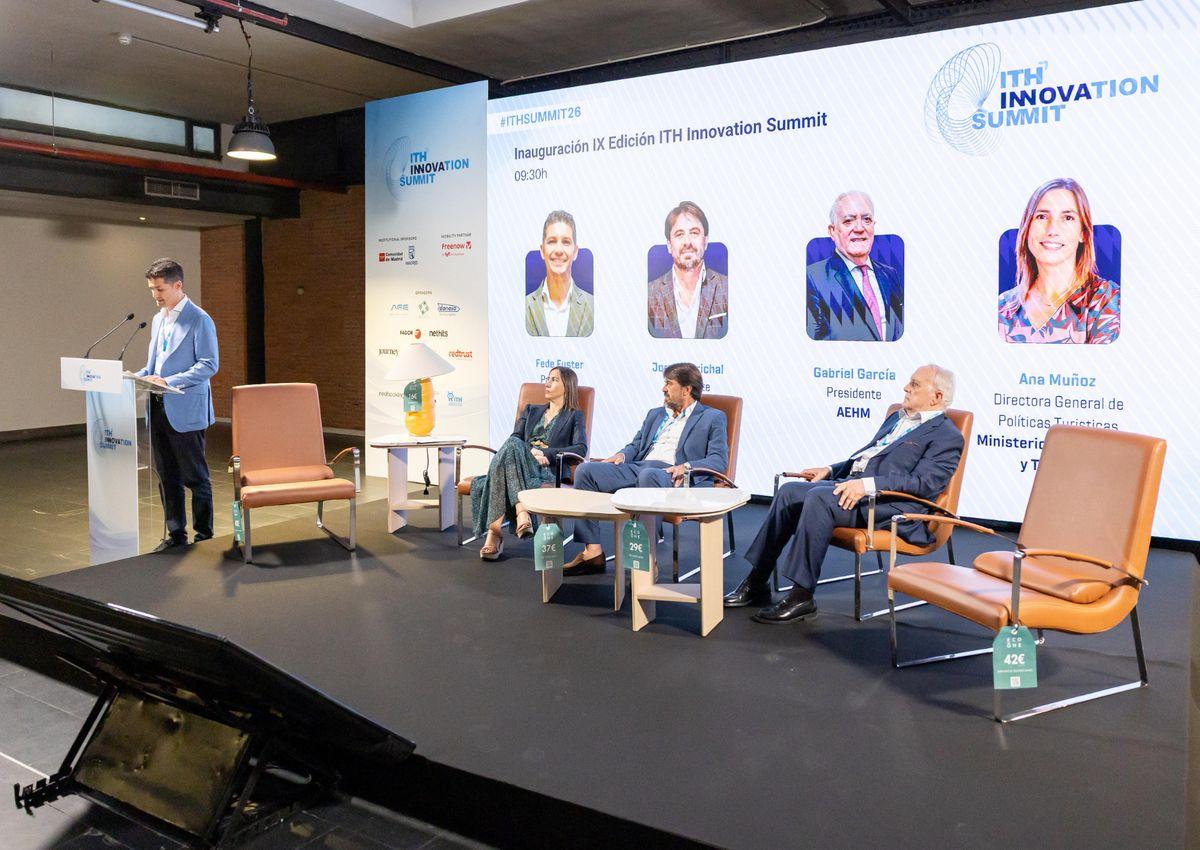
“Artificial intelligence, automation and advanced data analytics are transforming the way we manage hotels and enabling us to be more efficient,” said Jorge Marichal, President of the Spanish Confederation of Hotels and Tourist Accommodation (CEHAT), at the ITH Innovation Summit 2026. However, he also pointed out that “there is something that no technology can replace: the human ability to welcome, listen, understand and build trust” because “the essence of hospitality still lies in people”.
For his part, Fede Fuster, president of the Hotel Technology Institute (ITH), emphasised that “hotels act as a critical meeting point across the tourism value chain”, where innovation is a driving force for moving towards a model that is better equipped to meet the needs of individuals, businesses and destinations. Meanwhile, Ana Muñoz, Director-General of Tourism Policies for the Ministry of Industry and Tourism, emphasised the importance of continuing to promote “more efficient hotels” and of linking technology and tourism “to create more sustainable experiences”. Similarly, Gabriel García, president of the Madrid Hotel Business Association (AEHM), stated that “sustainability is no longer an option but has become a key factor in competitiveness” and that “authenticity makes all the difference”.
During the presentation ‘Agentic AI for hotels’, delivered by Lasse Rouhiainen, the AI expert analysed how dependence on OTAs, the shortage of qualified staff and rising operating costs, some of the major challenges facing the hotel sector, are also areas where AI can help by acting as another member of staff. To this end, according to Rouhiainen, it is important to bear in mind that the real value lies not in the agents themselves, but in the skills, apps and assistants available to people.
Public-private partnership
José Manuel Camarero Benítez, Regional Secretary for Tourism for the Valencian Community, called for “public policies that do justice to the industry” and also urged people to “debunk the myth that robotics is set to reduce the workforce”. “In other words, the important thing is to specialise people and technology in those processes where it makes sense.” Meanwhile, Antonio Sánchez, Head of Promotion and Marketing at Visit Benidorm, explained that, “with the advent of AI, the marketing department has changed the way it reaches out to its customers and tourists”. In this regard, he emphasised that “it is essential to position destinations on LLM search engines as well”. In other words, AI tools that respond directly to users’ queries, “without forgetting that customers are also looking for the human touch”.