




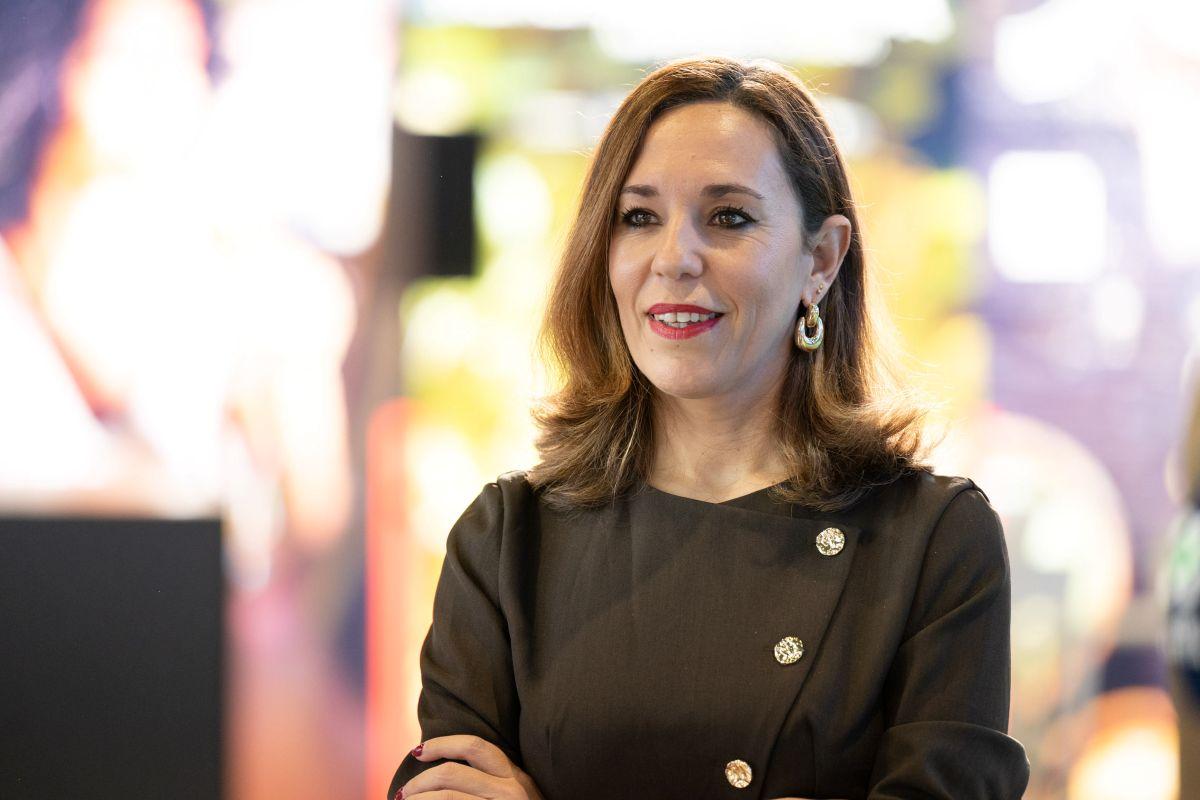
Jéssica de León: “At FITUR 2027, we will be showcasing a diverse and innovative side to the Canary Islands”


The Minister for Tourism and Employment of the Canary Islands Government states that the region is transforming its tourism model “to adapt it to changing demand and to what Canary Island society expects from an activity that is the driving force behind our economy”.
At FITUR 2027, “we want our presence, alongside the islands, their local authorities and businesses, to continue to be, above all, a useful tool for generating business opportunities, strengthening partnerships and showcasing an archipelago that is diverse, innovative, safe and committed to quality and sustainability”.
What figures demonstrate the strong performance of tourism in the Canary Islands and its contribution to the economy?
According to the latest figures from the Impactur report, in 2025 tourism accounted for 37.7% of the Canary Islands’ GDP and supported 413,064 direct and indirect jobs, representing 42.3% of total employment. Tax revenue reached 4.11 billion euros, and corporate tourism investment marked an all-time high at 1.18 billion euros.
As regards demand, we ended the year with 18.4 million tourists, a record figure following that set in 2024, but one we value above all for the increase in tourist spending that it brings, as these tourists generate solid profitability results. For example, hotel RevPAR stood at 121 euros, the second highest in Spain, and also grew by 5.5%, as did tourism revenue, which rose by 4%.
For 2026, we only have data up to May, but everything suggests that we are maintaining stability. In the first five months, the Canary Islands welcomed 7.6 million tourists, virtually the same number as in the corresponding period last year, particularly from the international market. As for mainland tourism, the figures are slightly lower, down by 5.4%, but it should be noted that they do not include the summer season, which is when this market traditionally performs best for the Canary Islands.
What measures is the Canary Islands Government taking in the area of tourism, and what sort of visitors is its promotional campaign aimed at?
We are transforming our tourism model to adapt it to changing demand and to what Canary Island society expects from an activity that is the driving force behind our economy. Over the last two years we have achieved record results, but the challenge is no longer to grow indefinitely, but rather to manage our operations more effectively, correct imbalances and ensure that the value generated translates into greater well-being for the public. That is the focus of the ‘Canarias Destino’ Strategic Plan, and we are already working on updating it for 2027.
Consequently, we are targeting our marketing at higher-value tourists who are interested in authentic, less price-sensitive experiences. To this end, we are constantly analysing markets and travel motivations, tailoring our messaging to the audiences we wish to engage with, and combining campaigns of varying scope with innovative formats, using technology as our key ally.
We also treat climate action as a cross-cutting principle underpinning our entire policy. As signatories to the Glasgow Declaration, we are committed to measuring and reducing the tourism carbon footprint, and we support businesses in this transition through our ‘Journey to Decarbonisation’ programme. We have also launched Regnext, a programme designed to channel voluntary contributions towards environmental and social regeneration projects. This represents a further step towards sustainable tourism, through which we aim not only to reduce our environmental impact but also to generate positive, measurable and lasting effects in the region.
To ensure the industry’s competitiveness, we are fostering its digitalisation, with a particular focus on small and medium-sized enterprises. We are also working to measure and improve the quality of employment, attract and retain talent, and invest in high-quality training. At the same time, we are allocating resources to modernise tourist facilities and infrastructures and improve their accessibility, in cooperation with island governments and local councils.
Finally, I would like to highlight the extensive efforts we are making to review and modernise the legal framework for tourism in the Canary Islands. We have successfully introduced the Law on Sustainable Planning of Tourist Use of Housing – the first piece of legislation to regulate holiday accommodation on the islands – and we have also updated the regulations on active tourism. We are also making progress on the first specific regional regulations for outdoor tourist accommodation establishments and on the drafting of a new Tourism Planning Act to replace the 1995 legislation, which was designed for a very different set of circumstances. The Canary Islands need clear rules and legal certainty to regulate tourism and ensure that the value it generates benefits the public.
Which segments of the tourism market are you prioritising, and which do you plan to develop further?
We will continue to focus on our main segment, Sun and Beach+, but with an approach that incorporates value-adding elements such as wellness, cultural heritage and gastronomy. Indeed, in the area of gastronomy, we want to take a qualitative leap forward, as this is a key aspect in connecting with the premium segment, which is becoming increasingly important for the Canary Islands.
At the same time, we want to promote and expand nature tourism, rural tourism and cultural and heritage tourism, as these add value to the archipelago’s tourism offering as a whole and highlight distinctive features such as our history, identity, traditions and the extraordinary diversity of landscapes across the eight islands.
Sport will continue to play a prominent role, both for enthusiasts and for professional training, as the Canary Islands offer exceptional conditions for practising sport all year round. It is a segment capable of attracting highly specialised audiences and reinforces our positioning as an active and healthy destination.
Finally, we want to make better use of the major sporting and cultural events on the calendar, which we support through our sponsorship programme and which act as real catalysts for travel and bookings, offering great potential to raising our profile and connecting with new generations of travellers.
What strategies are you developing to raise awareness and provide more information about the destination?
Tourism knowledge and intelligence play a key role. This year we have given a significant boost to the Canary Islands Tourism Observatory, expanding the sources and categories of analysis and incorporating artificial intelligence and business intelligence tools. We want to establish it as the destination’s central information platform, providing increasingly comprehensive and useful analyses to support decision-making by both the public sector and the industry.
On this basis, we are developing increasingly targeted and personalised marketing campaigns, supported by our own multilingual, data-driven digital ecosystem, which enables us to maintain constant communication and tailor content to each market, profile and stage of the decision-making process. This strategy is complemented by branded content campaigns and initiatives that enhance the brand’s visibility and reputation, alongside our presence at trade fairs such as FITUR, and our well-established partnerships with airlines, tour operators and marketing platforms.
We also offer tools aimed directly at the business community, such as our digital experience marketing programmes, our Brand Centre, specialist training initiatives and the ‘Journey to Decarbonisation’ programme. Promotion is no longer just about launching campaigns; we must also help businesses to sell more effectively, innovate and adapt.
What role does the public-private partnership play in the tourism industry?
It is essential. The competitiveness of the Canary Islands depends on the ability of public authorities and businesses to share information, anticipate changes and work towards common goals. We maintain ongoing relations with employers’ organisations, SMEs, professionals, airlines, tour operators and international platforms, viewing this collaboration not as a one-off consultation, but as an exercise in co-governance and co-leadership.
Regnext is a clear example of public-private partnership, as it brings together public authorities, leading tourism operators and civil society around a shared objective: to move towards a tourism model that has a positive and measurable impact on the local area, biodiversity and social cohesion. This programme establishes a voluntary participation scheme for businesses and travellers, with guarantees of transparency and traceability, and is designed to directly fund specific regeneration projects. Furthermore, it will enable public and private organisations, NGOs, groups and associations to put forward their own proposals to ensure that a large proportion of the wealth generated by tourism is returned to the islands in the form of ecological, social and cultural value.
Another clear example of the positive results of this collaboration is our sponsorship programme, a strategic tool for developing the destination in partnership with the cultural and sporting sectors. From 2021 until the first half of 2026, we facilitated the organisation of 966 events, to which we allocated 54.4 million euros, in addition to the more than 261 million contributed by private organisations and the 29 million from public bodies. This partnership has enabled us to support more than 600 organisations and organise events with a total value of 291 million euros. As well as promoting an image of the Canary Islands that goes beyond just sun and beaches, this strategy generates economic activity, employment and opportunities spread across the eight islands.
What is the current state of connectivity and links with the Canary Islands?
There is one issue we cannot take for granted: air connectivity. The Canary Islands are in a strong position and are highly regarded by airlines, as demonstrated by the repeated accolades received at the Routes Awards, where, at the most recent ceremony, we won the award for the best European destination in terms of connectivity management. Behind these results lies ongoing technical work with the airlines, to whom we provide market intelligence and demand analysis to support them in their decisions regarding new routes, frequencies and capacity.
The Flight Development Fund is another tool within this policy, designed to support the launch of strategic routes that require an initial boost, particularly in markets or on islands with lower passenger volumes. That is why we are calling on the European Union to ensure that the revision of the Aviation Guidelines retains this option for the outermost regions. It is not a question of artificially sustaining routes, but of maintaining a selective tool that enables us to diversify markets and facilitate viable connections which, without that initial support, might never become operational.
How did the Canary Islands’ participation in the last edition of FITUR contribute to their tourism development, and what are their expectations for FITUR 2027?
FITUR 2026 once again demonstrated that the fair is, above all, a major working platform for the Canary Islands’ tourism industry. The Canary Islands stand space welcomed 380 companies from the archipelago and more than 1,300 accredited professionals, who used this major tourism event to hold numerous meetings, present projects and forge business contacts.
The trade fair gave us the opportunity to hear directly from the market, strengthen relationships with our key partners and make progress on specific agreements. Among these was the integration of Lanzarote’s tourism website into the holaislascanarias.com ecosystem, as part of a strategy to collaborate with the island destinations to improve digital promotion.
Furthermore, we reached a milestone at FITUR, as it was there that we formalised the establishment of the Regenerative Tourism Alliance Commission, which is responsible for finalising the design of the Regnext programme. The memorandum was signed at the trade fair by the Vice President of the Canary Islands Government, the Minister for Ecological Transition and Energy, and myself as Minister for Tourism and Employment, alongside representatives from major international, national and regional tour operators such as TUI, Expedia, Jet2 and Jet2holidays, easyJet Holidays, DERTOUR, Barceló Hotel Group, Lopesan, Binter and Loro Parque, as well as the Canary Islands organisation Excelcan and the tourism industry associations Ashotel, FEHT, Asolan and Asofuer.
At FITUR 2027, we want our presence – alongside the Canary Islands, their local authorities and businesses – to remain, above all, a useful tool for generating business opportunities, strengthening partnerships and showcasing a Canary Islands archipelago that is diverse, innovative, safe and committed to quality and sustainability.