




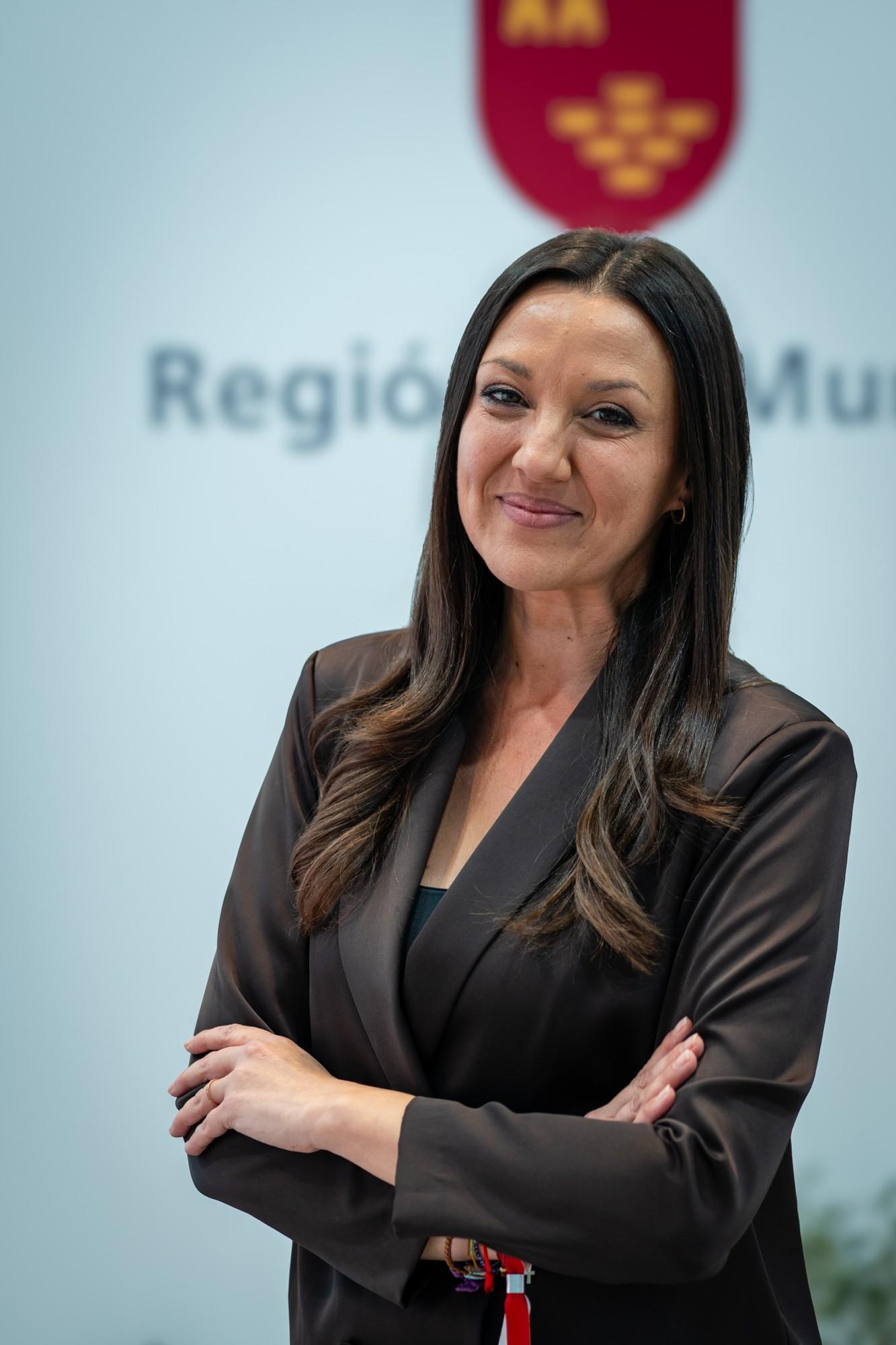
Carmen María Conesa: The Region of Murcia has a very positive outlook for FITUR 2027


Murcia’s Regional Minister for Tourism, Culture and Sport emphasises that “FITUR is a key trade fair due to its extraordinary international reach, which enables us to continue moving towards a more competitive, sustainable and higher-quality tourism model, in which attracting international tourists is a top priority”.
Conesa outlines the latest regional tourism figures and the strategies her government has put in place to further boost the industry.
What measures is the Region of Murcia taking in terms of tourism?
When it comes to key areas of focus, the Region’s main initiatives in the field of tourism are set out in the Pacto por el Turismo de la Región de Murcia (Pact for Tourism in the Region), a strategic agreement signed between the regional government and the tourism industry to promote sustainable, diversified and seasonally balanced development, which is structured around several strategic priorities aimed at transforming and consolidating tourism as a key industry.
Among these, the strengthening of ‘tourism governance’ stands out, with the creation of new bodies such as the Tourism Advisory Council and the Inter-administrative Commission, whose aim is to ensure coordinated, participatory and effective management. The agreement also sets out measures to boost the tourism industry through public-private partnerships, with support to modernise tourism provision, encourage innovation and make progress on sustainability. In this section, the projects funded by Next Generation Funds deserve a special mention; these have a budget of 63.9 million euros and are allocated to 20 local authorities in the region, including town councils, associations of local authorities and consortia.
Furthermore, the Regional Ministry of Tourism, on its own initiative, is leading several Action of Cohesion between Destinations initiatives (ACD), including the Ricote Valley ACD, which has been allocated 3 million euros to establish it as a ‘Slow’ destination. In turn, the ACD for Blue Tourism, which has a budget of 3 million euros, and the ACD for grants to modernise accommodation – an area in which it is a pioneer; has a budget of 8 million euros for this purpose, the main aim of which is to improve the quality of the region’s accommodation provision and enhance its competitiveness.
At the same time, there is a commitment to ‘strengthening destinations and brands’, with measures such as the development of a new regulatory framework for tourist municipalities to officially recognise those with a tourist vocation, the creation of a regional map of tourist destinations, and the adoption of specific promotional plans for these destinations through joint efforts between local authorities.
How important do you consider innovation and sustainability to be?
Another key focus is the drive towards ‘innovation and digitalisation’, which includes the redesign of the DTI Smart Office, the development of new smart tourist destinations, and partnerships with universities and start-ups to incorporate advanced technology into the industry’s management. As regards ‘sustainability’, the aim is to promote the deseasonalisation and diversification of the tourism offer towards products such as inland tourism, cultural tourism, nature tourism and tourism centred on events and conferences (MICE). In the area of ‘training and employment’, an annual plan has been launched through the Tourism Qualification Centre, and support will be provided for specialised studies in this area.
Furthermore, we have presented the Social Sustainability Plan for Tourism, which will be linked to the Este viaje lo hacemos juntos (This trip we make together) campaign, and which, together with other initiatives included in the Plan (such as the publication of a Guide to Best Practices and the holding of the First National Forum on Social Sustainability in Tourism), aims to promote a tourism model that is respectful, inclusive and aligned with territorial cohesion.
Finally, a far-reaching ‘regulatory reform’ will be undertaken, involving a review of the current legal framework to simplify procedures, remove outdated barriers and bring regulations into line with the industry’s current reality. This update will be carried out with the involvement of the tourism industry, ensuring a more streamlined, safer and attractive environment for investment.
Which market niches do you plan to focus on?
This year, the Region is prioritising 16 markets, including the domestic market, with a particular focus on the United Kingdom, France, Italy, Germany, the Nordic countries, Portugal, the Benelux region and the countries of Eastern Europe. Furthermore, this year we are placing particular emphasis on those products and initiatives with great potential to generate tourist activity, especially during the mid and low seasons, with a particular focus on ecotourism, the flowering season, wine tourism, blue tourism, gastronomy, festivals and celebrations, and MICE.
What tools will they use to promote these products?
The Region has set out a 360-degree tourism promotion strategy, which involves rolling out more than 230 initiatives to strengthen our position as a tourist destination. Of these, 174 will take place at national level and 59 in international markets. These activities include participation in general and specialist trade fairs, professional workshops, familiarisation trips for tour operators and the press, industry events, initiatives aimed at the general public, workshops and training programmes.
Among the key highlights of the 2026 tourism calendar is the new destination campaign Felicidad de la buena (Real happiness) an initiative designed to set us apart from other destinations and showcase the region’s range of experiences, which are suitable for all types of visitors throughout the year. The key distinguishing features we highlight are that this is a region with a pleasant climate all year round, where everything is within easy reach, where the quality of life is evident in every corner, and where visitors’ experiences become lasting memories thanks to the hospitality of the people of Murcia.
How are the figures for the tourism industry in the Region of Murcia developing?
Between 2019 and 2024, the Region of Murcia has undergone one of the most robust processes of tourism transformation on the national stage, strengthening its competitiveness and its capacity to generate social well-being. Balanced growth across markets, strong investment and improved employment figures underpin a sustainable and diversified model that positions tourism as a strategic pillar of regional development. This is the main conclusion of the Impactur 2019–2024 executive summary for the Region of Murcia.
Since 2019, tourism has accounted for 16% of the regional economy’s growth, achieving a tourism GDP of 4,156 million euros by 2024, and has been responsible for the creation of 66,000 jobs, accounting for 20.8% of the jobs created during that period and 9.5% of the regional total. During this period, tax revenue totalling 1,297 million euros was generated, equivalent to 8.4% of the total collected. Another contribution of tourism highlighted in the report is that it is an industry with a strong knock-on effect, with a great capacity to boost other economic activities. Thus, for every 100 euros spent in the tourism industry, 34.3 euros are generated in other productive sectors, and for every 100 direct jobs in tourism, 37 indirect jobs are created.
Impactur also points out that there has been a 76.5% increase in business investment in tourism and a repositioning of accommodation capacity, with a 7.6% increase in the number of beds in 3- to 5-star hotels and a significant expansion of unique accommodation options in inland areas. It also highlights greater job security, and emphasises the record numbers of travellers and their spending.
In 2025, the region welcomed around 1.9 million tourists and recorded just under 5.7 million overnight stays, figures which cement tourism’s status as an economic pillar.
How is public-private partnership developing in the industry?
Public-private partnership is the foundation upon which we build our entire management strategy. In the Region of Murcia, we believe that the best tourism policy is one that is designed by listening to, sharing ideas with and making decisions alongside the regional business community, as they are the ones who experience tourism on a daily basis and have first-hand knowledge of changes in demand, new trends and the industry’s real needs. That is why our relationship with associations, companies, employers’ organisations and professionals is ongoing, fluid and based on mutual trust.
At the Institute of Tourism, we work on the basis that the business community has the deepest understanding of the regional tourism ecosystem and is therefore a vital player in any strategy for the destination’s growth, promotion or transformation. Every single decision we take involves the industry, either through working groups, consultation processes, technical meetings or permanent coordination forums. This active listening enables us to develop policies that are more effective, realistic and in line with the challenges and opportunities facing the tourism industry today.
A very clear example of this approach is the Murcia Region’s Strategic Tourism Plan 2022–2032, which was drawn up with extensive input from the business community and all stakeholders linked to the regional tourism industry. Similarly, the Tourism Pact presented at the end of 2025 represents the consolidation of this model of shared governance, based on consensus, shared responsibility and a common vision for the future. Both projects perfectly illustrate that the success of tourism in the Region of Murcia is built on cooperation between the public authorities and the private sector.
In your opinion, what other issues need to be prioritised?
In addition to all of the above, we consider it particularly important to continue making progress in improving air connectivity in the Region of Murcia, as this is a key factor in our continued growth as a competitive tourist destination. Over the coming weeks, we will be introducing new direct flights to France and Italy from the Región de Murcia International Airport, with services due to commence at the end of June and operating twice a week. This will ensure that, during the summer season, the region is regularly connected to seven countries and twenty European airports, thereby bolstering what is a particularly positive period for regional tourism, characterised by sustained growth in visitor numbers, tourism spending and employment in the industry.
The national and international recognition the region is receiving for its quality of tourism and sustainability is also highly significant. By 2026, we will have a total of 41 Blue Flags – five more than the previous year – making us the leading single-province region in terms of the number of Blue Flags awarded to beaches, as well as having eight recognised marinas. Towns such as Águilas and Cartagena are among those with the most Blue Flags in the whole of Spain. Added to this is our regional leadership in the Senderos Azules (Blue Trails) scheme, where we already have 32 accredited routes and are the country’s leading single-province region in terms of the number of accreditations. All of this demonstrates the tremendous work carried out by local councils, the tourism industry and public authorities to establish a destination that is increasingly sustainable, accessible and of a higher quality.
Furthermore, we are promoting new tools to strengthen the region’s identity as a tourist destination and improve our capacity for promotion and innovation. We have presented the Assembly with the new ‘Asset of Tourist Interest’ designation, a status that will enable us to protect and promote such iconic attractions as the Camino de la Cruz de Caravaca, the Cieza Blossom Festival, Cartagena’s Asiático (an alcoholic coffee), the ‘marinera’ dance and the meat pie, thereby extending tourism recognition beyond our traditional festivals. At the same time, we are continuing to develop a strong digital strategy, with the revamp of our tourism website, targeted campaigns and a strong social media presence. Furthermore, we are making progress with the Smart Tourist Destination model, using innovative tools such as the virtual assistant based on generative artificial intelligence, ‘IA Costa Cálida’, and the interactive digital guide, SmartGuide, which is available in ten languages and designed to enhance visitor experience.
How did the Region of Murcia’s participation in the latest edition of FITUR contribute to its tourism development?
The Region brought its participation in the trade fair to a close with an unprecedented level of tourism promotion, supported by record highs for the industry and in an edition characterised by institutional respect following the train accident in Adamuz (Córdoba). As a result, the Community’s stand exceeded the 80,000-visitor mark for the first time,attracting more than 83,000 visitors, almost 10,000 more than in 2025, consolidating the destination’s reputation as one of the leading choices for experiential tourism throughout the year.
In terms of professional activity, over the first three days of the fair, the Region organised 400 business meetings through the Institute of Tourism, as well as private meetings initiated by the business sector itself, which provided a strategic opportunity to consolidate partnerships, tap into new markets, attract investment and boost the marketing of regional tourism products.
What are your expectations for FITUR 2027?
Expectations for the next edition of FITUR are very positive. This is a key trade fair due to its extraordinary international reach, which enables us to continue moving towards a more competitive, sustainable and higher-quality model of tourism, in which attracting international tourists is a top priority. The results back this strategy: in the first four months of the year, the Region of Murcia welcomed 331,630 foreign tourists, the highest figure on record for this period, representing a 3.1% increase on 2025. Furthermore, expenditure reached 472.4 million euros, a record figure representing an increase of 16.5% – more than double the national average. These figures encourage us to continue making the most of FITUR’s international platform to consolidate our position and open up new opportunities for growth.