




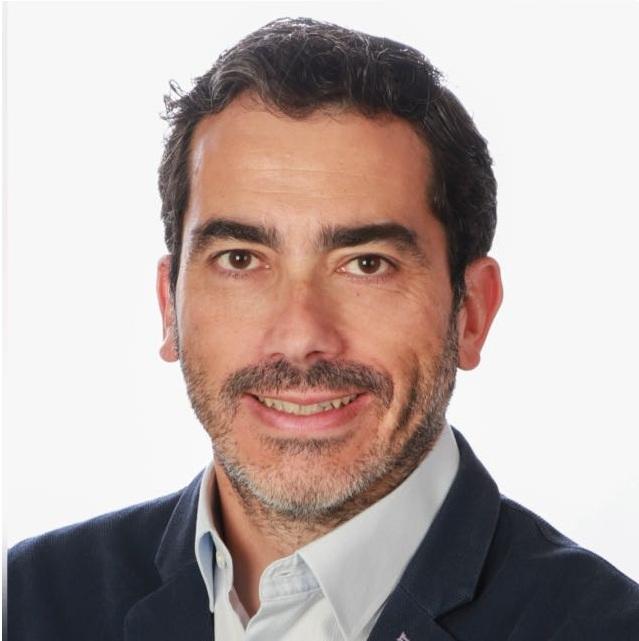
Víctor Carballo: Renfe to showcase its progress in innovation, digitalisation and decarbonisation at FITUR


Renfe’s Director of High-Speed Rail and Commercial Services affirms that FITUR represents “a unique opportunity to strengthen institutional and commercial relationships, present new products and identify the trends that will shape the market’s future”. les, presentar nuevos productos y conocer las tendencias que marcarán la evolución del mercado”.
Looking ahead to FITUR 2027, “we hope to continue strengthening our collaboration with all stakeholders in the industry and to showcase the progress we are making in the areas of innovation, digitalisation, customer experience and the decarbonisation of transport”.
In your opinion, how important is the tourism industry in Spain?
Tourism is one of Spain’s main economic and social drivers. Its ability to create jobs, drive regional development and promote the country’s image abroad makes it a strategic industry. Furthermore, it helps to boost economic activity in both large and small towns, promoting territorial cohesion and the development of numerous destinations.
In this context, mobility plays a vital role. High-speed rail has transformed the way people travel across Spain, bringing destinations closer together, facilitating more sustainable travel and enabling more and more travellers to discover new regions quickly, comfortably and safely.
What measures is Renfe taking to help boost tourism?
Renfe operates in the field of mobility and passenger transport, a key factor in the development of domestic and international tourism. Through our high-speed and long-distance services, we help to connect destinations, enhance the travel experience and improve access to Spain’s tourist attractions.
As well as transport, we promote projects that combine travel and leisure through partnerships with cultural institutions, tourist destinations, travel operators and other organisations, with a view to offering integrated experiences that add value for customers and encourage visits to different regions.
What mobility challenges is the industry facing in 2026?
The main challenges lie in accelerating digitalisation, making progress on sustainability and responding to travellers who are increasingly demanding, well-informed and connected.
It is also essential to help reduce the seasonal nature of demand, diversify destinations and consolidate more environmentally efficient models of mobility. In an increasingly competitive environment, the ability to offer personalised experiences, improve intermodal connectivity and facilitate comprehensive journey planning will be crucial to continued growth.
In this context, the railway plays a strategic role. Transport accounts for around 30% of greenhouse gas emissions in Spain, while rail travel contributes only about 0.3%. For this reason, promoting rail-based transport is one of the most effective ways of moving towards more sustainable tourism.
What other projects will Renfe be carrying out this year?
Renfe will continue to develop initiatives aimed at improving the service and the customer experience. We have a number of new features aimed at improving that experience lined up for this year, which we hope to reveal gradually. To give you a preview, some of the highlights include initiatives such as tools for tracking and viewing train locations and timetables, and the recent introduction of the option to travel with dogs weighing up to 40 kilos on our trains. We have also launched a project to comprehensively upgrade connectivity on high-speed and long-distance trains, which will enable us to offer improved digital services and higher-quality on-board communications.
We will also continue to promote integrated and sustainable mobility initiatives, such as Renfe+Bici, which makes it easier to combine train travel with cycling, as well as strengthening our digital channels and personalised communication tools to better meet the needs of each customer.
Furthermore, we are continuing to explore innovative energy solutions for non-electrified lines, reinforcing our decarbonisation strategy and our commitment to low-emission technologies.
What other issues relating to the tourism industry do you consider to be relevant?
Sustainability, technology and digitalisation are three key pillars for the present and future of tourism. Digitalisation makes it possible to enhance the travel experience, personalise customer relationships and optimise operational management. For its part, technological innovation is key to improving efficiency, reliability and service quality.
As regards sustainability, this is a strategic priority. Transport accounts for around 30% of greenhouse gas emissions in Spain, while rail travel contributes only about 0.3%. Renfe has reduced its emissions by nearly 90% since 2005 and, in 2024, achieved its best-ever figure, with just 3.79 grams of CO₂ per unit transported.
Furthermore, Renfe’s operations generate annual environmental savings for society valued at around 360 million euros, thanks to reduced emissions, improved air quality and lower noise levels. High-speed and long-distance services alone generate annual environmental savings of more than 220 million euros, establishing themselves as one of the most sustainable transport options for medium- and long-distance journeys.
We therefore believe that the future of tourism necessarily lies in sustainable mobility, and that rail is set to play a leading role in this transformation.
What will future tourism mobility look like?
Tourism in the future will be closely linked to more sustainable mobility. In this context, the train has a unique opportunity to establish itself as the go-to option for short- and medium-distance tourist travel.
Renfe will continue working to connect people and destinations safely, efficiently and in an environmentally responsible manner, contributing to the economic development of the regions and offering solutions tailored to new ways of travelling. Supporting rail travel means supporting more responsible tourism, less congested cities and a better quality of life for everyone.
What are your expectations for FITUR 2027?
FITUR is one of the leading events in the global tourism industry and offers a unique opportunity to strengthen institutional and commercial relationships, showcase new products and discover the trends that will shape the market’s future.
Renfe’s participation in FITUR helps to strengthen partnerships with destinations, institutions and tour operators, as well as highlighting the role of the train as a key element in sustainable mobility.
Looking ahead to FITUR 2027, we hope to continue strengthening our collaboration with all industry stakeholders and to showcase the progress we are making in the areas of innovation, digitalisation, customer experience and the decarbonisation of transport.