




Xosé Manuel Merelles: One of the keys for Turismo de Galicia is the internationalisation of our demand


Traditionally, tourism demand in Galicia has focused on the generation of unique and authentic experiences, and the Camino de Santiago.
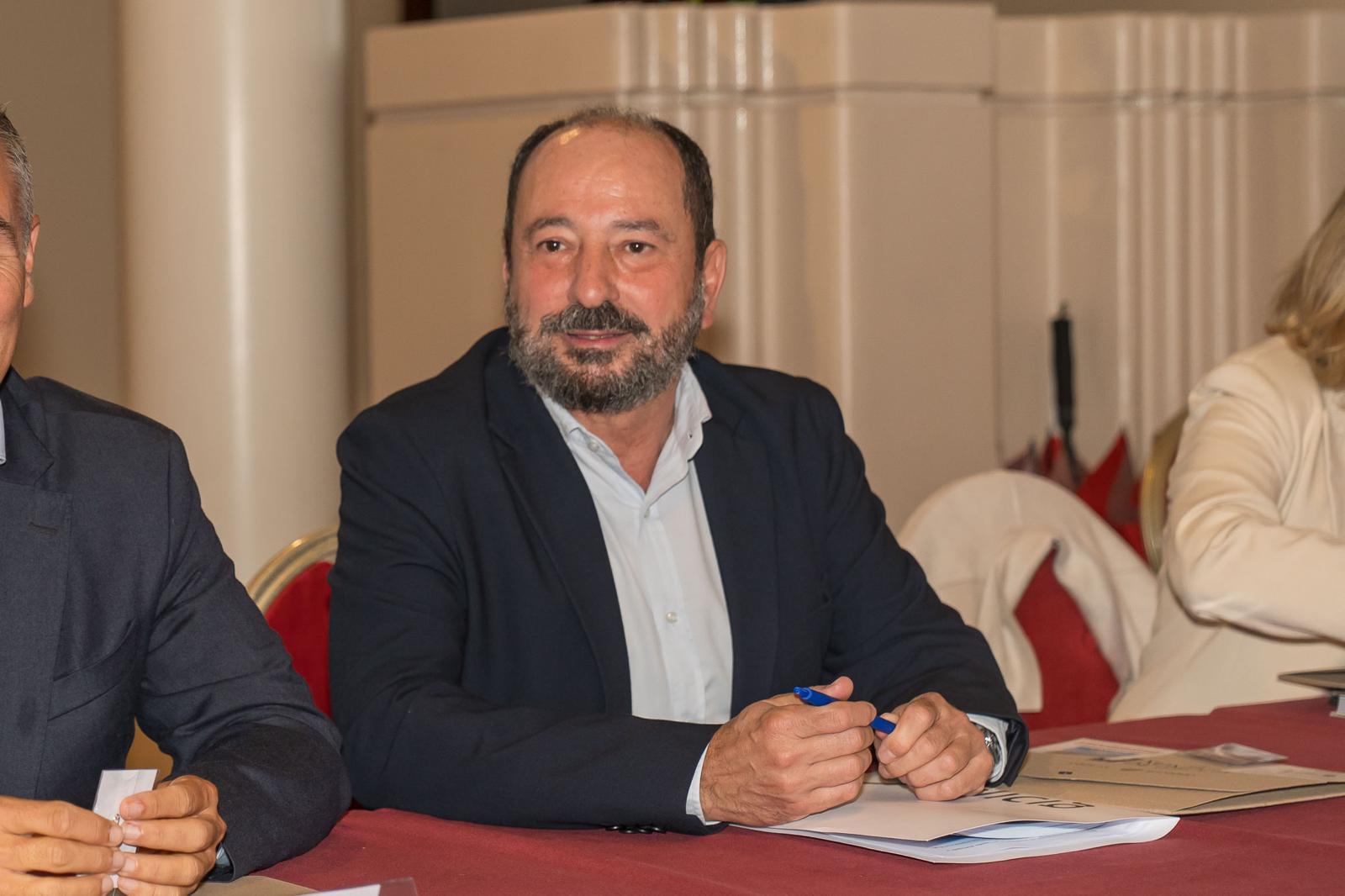
Xosé Manuel Merelles, director of Tourism, affirms that "we are working to consolidate this model, with initiatives underway for Xacobeo 2027; and also in the diversification of these trends, complementing them with other types of tourism that highlight the uniqueness of our land". Among the objectives of this autonomous community, which presented its latest innovations at FITUR 2026, is the internationalisation of demand.
What are the major challenges facing the Galician tourism industry in 2026?
In recent years, the commitment to sustainability has become an objective and a challenge in which, in addition, quality is our leitmotiv in everything we want to show our visitors. This, together with digital transformation, which integrates new technologies and improves the competitiveness of the industry; all of these aspects are included in the the Xunta de Galicia’s Tourism Strategy 2030, where sustainability is both a transversal parameter and one of its central missions, and digitalisation is presented as a tool to optimise tourist flows and move towards a more personalised offer.
At the same time, in Galicia we accept the challenge of organising Xacobeo 2027 with great enthusiasm. We already began preparations in previous years, improving and updating infrastructures and hostels on the different routes and other actions included in the Master Plan for the Caminos de Santiago 2022-2027. Work is currently intensifying, with the preparation of the cultural programme through the Xacobeo 2027 Sponsorship Master Plan with the call for sponsorship of high-impact events and other initiatives by SMEs and associations such as 'O teu Xacobeo'.
What impact does tourism activity have on Galicia's GDP and employment?
Tourism is one of the main contributors to Galicia’s Gross Domestic Product, with a contribution of more than 10%, and with a direct and indirect impact on industries such as hotel and catering, commerce, transport, culture, the primary sector and services. In terms of employment, the industry registered a total of 83,629 affiliations to the Social Security System in 2025, 1.5% more than in the previous year, which represents 7.7% of the total number of affiliations in Galicia.
These figures are partly thanks to the consolidation of Galicia as a sustainable and differential destination, with a quality offer. In 2025, 8.8 million tourists visited us, 7.3% more than in the previous year, and the number of nights exceeded 13.5 million, reaching an all time high. Hotel and guesthouse establishments earned more than 451 million euros, which represents an increase of 5.2% compared to 2024, and the profitability of the industry grew by 7%, one point above the state average of 6%, placing this indicator at the highest value recorded to date. All this leads us to affirm that Galicia is experiencing a good moment in terms of tourism and this has direct repercussions on the territory and the well-being of the Galician people.
What is the focus of tourism demand and what initiatives have you put in place to meet it?
Traditionally, tourism demand in Galicia has focused on the generation of unique and authentic experiences and the Camino de Santiago. At Turismo de Galicia we are working to consolidate this model, with initiatives underway for Xacobeo 2027; but also in the diversification of these trends, complementing them with other forms of tourism that highlight the uniqueness of our land.
This is the case, for example, with food and wine tourism; Galicia has a long-standing tradition in the field of cuisine and the production of wines and spirits, as evidenced by the 19 Michelin stars awarded to restaurants in the region and its 64 festivals of tourist interest related to gastronomy. The Xunta de Galicia is promoting initiatives in this regard with tools such as the Galician Territorial Plan for Sustainable Food and Wine Tourism, with a budget of 34.5 million euros.
Another of the land's great riches is its potential for thermal spa tourism: with seven of the eight main mineral-medicinal waters and more than 20 spas, Galicia is the main thermal power in Spain, accounting for 20% of the country's offer. To promote this modality, the Xunta has launched a Thermal Spa Tourism Plan 2025-2028 - with a budget of more than 10 million euros - and a Territorial Plan for Sustainable Tourism in Thermal Spa Villages and Historical Centres of Galicia, with an investment of 23.23 million euros.
What actions are being carried out to promote sustainability, diversification and deseasonalisation?
These are all essential aspects of Estratexia 2030, in which two key aspects are the deseasonalisation and territorial diversification of demand. Turismo de Galicia is designing proposals to distribute the flow of visitors throughout the year and beyond the region’s traditional destinations.
This is the case, for example, with the Galician Tourist Trains programme, organised with Renfe and the Instituto Orensano de Desarrollo Económico (Inorde), which highlights the region’s different resources. For example, the first of the season's routes was the Camellia in Bloom Route, which takes advantage of the flowering season of this plant so characteristic of Galicia with routes in March through historic manor houses and gardens in the region, outside the high season. Other destinations are related to food and wine tourism -Ribeira Sacra, Rías Baixas and Ribeiro and the Cheese Route; the architectural legacy -Route of the Monasteries or the Route of the Historic Pazos and Gardens of Galicia, or the natural heritage; -Route of the Mariñas.
Other initiatives in this line are the Spring Open Doors on the Galician Wine Routes, which is held in May in collaboration with the Associations of the Wine Routes of the five Galician Designations of Origin, or the Galicia Gastronomic Autumn, which promotes weekend stays with accommodation and catering and runs from mid-September to mid-December.
All these actions are bearing fruit: the months with the highest growth in tourist volume in 2025 were June (+6.7%), January (+4.3%), December (+4.2%) and May (+4%).
What digitalisation projects have you developed?
In terms of digitalisation, we have several projects underway, such as the sensorisation of the Camino de Santiago, which is allowing us to digitally extract information along the official pilgrimage routes beyond standard statistics. In addition, we are working on the Tourism Sustainability Observatory, which monitors the evolution of Galician destinations through a comprehensive statistical observation system and under which a new tourism data scorecard has been developed; or SIMADA, a data monitoring system, a free tool developed with the Tourism Cluster for accommodation companies. We understand that, nowadays, good data management and processing are the basis for the correct application of tools such as AI.
What other issues do you consider key for the Galician tourism industry?
One of the keys for Turismo de Galicia is the internationalisation of demand. In 2025, the international market accounted for nearly 30% of demand (+3.5% compared to 2024), and for the third year in a row it surpassed resident tourism in the region. In 2026 this trend continues, with the international market growing by 2.2%.
To boost this path of growth, we are implementing a rigorous promotion plan, which guarantees Galicia's presence at industry trade fairs and also includes various actions to familiarise visitors with our destination. For example, in the first half of the year alone, it has attended such important events as FITUR, the Better Tourism Lisbon Travel Market BTL 2026 in Lisbon, Internationale Tourismus-Börse (ITB Berlin), VELOBerlin, the Cycle Tourism Fair and FIO 2026, the International Ornithological Tourism Fair.
Other collaboration initiatives between neighbouring countries, focused on establishing synergies and boosting tourism in territories with similarities, deserve a special mention. This is the case of the ULTREIA SUDOE project for international cooperation between Spain, France and Portugal on the subject of Jacobean routes. Also of the initiatives launched in the Galicia-North Portugal Euroregion, such as the Visit Minho Plus project, which has an educational programme for tourism agents, as well as the cross-border accelerator of innovative, high impact, sustainable and quality tourism projects; or the creation of the Cross-Border Tourism Cluster are examples that the internationalisation of the market includes another line of action complementary to the promotional actions in other territories.