




Arantxa Hernández: Vías Verdes will be showing how to diversify Spain’s tourism offering at FITUR


“We want FITUR 2027 to be a platform where Vías Verdes can showcase its full potential as a means of diversifying Spain’s tourism offering and attracting visitors to new regions,”says Arantxa Hernández Colorado, manager of the Vías Verdes (Greenways) Programme at the Spanish Railways Foundation. For over 30 years, this foundation has been working in partnership with a wide range of public authorities, organisations and businesses to promote the restoration of disused railway lines as ‘Greenways’, making this heritage available to the public and contributing to sustainable mobility, active tourism and regional development.

How does Vías Verdes help to promote and improve tourism in Spain?
Tourism is one of Spain’s major economic and social drivers, but I believe that the current challenge is not simply to continue increasing visitor numbers or the economic impact of those visitors – which are almost the only figures usually quoted – but to grow more effectively and distribute the benefits of tourism more evenly across the country.
Spain has enormous potential to attract visitors, but we must move towards a model that allows us to spread tourist flows more evenly, both geographically and over time. And this is where inland destinations have a huge opportunity, with more than 3,600 kilometres of greenways spread across the length and breadth of the country.
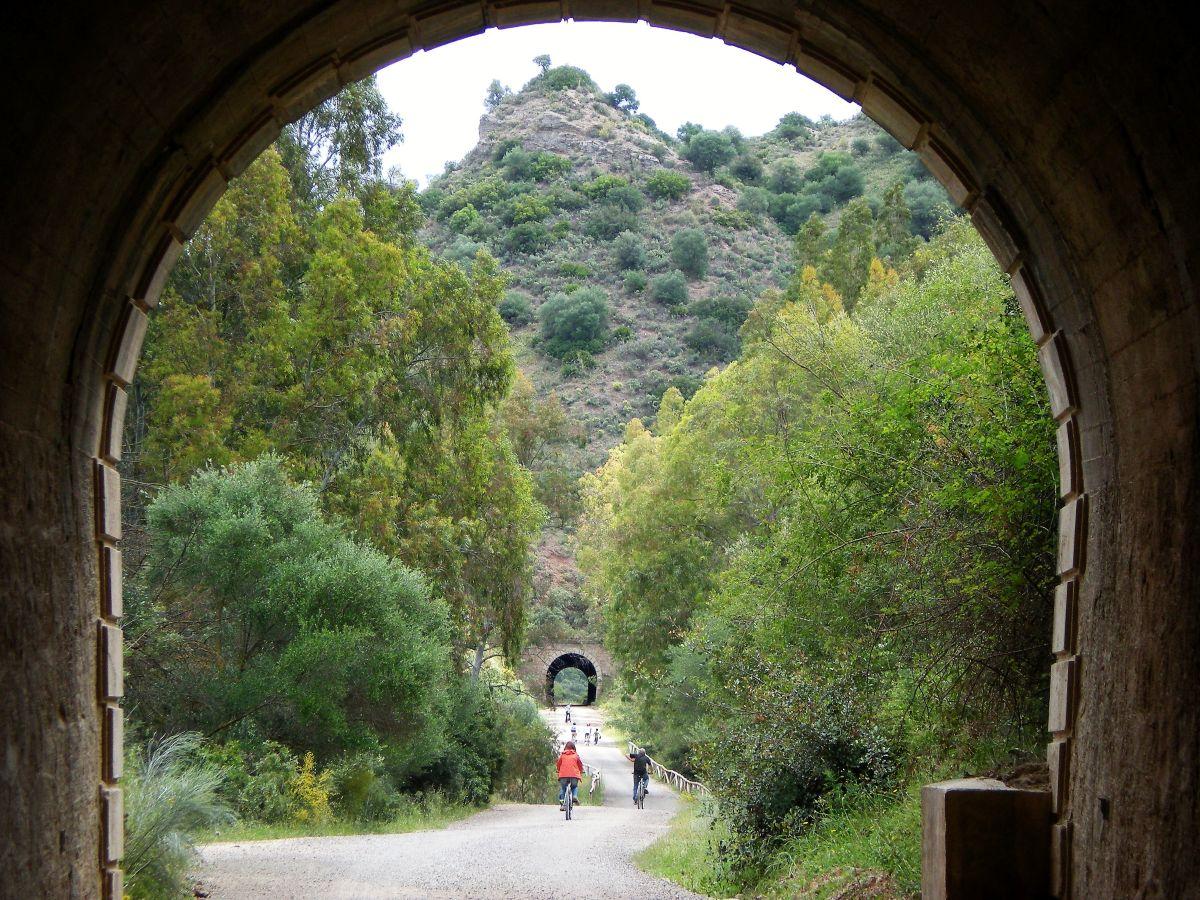
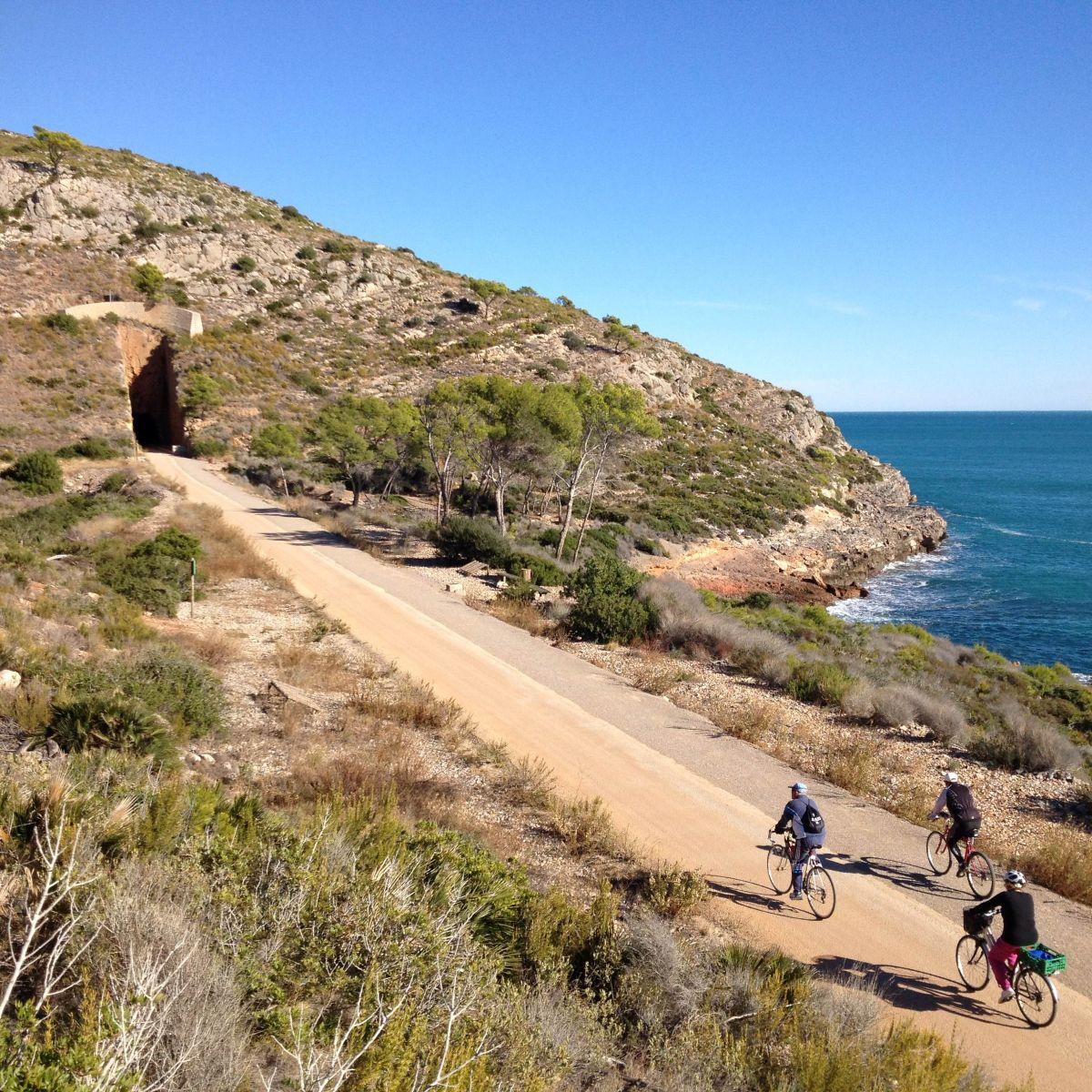
Greenways are a great resource. They are mainly located away from the major traditional tourist destinations and, in most cases, pass through small towns, districts and rural areas that boast an extraordinary natural, cultural and gastronomic heritage. They can therefore help tourism reach more places, ensure its impact lasts longer and generate economic activity in local communities.
Furthermore, we are talking about active, healthy and low-impact tourism, based on an existing infrastructure and the reuse of a railway heritage that forms part of our history.
In which areas of tourism does Vías Verdes operate, and what sort of projects does it carry out?
Here at Vías Verdes, we focus primarily on active and nature-based tourism, cycle tourism, walking, and accessible and sustainable tourism, but the Vías Verdes have a feature that makes them particularly interesting: they are simultaneously a tourist attraction, an infrastructure for non-motorised transport and a tool for regional development.
The Spanish Railways Foundation has been promoting and driving forward the Vías Verdes Programme since 1993. Over the course of over three decades, more than 3,600 kilometres of former railway lines have been converted into Vías Verdes, and there are currently 145 such routes in Spain.
Our work ranges from feasibility studies and technical projects for new Vías Verdes to the promotion and communication of existing ones, the development of new tourism products, cooperation with public authorities and businesses, and the promotion of accessibility and the connection of Vías Verdes with other tourism resources and sustainable transport networks.
This is a very important inter-institutional collaborative project in which ADIF, the Ministry of Agriculture, Fisheries and Food – through the ‘Caminos Naturales’ programme – the autonomous communities, local authorities and the business sector providing services along these routes all play a crucial role. It is the work and effort of many organisations that ensure these railway-derived resources contribute to society, through new tourist experiences, by offering a sustainable tourism option that is increasingly needed by our model of tourism development.
Trends in usage show that there is a growing demand. In 2025, approximately five million visits were recorded on the 36 Vías Verdes equipped with automatic counters(out of the 145 currently in operation); this data is also incorporated into Dataestur, Segittur’s tourism intelligence platform.
In your opinion, what are the major challenges currently facing the sector?
I would say we are facing four major challenges. The first is to spread tourist flows more widely. We need tourism to reach areas that still have great potential and which are not subject to the same levels of tourist pressure as the better-known destinations. The greenways can act as genuine corridors for tourism development between municipalities and inland regions.
The second is to create a tourism product, rather than simply having the infrastructure in place. A Greenway in its own right is a magnificent resource, but today’s visitors are looking for experiences: accommodation, gastronomy, heritage, nature, sporting activities, culture, service providers and opportunities for combined transport. In short, more businesses in the vicinity of the greenways. They are what I call ‘the living souls’ of the greenways.
The third is to move towards more sustainable tourism mobility. We need to make it easier for visitors to travel by public transport or train, continue their journey by bike or on foot, and use active transport options at their destination. The combination of train, cycle and the Vía Verde has enormous potential.
And the fourth is universal accessibility. We cannot talk about sustainable tourism without also talking about inclusive tourism. Due to their characteristics and the fact that they follow the route of a former railway line, Vías Verdes offer particularly favourable conditions for people with disabilities and varying accessibility needs to enjoy nature and the countryside. And this is very closely linked to improvements in the upkeep of the tracks.
What actions do you plan to carry out during the remainder of 2026?
2026 has been an important year for continuing to establish the Vías Verdes as a tourist attraction and as an infrastructure for active transport. We will continue to work with public authorities on the creation and extension of new Vías Verdes, through studies, projects and technical assistance, as well as promoting the improvement and enhancement of existing ones. We are also working on promoting the Vías Verdes product both nationally and internationally, in collaboration with Turespaña and other tourism stakeholders. In 2026, for example, there is a specific promotional programme targeting international markets such as Canada, Germany and Belgium.
And we will continue to carry out awareness-raising and promotional activities. One example is Día Nacional de las Vías Verdes (National Greenways Day), which in 2026 attracted more than 6,000 participants across nearly 40 activities held on 26 greenways in ten autonomous communities. The programme included sporting, environmental, cultural and culinary activities, as well as those specifically focused on accessibility and inclusion.
In 2026, we are planning to organise trips with tour operators to various Vías Verdes, to take part in events such as Pedal Spain alongside Renfe, and to launch the ‘Historic Roads’ website – a programme run by the Ministry of Transport on which we at the Foundation are actively working. Furthermore, we will continue – also in collaboration with MITMS – to issue calls for proposals for investment in cycling infrastructure, as well as for projects relating to destination promotion, digitalisation, etc.
What other issues relating to the tourism industry do you consider to be the most important?
Sustainability must be at the heart of this, but understood in a broad sense: environmental, economic, social and territorial sustainability. And digitalisation is essential for improving the visitor experience, making it easier to plan trips, providing georeferenced information and gaining a better understanding of how infrastructures are used. In this regard, we are making progress with tools such as the Spanish Greenways Observatory, which provides information on the use of these routes and helps to improve decision-making. Or the digitisation of 360-degree routes for platforms such as Google Maps Street View, or the constant updating of content in various languages via www.viasverdes.com, apps, social media, Wikiloc, podcasts and video channels.
However, the various formats for accessing information must coexist. There are many people who prefer to travel with a printed map rather than a GPS track. So we need to cater to all these different profiles in order to reach them all more effectively.
I also consider intermodal transport and rail links to tourist destinations to be essential. Tourism, both now and in the future, should not be considered solely from the perspective of the destination, but also in terms of how we get there and how we get around once we are there. There are around 700 stations on Spain’s rail network that are less than 10 kilometres from a greenway. This accounts for 47% of all railway stations. We need to make the most of this potential and focus more on the train-and-cycle or train-and-greenway combination. In this regard, Renfe is taking some very significant and decisive steps. These days, it is undoubtedly the most bike-friendly operator of them all.
And I would particularly emphasise universal accessibility. Tourism must be designed with everyone in mind from the outset, rather than as an afterthought. Vía Verdes offer an extraordinary opportunity here, as they are, in principle, very accessible spaces (very little slopes, broad paths, wide bends, infrastructures such as tunnels, viaducts and stations with facilities right next to the track, etc.). However, in order to establish themselves as truly inclusive spaces for leisure, sport, nature and mobility, it is essential that accessibility is guaranteed throughout the entire process. Not only must the route be well maintained and easy for everyone to use, but there must also be accessible toilets nearby, as well as accommodation and restaurants that anyone can access. There is still a great deal of work to be done, but there is also great potential, and many greenways that are already offering a pleasant experience.
How did your participation in the last edition of FITUR contribute to the development of Vías Verdes, and what are your expectations for FITUR 2027?
FITUR 2026 was a particularly important opportunity for Vías Verdes as it enabled us to strengthen our presence within the tourism industry and establish direct contact with public authorities, companies, destinations and professionals interested in developing new products. The Foundation took part in FITUR with a revamped stand, from which it promoted Vías Verdes projects and held meetings with managers, companies and other industry stakeholders. Furthermore, thanks to our collaboration with Impulsa Igualdad, we participated in FITUR4ALL at a round-table discussion specifically focused on positioning Spain as a destination for all – an area closely linked to our objectives.
Looking ahead to FITUR 2027, where we will also be moving to a better location in Hall 9, we hope to continue making progress in this direction: showcasing products and experiences; highlighting everything the FFE has to offer in terms of rail tourism (greenways, museums, tourist trains); and forge new partnerships. We want FITUR to be a platform where Greenways can showcase their full potential as a means of diversifying Spain’s tourism offering and attracting visitors to new areas, particularly rural and inland regions, and to introduce new ideas to the many people who have not yet tried them – such as cycling holidays or cycle tourism, or incorporating hiking into our visits to destinations, etc.
Are there any other points regarding Vías Verdes that you’d like to highlight?
I would like to highlight one point: Vías Verdes are not merely a tourist attraction; they are a means of revitalising our railway heritage and a valuable asset for regional development and transformation. They make it possible to revitalise disused railway infrastructure and transform it into public facilities that can be used for leisure, sport, everyday travel and tourism. What’s more, they can link towns and villages, landscapes, natural areas, cultural heritage and economic activities.
That is why they have enormous potential to address some of the major challenges currently facing Spanish tourism: spreading tourist flows more evenly, promoting inland destinations, generating local economic activity, encouraging sustainable mobility, and offering accessible, high-quality experiences.
In short, the aim is to move away from a model based solely on attracting visitors to specific destinations (usually urban and/or sun-and-beach destinations) towards one in which tourism also helps to underpin the region and improve the quality of life of those who live there. That is, in my view – and in the view of the wider community working on this – one of the greatest assets of Vías Verdes: transforming old railway infrastructures into green routes for the region and for the future.