




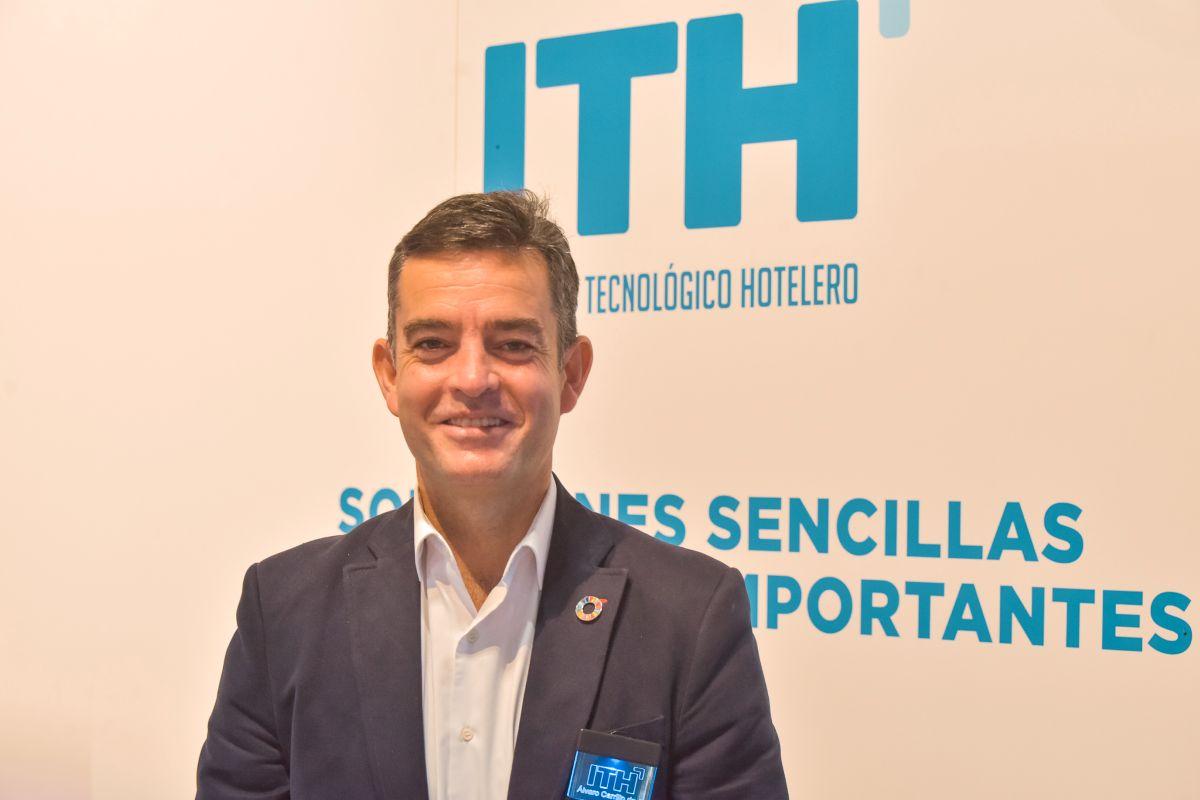
Álvaro Carrillo de Albornoz (ITH): At FITUR 2027, we will be addressing the real challenges facing hotels and destinations


For Instituto Tecnológico Hotelero (ITH), participating in FITUR and being a partner of FITUR TechY represents “a vital opportunity to put innovation at the service of the industry and to foster the exchange of knowledge between hotels, destinations, technology companies, public authorities and professionals”.
What new trends and preferences are emerging in the hotel sector?
Tourism is experiencing a profound transformation, driven both by technological advances and by changes in travellers’ expectations. One of the most significant trends is the establishment of artificial intelligence as a cross-functional tool for management, marketing, customer service and decision-making.
We are also seeing an increasingly strategic use of data. Hotels and destinations need access to reliable, up-to-date information that enables them to anticipate demand, optimise their resources, personalise the customer experience and improve their profitability.
Added to this is the advancement of automation and robotics applied to operational tasks, always with a view to technology complementing human work. Service personalisation, efficient resource management, direct sales and the pursuit of experiences that preserve the identity and human element of tourism are also becoming increasingly important.
In short, the sector is shifting from a phase focused on introducing new solutions towards one in which innovation is required to be useful, measurable and capable of meeting real needs.
What challenges is the sector facing?
One of the main challenges is to ensure that innovation effectively reaches the entire tourism industry, regardless of the size of the businesses or their level of digital maturity. It is not simply a matter of having the technology, but of knowing how to integrate it into our strategy and day-to-day operations.
We must also improve interoperability between systems and the quality, governance and security of data. Companies need to better integrate information from their various departments in order to gain a comprehensive view of the business and make decisions more swiftly.
Another key challenge is talent. The transformation of the industry requires new knowledge and skills, but also ongoing training so that professionals can make the most of technological tools and adapt to new ways of working.
Added to these factors are cost pressures, the need to improve energy efficiency, the responsible management of water and other resources, adaptation to climate change, and the search for a balance between tourism, residents’ quality of life and the conservation of destinations.
The major challenge will be to tackle all these areas together, recognising that competitiveness, sustainability, digitalisation and talent development are all part of the same strategy.
What are the direct applications of technology and digitalisation, and how should sustainability be addressed?
These are essential elements for ensuring the sector’s competitiveness and resilience. Technology and digitalisation enable us to gain a better understanding of travellers, automate processes, reduce repetitive tasks, improve marketing and manage establishments and destinations more efficiently.
However, digital transformation should not be seen as the final goal itself. Technology must serve specific objectives, deliver results and improve both the customer experience and the way teams work. Its value lies in its ability to solve problems, optimise resources and facilitate more informed decision-making.
Sustainability, for its part, can no longer be viewed solely as a matter of environmental responsibility. It also has a direct impact on operating costs, efficiency, financing, the value of assets and companies’ ability to adapt. Energy management, responsible water use, the circular economy and decarbonisation are strategic areas for hotels and destinations.
True transformation will take place when these elements are integrated: technology to measure and manage more effectively, digitalisation to connect processes, and sustainability to ensure the economic, social and environmental viability of the tourism industry.
How important is ITH’s participation in FITUR?
For ITH, taking part in FITUR and organising FITUR TechY, alongside FITUR, represents a key opportunity to put innovation at the service of the sector and to foster the exchange of knowledge between hotels, destinations, technology companies, public authorities and professionals.
FITUR TechY has established itself as a forum for analysing the present and future of tourism from four closely related perspectives: business, destinations, technology and sustainability. As well as identifying trends, our aim is to showcase real-life experiences, facilitate access to innovative solutions and spark discussions that help the sector make better decisions.
What are your expectations for FITUR 2027?
Looking ahead to FITUR 2027, we hope to continue moving towards a format that is increasingly practical, participatory and in tune with the real challenges faced by hotels and destinations. We want to explore how artificial intelligence, robotics, data, energy efficiency and new management models can lead to tangible improvements for businesses, professionals and travellers.
We hope that FITUR TechY will continue to serve as a forum for anticipating change, sharing knowledge and demonstrating that the tourism industry can move towards a model that is more competitive, sustainable and innovative, whilst remaining people-centred.