




José F. Adell: Grupo Julià combines tourist experiences and sustainable mobility


Grupo Julià plays a leading role as an integrated operator combining tourism experiences and sustainable mobility at national and international level, says its CEO.
"Our track record of more than 90 years has allowed us to evolve towards a diversified model, with different business segments and a presence in multiple destinations and international markets." The company, which took part in the last edition of FITUR, has in recent years "made a firm commitment to specialising in inbound tourism and becoming one of the world's leading tour bus operators".
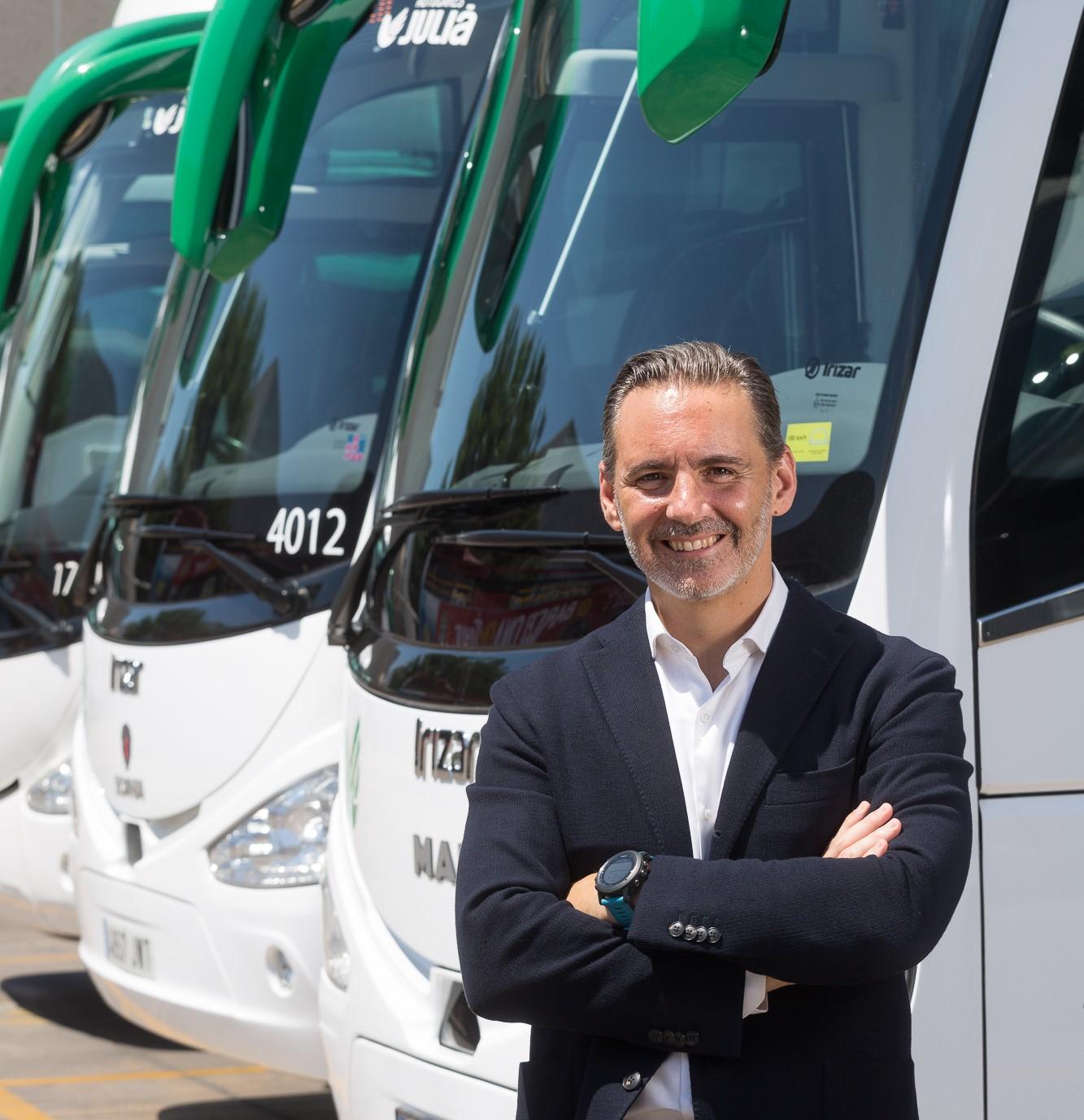
What major challenges does the tourism industry face in 2026 in the different business segments of Grupo Julià?
Grupo Julià groups together three major business segments: inbound tourism management (under the Julià Travel brand), the specific tourist bus activity (City Tour) and occasional passenger transport (Autocares Julià). In the first, the big challenge is the fundamental change from quantity to quality. Spain is one of the world's leading markets in terms of tourist numbers. We already have this competitive advantage. We must now continue to focus on progressively increasing the quality of our incoming tourism, highlighting the aspects sought by the most discerning customers with the greatest purchasing power: culture, tailor-made experiences, gastronomy, contact with the local environment, etc.
The second is undoubtedly the gradual electrification and decarbonisation of fleets; a very demanding step in terms of investment for operators, but one that makes a very positive contribution to improving the efficiency and sustainability of the cities in which we operate.
In the third case, in addition to further reducing our carbon footprint, the big challenge for this year is to manage the increase in operating costs and, especially, the rise in fuel prices as a result of international tensions, which forces companies to gain efficiency without the service deteriorating. The shortage of professionals, especially drivers, is another major challenge.
In this context, how would you define your company's role in the tourism industry?
Grupo Julià plays a leading role at national level as an integrated operator that combines tourist experiences and sustainable mobility. Our trajectory of more than 90 years has allowed us to evolve towards a diversified model, with different business segments and a presence in multiple destinations and international markets. In recent years, the company has made a firm commitment to specialising in inbound tourism and to becoming one of the world's leading tour bus operators.
For its part, Grupo Julià's team acts as a facilitator and promoter of tourist experiences, developing products - currently more than 150 excursions, circuits and leisure activities - that provide personal and value-added experiences, contributing to the economic revitalisation of the destinations where we operate and connecting visitors through efficient, safe and increasingly sustainable transport solutions.
What new projects or segments are you developing in 2026?
In 2026, at Julià Travel we are expanding our range of tourism experiences, especially in the premium segment with the ‘Small Groups’ brand, and in cultural and urban products, which are in growing demand from international travellers, who demand ever greater personalisation. We are also strengthening our presence on digital channels and platforms.
Another new development is the recent launch of Julià Events, a new brand specifically dedicated to the planning, promotion and management of MICE projects, with a cross-cutting approach. This new business unit was created with the goal of taking advantage of cross-selling opportunities between our different brands and divisions, and will allow us to offer more complete and higher value-added propositions to our corporate and business tourism customers. The group is also strengthening its offer of nautical activities and excursions, through the ‘This is Med’ brand.
In the tourist bus segment, we have just renewed the Barcelona and Madrid City Tour tenders, and have made a significant investment of over 46 million euros in the progressive electrification of their fleets and in the improvement and optimisation of both operations.
Finally, Autocares Julià has just extended its commercial agreement to support the cruise activity in Barcelona and continues to invest in the renewal of its fleet of more than 400 vehicles, which are increasingly demanding in terms of emissions reduction.
Along these lines, what role do innovation, technology and sustainability play in your products and projects?
Innovation, technology and sustainability are completely cross-cutting in the strategy and objectives of Grupo Julià's brands. In the area of technology and innovation, we are driving the digitalisation of our products and services, from operational management to customer relations, allowing us to gain in efficiency and improve the user experience. In this direction, in 2026, the migration to the SAP S/4HANA system and the incorporation of the Ventrata ticketing management platform will involve an initial investment of around 1.5 million euros.
In terms of sustainability, we are working to reduce environmental impact by progressively incorporating electric and low-emission vehicles, optimising routes and circuits, and improving energy efficiency. Furthermore, we are committed to a responsible tourism model, aligned with the needs of destinations, local communities and the different public administrations.