




The new cruise tourism trends in 2026


The Spanish-speaking cruiser is more expert and discerning in 2026, said Jesús García, editor-in-chief of cruceroadicto.com and coordinator of FITUR Cruises, at the last edition of FITUR.
“They know more options, as it’s not the first time they have made such a trip, and they compare more before booking.” Moreover, “they are more digital, they research online, read reviews and decide once they are informed”. On the other hand, “they are less afraid of the language, so they will try new cruise lines that they wouldn’t have gone with before”. Also, “they are sensitive to the real price, not just the base fare, but the final cost with extras; and book further in advance”.
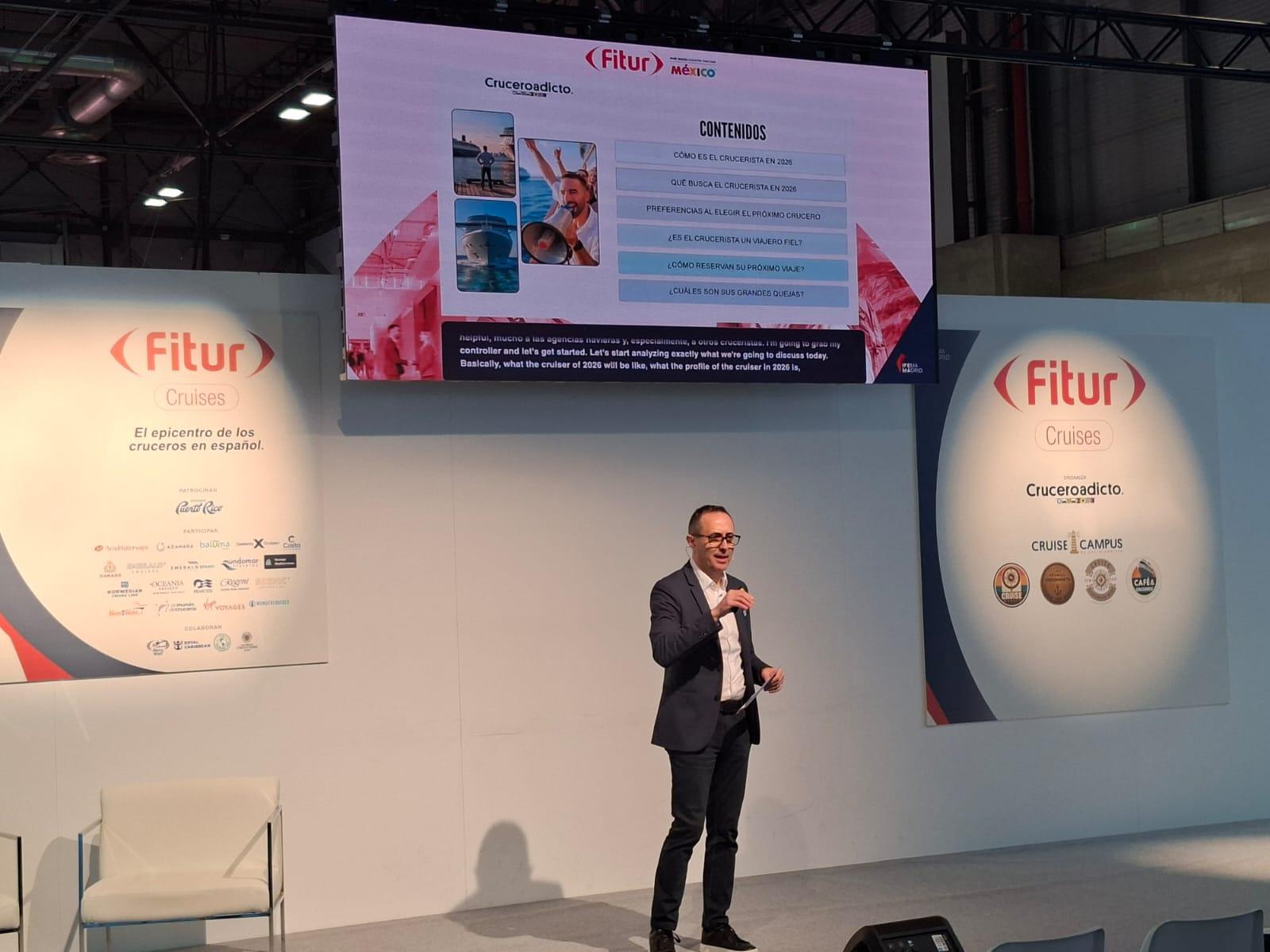
By 2026, more than 38 million passengers are expected to use this mode of travel worldwide. And among the trends detected, according to Jesús García, “the destination continues to lead (44% according to some studies) over the choice of ship; the customer doesn’t want any surprises and looks for real value (final cost of base price plus extras); medium/large ships (up to 3,500 passengers) are gaining ground over megaships (preferred by 41%); the passenger prefers a real all-inclusive deal, without surprises or small print; experiences in the destination are highly regarded, not only to sightsee but to spend more time in the port; and there is an increase in the preference for short cruises (3-5 nights) for new audiences; and in off-season trips, outside July and August”. On the other hand, there is the paradox that “aggressive pricing attracts, but then the real cost with extras frustrates”.
The FITUR Cruises coordinator also spoke about the behaviour of veteran cruisers, who “try new cruise lines as a reaction to the current quality standard; they overcome their fear of language by booking with companies from other markets; they look for differentiated experiences (coastal, premium, themed, etc.); they compare more because they are already familiar with the product and know what to expect; and they are more critical, detecting when quality declines”.
The motives of the cruiser
The five main reasons for cruisers to choose a cruise ship are as follows: “the itinerary and destinations (the destination outweighs the brand); the value for money (final cost with all the extras); the on-board service (attention, cleanliness and sufficient staff); the size of the ship; and a real all-inclusive deal without any hidden or surprise costs (drinks, tips, Wi-Fi charges...).”
On the other hand, passenger loyalty is shown more for cruising than for the cruise lines. “In the first case, 82% plan to come back on-board and the holiday format is a favourite. While the percentage of travellers loyal to a cruise line has fallen. In fact, 72% say they are loyal cruisers, but add that they may change cruise lines. For every cruiser loyal to a brand, there are three who would have no problem switching.” In this regard, “loyalty is to the destination and the experience, not to the brand. If the itinerary or price is better on another ship, the customer will change. Likewise, “points programmes retain loyalty, but are not decisive"; and, according to García, "an increase in the percentage of non-repeaters after a first or second cruise experience" is beginning to be detected”.