




Marián Cano: The Region of Valencia advances towards a model with greater added value


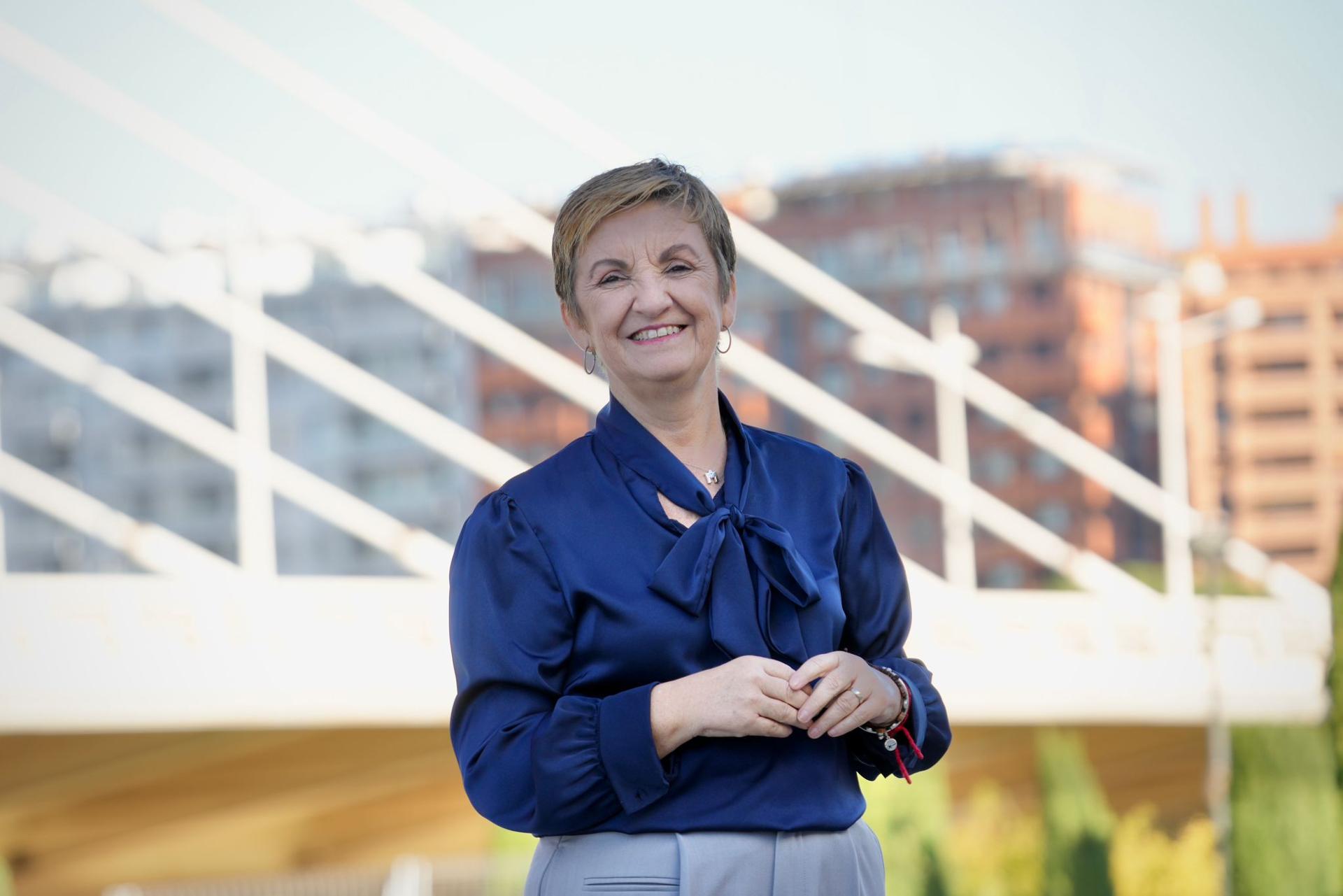
“The Region of Valencia must continue to move towards a model with greater added value, not only by increasing the number of visitors, but also by attracting tourists who value the quality, authenticity and sustainability of the tourism offer,” says Marián Cano, Regional Minister of Industry, Tourism, Innovation and Trade.
This autonomous region, as could be seen at FITUR 2026, has an increasingly diversified tourism model, where the traditional 'sun and beach' segment continues to be key, but coexists with other high added value products that are gaining prominence.
In your opinion, what is the biggest challenge for the tourism industry in 2026?
It is clear that the geopolitical situation is the big challenge we are facing this year. It is essential to convey a message of confidence and stability. The Region of Valencia is a safe and highly valued destination for the tourists who visit us, and it is time to highlight this. We are the Safe Mediterranean and can capture some of the demand that avoids destinations in the eastern Mediterranean and the Gulf.
This said, uncertainty and rising costs may affect and reduce demand volumes, especially in price-sensitive markets. We will be monitoring the pace of bookings and also on airline capacity and the reaction of airlines to their rising costs. But, for the time being, our forecasts are positive. Easter did not suffer and hotel occupancy remained steady, between 75% and 80%.
What other challenges will the industry face?
Apart from the international situation, the industry faces a fundamental structural challenge: the transition to a socially, economically and environmentally sustainable tourism model. After more than 40 years of tourism success, it is essential to evolve from a model focused primarily on promotion to a model based on management, tourism intelligence and shared governance. Tourism can no longer be managed on its own, but in a cross-cutting manner. It requires us to work together: administrations, businesses and citizens, sharing responsibilities, information and goals. We have challenges to face together: the redistribution of flows, the use of resources and the need for qualified professionals.
With this model of co-governance, the Region of Valencia is moving towards sustainable, quality tourism. We are the first autonomous region to have a Tourism Sustainability Strategy certified by AENOR. We have a pioneering network of Smart Tourist Destinations, with more than 100 municipalities, which is an international benchmark. In short, we work for tourism that adds up, that makes our territory the best destination to live in and, therefore, the best destination to visit.
What impact does tourism have on economic development and GDP in the Region of Valencia?
The Region of Valencia receives 30 million tourists every year. But beyond the volume, spending by tourists visiting us is setting record figures. We exceeded the 16 billion euro mark in international tourism expenditure in 2025. Tourism is clearly the driver of our economy. It already accounts for 19% of GDP, employs more than 380,000 people and drives especially youth employment, which grew by 4.5% in this industry in 2025. Moreover, month after month, tourism in the Region of Valencia is the one that generates the most employment of all the autonomous regions. In February, tourism employment in our region grew by 3.8%, the highest increase recorded in Spain. This was already the case in January, with a growth of 4.1%, and in December, with 3.4%.
The Valencian tourism industry is experiencing exceptional dynamism and businesses continue to thrive. In 2024 hotel beds grew by 3.2% and, as I said, they continue to create jobs even outside the high season. Economically, socially and environmentally sustainable growth, audited and endorsed with certifications: nearly 400 Q for Quality and S for Sustainability certifications in 2025 alone. These data confirm that tourism in the Region of Valencia makes a decisive contribution to economic growth and is a competitive and sustainable industry.
How does the 'sun and beach' sector coexist with other tourism products?
In the Region of Valencia we have an increasingly diversified tourism model, where the traditional 'sun and beach' segment continues to be key, but coexists with other high added value products that are gaining prominence. The most important segments include cultural and heritage tourism, gastronomy tourism, nature and active tourism, sports tourism, MICE (congresses and events), as well as health tourism and senior tourism. All of these contribute to attracting a more sustainable visitor, with greater spending power and an interest in authentic experiences linked to the territory.
In 2026 we are strengthening these segments through programmes such as Creaturisme, which already involves more than 1,100 companies and allows us to structure an experiential offer in areas such as culture, gastronomy and nature. We also promote specific tourism products such as wine tourism, agrotourism and gastronomy tourism through the L'Exquisit Mediterrani network.
In addition, we are working on promotion in international markets with greater added value and on the development of new experiences in inland destinations, thus favouring a better territorial distribution of tourism. The aim is to shift towards a more diversified, competitive model that is less dependent on seasonality.
What are the strengths of the tourism strategy being implemented by the Region of Valencia?
The Region of Valencia is developing a comprehensive strategy based on sustainability, innovation and diversification as the pillars of the tourism model. In terms of sustainability, we have gone one step further in 2026 by consolidating a tourism model based on measurement, planning and continuous improvement. As I mentioned, we have a Tourism Sustainability Strategy certified by AENOR, which we have renewed and expanded, incorporating new lines of action adapted to the current context. This strategy is deployed through numerous programmes addressing key areas such as carbon footprint reduction, energy efficiency, responsible water management, the circular economy and the protection of the natural environment.
In addition, we are making progress in the implementation of measurement systems that allow us to assess the real impact of tourism from an environmental, social and economic perspective, which enables us to make more effective decisions aligned with international standards. Social sustainability is also a priority, with initiatives aimed at improving coexistence between residents and visitors, reinforcing local identity and ensuring a balanced distribution of the benefits of tourism throughout the territory. At the same time, we continue to promote the certification of sustainable tourism destinations and businesses and the adoption of best practices in the industry.
In the technological field, we are committed to the digital transformation of the industry through tools such as Smart Tourism, which allows destinations to be managed more efficiently through data analysis and artificial intelligence. We are also strengthening training in digital skills and support the innovative tourism ecosystem through Invat-tur.
In order to make progress in diversification and deseasonalisation, we are developing programmes such as the one I mentioned earlier, Creaturisme, whose aim is to differentiate the Valencian offer and encourage the creation of structured, marketable products with greater added value and, in particular, segments such as inland, gastronomic, cultural, sports and events tourism, which allow us to maintain tourist activity throughout the year and better distribute visitor flows.
In short, we are evolving towards a smarter, more sustainable and diversified tourism model, which not only seeks to grow in volume, but also to generate greater economic, social and territorial value for the Region of Valencia.
What is the roadmap for the coming years?
As I said at the beginning, we must continue to move towards a higher value-added model. Our aim is not only to increase our number of visitors, but also to attract tourists who value quality, authenticity and sustainability. This implies a commitment to service excellence, professionalisation of the industry and ongoing training of workers, which are fundamental to maintaining competitiveness.
Tourism co-governance is essential, as I said. We are strengthening public-private collaboration and coordination between administrations to achieve more efficient management, aligned with the real needs of destinations and the business community, and to be more agile by adapting to changes in demand, which is increasingly more digital, more discerning and more aware of the impact of their trips.
We want to continue positioning the Region of Valencia as an open, hospitable and safe destination, capable of offering unique experiences all year round. A destination that is not only attractive to those who visit us, but also to those who live there, because tourism must be an engine of shared prosperity.