



Márcio de Jesus Lopes Daniel: En FITUR 2027 mostraremos una Angola más madura como destino turístico


“FITUR 2027 will be an opportunity to showcase a more mature Angola as a tourist destination, with a wider range of products, more partnerships and a stronger international narrative,” says the Minister of Tourism of Angola.
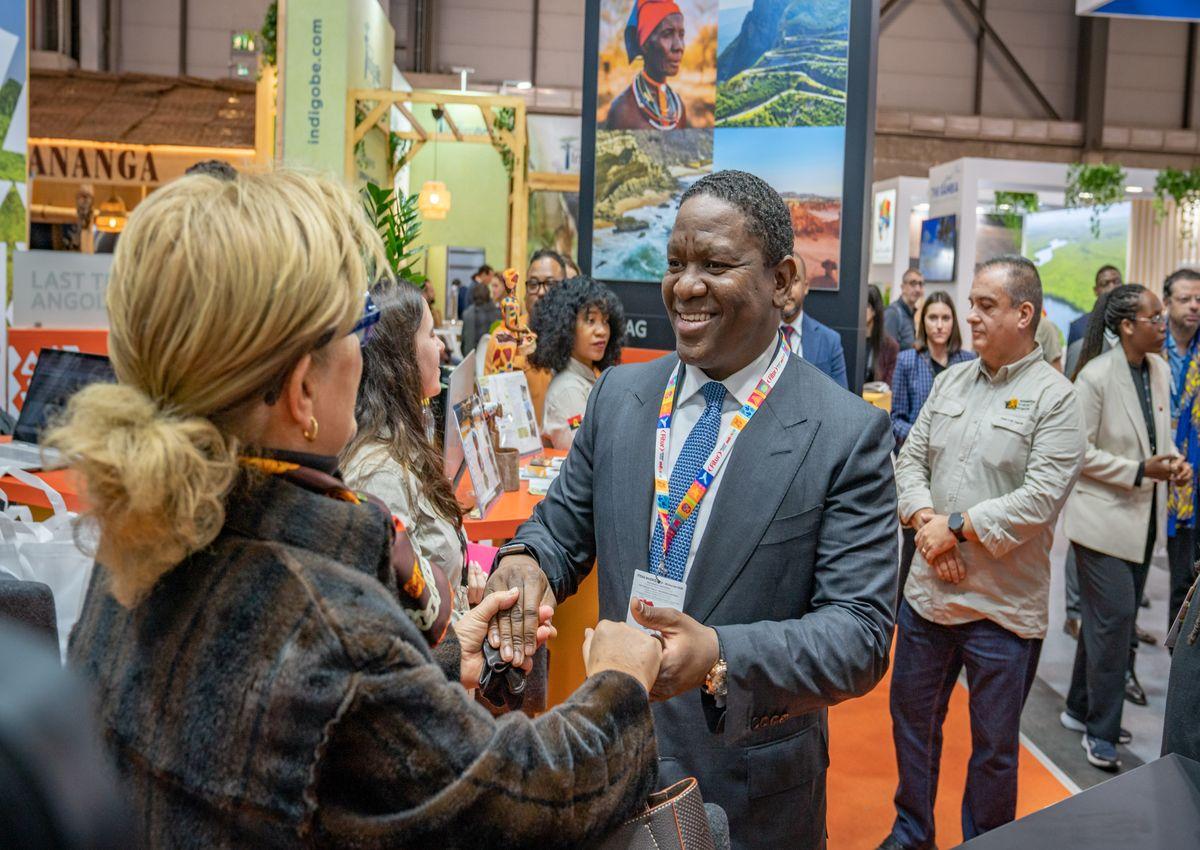
“Our aim is clear: for Angola to continue to gain visibility and establish itself as one of the most attractive emerging destinations on the African continent.” According to Lopes, Angola’s stand at the next FITUR will be “a real meeting place, where industry professionals, the media and the general public will be able to experience the country in an immersive way”.
What tourist attractions is Angola promoting as an emerging destination?
Angola presents itself to the world as an emerging, authentic and as yet largely unexplored destination, offering a tourism diversity that is hard to find in any single country. Our main attraction is, in fact, that very combination of unspoilt nature, vibrant culture, stunning landscapes, cities each with their own character, and a tremendous sense of discovery.
It is a country of contrasts: Luanda, a modern, cosmopolitan capital where music, gastronomy and hospitality define the Angolan way of life; over 1,600 kilometres of Atlantic coastline; stunning natural landscapes; colonial architecture; communities with ancient traditions; and a cultural identity deeply shaped by rhythm, history and diversity.
This positioning is also starting to attract international recognition. Angola has been named ‘Best International Destination’ at the 2026 National Geographic Travel Readers’ Choice Awards and has also been nominated in the Dream Destination category at the ELLE Travel Awards, two milestones that confirm the growing interest in the country amongst travellers, the media and international influencers.
Our aim is for Angola to be recognised as one of Africa’s major emerging destinations: a place for curious travellers, for those seeking authenticity, and for those who want to discover a country before it becomes the next big thing.
What does the country have to offer in terms of its natural beauty and cultural heritage?
Angola has extraordinary potential in terms of its natural environment and ethnography. It’s a country with a wide variety of landscapes, ranging from waterfalls and mountains to deserts, rainforests, savannahs, unspoilt beaches and large rivers. In Malanje, for example, you can find the majestic Kalandula Falls, the second largest in Africa, and the legendary Black Rocks at Pungo Andongo. In Namibe, the desert meets the Atlantic, and the ancient Welwitschia mirabilis flourishes, a plant that’s native to the Namib Desert and a symbol of resilience and eternal life. In Huíla, the Serra da Leba offers some of the country’s most iconic mountain landscapes and scenic routes.
Benguela and Lobito, with their Portuguese colonial architecture, golden beaches and a vibrant cultural life; the provinces of Cuando and Cubango, the source of the Okavango River, home to untamed wilderness and communities that preserve ancestral traditions; and Cabinda, with its tropical rainforest and biodiversity that’s unique on the continent.
And when it comes to cultural wealth, Angola has a huge advantage. More than 100 ethnic groups coexist in the country, many of which have kept their traditions alive, forms of organisation, artistic expressions and ways of life, passed down through the generations. For us, ethnography is one of the destination’s greatest assets, always approached in a respectful and responsible manner.
What is truly authentic is not just observing, but being able to get to know communities such as the Ngendelengos, the Himba and the Mucubal, and spending time with them, understanding their relationship with the land, their rituals, their handicrafts, their music, their celebrations and their way of understanding life. That human connection is one of the most profound experiences Angola has to offer.
What other experiences does the country offer to those wishing to discover a destination that is still relatively unexplored?
The thrill of discovering a country that still retains a great deal of its authentic character. It’s a destination for travellers who are not looking to retrace familiar routes or opt for packaged experiences, but rather to enjoy new experiences with a strong human, cultural and scenic element. Angola offers the genuine thrill of discovery. It is a destination for travellers seeking experiences such as exploring local markets, sampling cuisine shaped by the coast and African and Portuguese influences, sharing music and dance with the locals (kizomba, semba and kuduro), sleeping under the stars or exploring virtually unspoilt landscapes.
One of the best examples of that remote part of Angola is Ilha dos Tigres, in the south of the country, where the desert and the Atlantic meet. An old settlement abandoned after the Portuguese colonial period; today it can only be visited when the tide allows, which makes getting there part of the adventure. Camping amongst its ruins, surrounded by sand, silence and the ocean, captures the very essence of Angola: a vast, unexpected and deeply authentic destination.
Added to this is an urban and contemporary Angola, particularly in Luanda, with its music, cuisine, nightlife, markets and hospitality.
Our task now is to organise all these experiences and turn them into a high-quality tourism product, in collaboration with tour operators, inbound agencies and international partners. We want Angola to retain its authentic character, whilst becoming increasingly accessible, professional and well-prepared to welcome international travellers.
Which tourism segments does the country plan to promote, and what tools will it use to do so?
In addition to sectors with enormous potential for Angola, such as nature, adventure, culture, ethnography and coastal tourism, one of the areas we are prioritising is corporate, meetings and incentives tourism.
The current situation supports this approach. According to figures from UNWTO, Angola welcomed 223,140 international tourists in 2025, representing a 28% increase on the previous year and confirming the country’s dynamism in this new phase of tourism development. Within this trend, business travellers are playing a particularly significant role: the number of business visitors from Europe reached 59,750 in 2025, compared with 45,757 the previous year.
Added to this is the positive performance of the hotel sector, with an average occupancy rate of 72.6% in 2024 and a total of more than 1,428 accommodation establishments. These indicators show that Angola has moved beyond the post-Covid recovery phase and is now entering a phase of growth, structural development and international positioning.
Against this backdrop, last May we presented our MICE strategy under the slogan “The meeting room in Africa”, alongside the launch of the Angola Convention Bureau, an organisation set up to act as the linchpin between the destination, the Angolan business community and the international events industry.
The Angola Convention Bureau was established with the aim of attracting international conferences, incentive trips, corporate events, investment forums and major professional meetings. Its operations will be coordinated from the Kleber Group’s new office in Luanda, our representative agency in five markets and the firm responsible for setting up and managing the organisation.
Furthermore, we are making progress on strategic partnerships with key industry players, including ICCA, of which Angola is a Destination Partner. This agreement is exclusive to the African continent and enables us to strengthen the country’s presence in the main international MICE industry networks, positioning Angola as a competitive destination for attracting conferences, corporate meetings and high value-added events.
Another key milestone will be the opening of the new Luanda Convention Centre after the summer, which can accommodate 3,000 attendees. This venue will mark a turning point for Angola’s competitiveness as a destination for meetings, conferences and major events.
The Convention Centre will form part of a much wider development project in the Chicala area, which will include hotels, residential properties, offices, schools, lifestyle areas and new cultural and tourist facilities. In a second phase, scheduled to begin in 2027, this development will also include infrastructures linked to cruise tourism, another sector we wish to promote in the coming years and for which we are currently developing a specific strategy.
Our vision is clear: we want Angola to be recognised not only as a destination for nature and culture, but also as a new African hub for business, international events, investment and unforgettable experiences.
What other issues are key to the development of the tourism industry in Angola?
For us, tourism is a key tool for Angola’s economic diversification. Our country has historically been closely linked to natural resources, but we firmly believe that tourism can usher in a new era of growth, job creation and opportunities for the local population.
But tourism is also a matter of national pride. It is a way of showing the world who we are: our culture, our traditions, our history, our music, our cuisine, our hospitality and our way of life. That is why we want Angola’s tourism industry to develop in a sustainable manner, involving local communities and having a positive impact on the region.
One of the areas we are focusing on most intensively is the professionalisation of the industry. If we want to compete at an international level, we need the entire value chain to be ready to meet the standards demanded by today’s travellers. With this in mind, we are promoting the development of local agencies, inbound operators and other key players, so that they can offer high-quality experiences to international operators and the end traveller.
The idea is clear: to invest now in developing the destination in order to attract more visitors in the future, generate more business for the industry and strengthen Angola’s position in international markets.
Another key pillar is the improvement of infrastructures and connectivity. Angola is making significant investments in roads, energy and communications, with the aim of improving access to the country, facilitating investment and enabling travellers to explore the country in a more comfortable and organised manner.
Air connectivity is equally a priority. We currently have simple connections via Portugal, but we are aware that re-establishing a direct connection with Spain would have a very positive impact on demand and on tourism links between the two countries. We are also working on internal connectivity, because Angola is a vast country and we need to make it easier to travel within the destination so that we can develop tourism products in different regions.
In this regard, the opening of the new Dr António Agostinho Neto International Airport represents a very important step in supporting the country’s growth and strengthening its role as a gateway to Southern Africa. Added to this is the improvement in entry requirements, including visa exemptions for numerous international markets, a measure that makes it easier for travellers to visit and enhances Angola’s competitiveness as a destination.
Finally, we consider digitalisation, international promotion and the development of tourism products to be essential. We are working in key markets such as Spain, the United Kingdom, Germany, Austria, Switzerland, Poland and South Africa, combining communication initiatives, public relations, trade marketing, familiarisation trips, collaboration with tour operators and a presence at international trade fairs.
Angola has all the ingredients to become one of Africa’s leading destinations: nature, culture, authenticity, hospitality, investment and a clear desire to open up to the world. Our challenge now is to harness that potential, turn it into a tourist attraction and develop it responsibly, sustainably and with a long-term vision.
How did Angola’s participation in the last edition of FITUR contribute to the country’s tourism development, and what are your expectations for FITUR 2027?
Angola’s participation in FITUR 2026 marked a very important milestone for us, as it was our first time exhibiting with our own stand at the trade fair. Up until then, we had been attending to gauge FITUR’s potential, but 2026 marked our official launch on the Spanish market.
Furthermore, it coincided with the launch of our promotional strategy in Spain, which we began in September 2025. That is why FITUR was our major showcase for entering this market. The response was very positive: we held more than 35 meetings with the tourism industry, including airlines, tour operators, travel agencies and other strategic partners.
The destination was very well received, both by specialists in African travel who were already marketing Angola, and by major Spanish tour operators, who showed a clear intention to start promoting the destination. The trade fair gave rise to numerous synergies and opportunities, including our first familiarisation trip with Spanish tour operators.
From the perspective of the media and influencers, FITUR 2026 was also key to putting Angola on the map. Some very significant opportunities arose, such as the collaboration with Daniel Illescas, who travelled to Angola and helped bring the destination into the digital conversation, making it accessible to thousands of travellers.
Looking ahead to FITUR 2027, we expect to attend with a more established tourism product, with more specific proposals and an product offer that is better prepared for marketing. We want the meetings to serve not only to showcase our destination, but also to make progress on agreements and real business opportunities.
In this regard, how are you preparing to participate in FITUR 2027?
We are preparing a more ambitious exhibition programme for FITUR 2027. We can reveal that Angola will have a larger stand, measuring approximately 150 square metres, located in the central aisle of Hall 6, the hall dedicated to Africa.
We want our stand to be much more than just a meeting space. We aim to create a genuine meeting place where professionals, the media and the general public can experience Angola in an immersive way. We are working on experiences linked to our culture, our music, our identity and our hospitality, so that those who visit us can feel, even if only for a few minutes, the rhythm of our country.
FITUR 2027 will be an opportunity to showcase a more mature Angola as a tourist destination, with a wider product range, more partnerships and a stronger international narrative. We will be revealing further details shortly, but our aim is clear: for Angola to continue to gain visibility and establish itself as one of the most attractive emerging destinations on the African continent.