



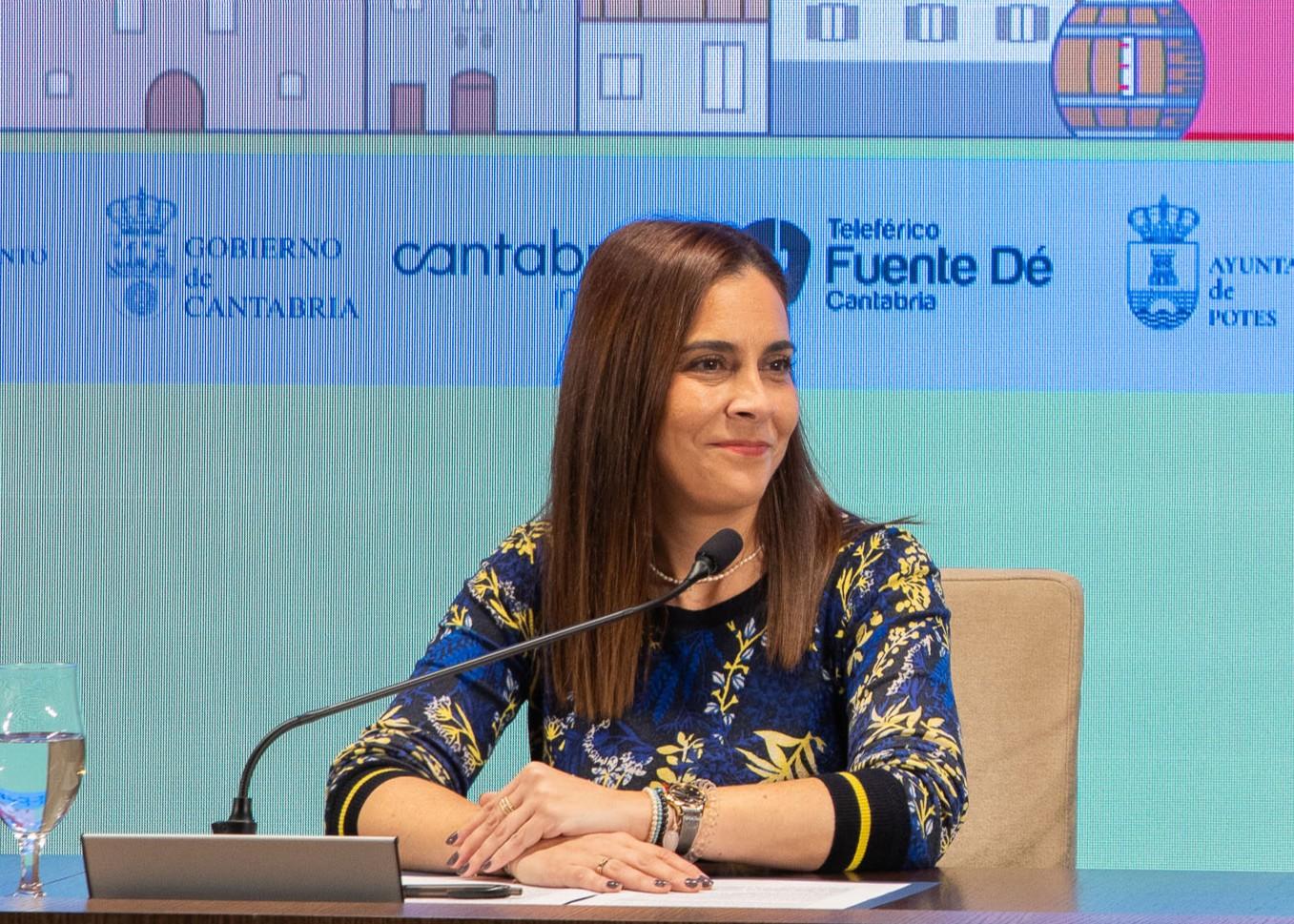
María Saiz: We want to promote the image of Cantabria as a year-round destination at FITUR


Tourism is a major driving force for the Cantabrian economy. It represents 12.2% of the GDP, has an economic impact of 2.16 billion euros and generates around 33,000 jobs, according to María Saiz Villar, Director General of Tourism and Hospitality of the Government of Cantabria.
"At FITUR 2026 we will be providing a space for the industry, there will be presentations and tastings, and the trade fair will become a strategic meeting point. We want to promote the image of our community as a year-round destination, we are a welcoming territory with options adapted to every season".
What does tourism represent for Cantabria’s economy?
Tourism is a major economic driver, representing 12.2% of the autonomous community of Cantabria’s GDP, with an economic impact of 2.16 billion euros and the generation of nearly 33,000 jobs. Tourism is Cantabria’s great economic booster and, moreover, being a small region, it has a very cross-cutting and multiplying effect, as it generates wealth far beyond the tourist companies and contributes to the development of other industries.
Cantabria Infinita is our motto and it is not by chance, as this is precisely our main attraction. We are a small autonomous community, but infinite in resources, our offer is very varied and full of contrasts with options to suit all tastes. A beach-lined coast merges with the nine valleys that make up the inland territory, each with its own particularities at all levels -natural, cultural, gastronomic- and crowned by the Picos de Europa National Park. We can also boast of our first UNESCO Global Geopark, the Costa Quebrada, the Camino Lebaniego, the Camino de Santiago del Norte (Northern Way) and also our underground World Heritage Site, with ten caves with Paleolithic Cave Art recognised by UNESCO.
In addition to all these attractions, what other market segments or niches do you plan to develop in 2026?
This amalgamation is a perfect fit for any traveller, but in our quest for constant improvement, 2026 will be the year in which we will be enhancing culture more than ever before. We already have the Botín Centre in Santander and just in front of it the construction of Faro Santander (Santander Lighthouse), a project by Banco Santander in what was, and always will be, its first headquarters, which will house its collection of works of art, is being completed. Also nearby, forming a first-class cultural triangle in the Bay of Santander, the first associated centre of the Reina Sofia Museum outside of Madrid will be completed in 2026. The former Banco de España building is to house the Lafuente Archive, one of the most complete collections of modern and contemporary art in existence.
What are the latest tourist data you can provide us with?
Cantabria broke all tourism records in 2024, exceeding 2.1 million travellers and 6 million overnight stays. This increase in data was largely driven by international tourism and by all those who visited outside the high season. And we will be closing 2025 with similar data. However, we are not looking for a horizon of tourism records, that’s not our goal. We want to continue to improve as a destination, to seek quality, not quantity. We want travellers who are willing to spend more, to visit all year round, and we always want to guarantee a balance between visitors and the well-being of the citizens of Cantabria.
Along these lines, what tourism model are you working on?
We want to be a year-round destination and promote all the virtues of Cantabria beyond its iconic attractions. In short, we want to deseasonalise and decentralise. Cantabria has a lot to offer, there are options for every season and every moment has its charm. We follow a model committed to innovation, excellence and sustainability and we are working in that direction, optimising resources and also creating new products.
What is your commitment to sustainability and deseasonalisation?
Cantabria has 18 Tourism Sustainability Plans in place, some completed and others under development, and one Destination Cohesion Action. This represents an injection of a total of 59.4 million, which translates into more than 500 actions being carried out across 46 municipalities. The Directorate General that I lead has been assisting our territories to make the most of these funds financed by the Next Generation and also by the local councils and the Regional Ministry of Tourism. These plans always involve the development of actions aimed at creating and improving tourism products and services that enhance sustainability and reduce seasonality, thus improving the comfort of the traveller and the well-being of citizens.
Another of the key areas that we promote is public-private collaboration and from this commitment to the tourism business fabric of the autonomous community, we launch calls for funding aimed at the sustainability and improvement of the quality of their businesses. This October, for example, we closed the distribution of a historic allocation of subsidies. We have granted 59 tourism companies a total of 4.5 million for the development of energy efficiency and circular economy projects that contribute to energy and consumption savings in Cantabrian establishments.
We have also been working for years to strengthen Cantabria’s standing as a MICE destination. We are a welcoming territory, Santander has impressive venues such as the Palacio de la Magdalena and the Botín Centre, but the rest of Cantabria also boasts a whole host unique places such as the Comillas Pontifical University. In addition to these already special venues, there is a range of options for converting an event into a unique experience. For example, in Cantabria, meetings can be combined with a surfing lesson, a visit to a cannery or even networking sessions in the cable cars at the Cabárceno Nature Park.
We offer more modest experiences, compared to larger cities like Barcelona, but we believe that these are the ones that leave their mark. We believe this and so do the organisers of the more than 200 congresses held in Santander in 2024, with an increase in profits generated of 66% over the previous year. MICE tourism has established itself as a strategic asset in the city, not only as a means to deseasonalise, but also to promote the strengths of our land. Cantabria always leaves you wanting more. We want you to continue to choose us as a location for events and also we’d like to entice you to leave Santander and explore all that the region has to offer in terms of organising events.
How important is your participation at FITUR 2026?
If there is one essential showcase for Cantabria, it’s FITUR. We take our participation in this trade fair, the most important in the industry, very seriously, and proof of this is that in the last three years we have won the prize for the best stand of the autonomous communities twice. A recognition of the work of Cantur, the public company in charge of promoting Cantabria as a tourist destination, and also an incentive to continue improving.
Can you give us a preview of what you will be promoting at the Trade Fair?
At FITUR we will be providing a space for the industry; there will be presentations and tastings, and the trade fair will become a strategic meeting point for everyone involved. This year we want to promote the image of Cantabria as a year-round destination, we’re a welcoming territory with options adapted to every season. Spring is ideal for enjoying the long days, the sunsets and the blooming of nature; summer is the time for the 90 beaches that make up the coastline; autumn is perfect for hiking, and winter is synonymous with skiing and the delicious cocido montañés or cocido lebaniego (traditional stews). In short, Cantabria is infinite 365 days a year.