




FITUR Woman calls for female talent to be recognized in tourism decision-making


Participants in the forum, organized by FITUR together with Women Leading Tourism, say that for tourism growth to be sustainable and competitive, it must also be inclusive.
One in three new jobs created worldwide in the coming years will be linked to tourism, a sector in which women make up 54% of the workforce.
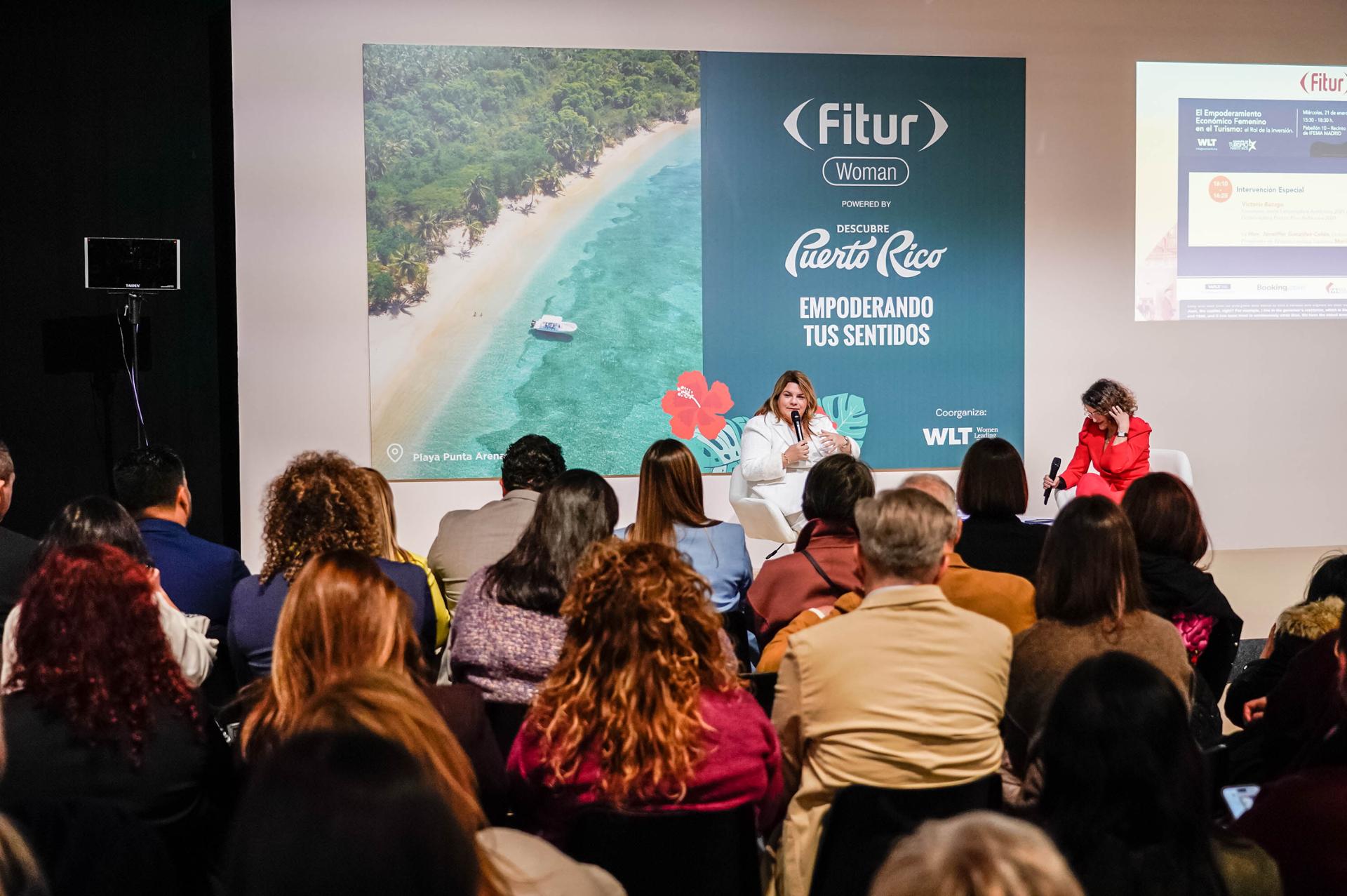
The fifth edition of FITUR Woman has highlighted the importance of diversity and female talent in decision-making across the tourism industry, calling for greater access for women to leadership roles in order to drive innovation and generate positive impact. The forum, part of FITUR – the International Tourism Trade Fair organized by IFEMA MADRID, which opened its doors today, examined tourism’s role as a driver of economic empowerment, opportunity creation and female leadership. FITUR Woman is organized by FITUR in collaboration with Women Leading Tourism (WLT), with the support of the Puerto Rico Tourism Company and its country brand ‘Discover Puerto Rico’. At the opening session, all participants expressed their condolences to the victims of Sunday’s tragic railway accident.
Opening the event, Arancha Priede, Managing Director of Trade Fair and Congress Business at IFEMA MADRID, described FITUR Woman as “a space for dialogue and inspiration, but also for action, that gives visibility to female talent, generates knowledge and promotes real change in some of the most strategic sectors of our economy”. “Tourism is, by its very nature, a driver of development, employment and cultural exchange,” she said. “But for that growth to be sustainable and competitive, it must also be inclusive. And along that path, female leadership is not an option – it is a necessity.”
This year’s edition focused on two key concepts: investment and economic empowerment. According to Priede, “investment should not be understood only in financial terms, but as a commitment to projects, people and business models that integrate diversity and female talent into decision-making. Empowerment, meanwhile, is the foundation that enables more women to access leadership roles, spearhead innovative initiatives and generate positive impact across the sector.”
Maribel Rodríguez, President of Women Leading Tourism, underlined “the importance of female leadership in the economic sphere and of investing in talent and infrastructure at a time of unprecedented tourism growth”. She added that “investment is not only essential for the industry, but also a lever for economic, social and territorial development”. In this context, Rodríguez pointed out that “one in three new jobs created globally in the coming years will be linked to tourism, a sector in which women currently represent 54% of the workforce”. She also stressed that “economic growth requires vision, investment and leadership”, concluding that “investing in people is tourism’s true strategic asset”.
2025, the best year in tourism history
During the event, WLT ambassadors María Lourdes Prieto (Mexico), Amora Carvajal (Peru) and Isabel Oliver (Spain) were introduced. This was followed by an analysis of the new era of tourism by President and CEO of the World Travel & Tourism Council (WTTC).
“The sector is experiencing a defining moment,” she said. “In 2025, travel reached its best year in history, with 1.55 billion international arrivals, revenues of 11.7 trillion dollars, accounting for 10.3% of global GDP, and 371 million jobs dependent on tourism – 40% of them held by women.” Against this backdrop, Guevara argued that “women’s empowerment is a strategy with not only social but also economic impact, which is why women must have a stronger presence in tourism business decision-making”.
From a European perspective, Elena Kontoura, Member of the European Parliament and of its Committee on Transport and Tourism, said that “greater diversity on boards and the presence of talented women improve corporate performance”. However, she warned that “women still occupy a relatively small proportion of senior management roles and are more exposed to flexible working conditions or informal employment”.
Jennifer González, Governor of Puerto Rico, highlighted institutional commitment to a tourism model that creates real opportunities for women. “Greater female participation in tourism leads to better performance,” she said, “but what remains to be addressed is closing the existing gender pay gap.” She also explained that Puerto Rico is focusing on “incorporating new tourism experiences, attracting talent, investing in infrastructure and expanding air connectivity to boost the sector”.
A driver of empowerment
Experts taking part in FITUR Woman also examined tourism as a driver of empowerment and the role of investment, as well as challenges such as inequality, the gender pay gap, job insecurity and women’s representation in decision-making spaces. Discussions also addressed the current context and the challenges facing tourism in 2026, alongside solutions and the benefits of economic empowerment at a regional level.
The event also featured a wide range of institutional, business and tourism leaders, including Almudena Maíllo, Madrid City Council’s Delegate for Tourism; Verónica Pardo, Chile’s Vice Minister of Tourism; Carmen Caballero, President of ProColombia Spain; Fernando Flores, Mayor of Metepec (State of Mexico); Libia Dennise García Muñoz, Governor of Guanajuato (Mexico); Yasmina Laraudagoitia, Head of Public Affairs at Booking; Jimena Faena, VP of Marketing, Loyalty and Communications at Wyndham Hotels & Resorts; Katja Bohnet, Director of Hospitality Business Development at Amadeus; and Cinta Masso, Sales Director Enterprise at RateGain, among other industry representatives.
The day concluded with the presentation of awards to Eduardo Santander for “global leadership”; Marian Muro for her “contribution to a destination”; Helena Murano as a “committed individual”; and John Sage as a “committed company”.