



FITUR TechY Marks 20 Years as the Leading Hub for Tourism Innovation


FITUR TechY brings together business leaders, official representatives and international experts to analyze how AI, sustainability and digital governance are shaping the future of tourism.
The event also introduced ITH Lab, an active space designed for hands on interaction with cutting edge innovation developed by leading companies
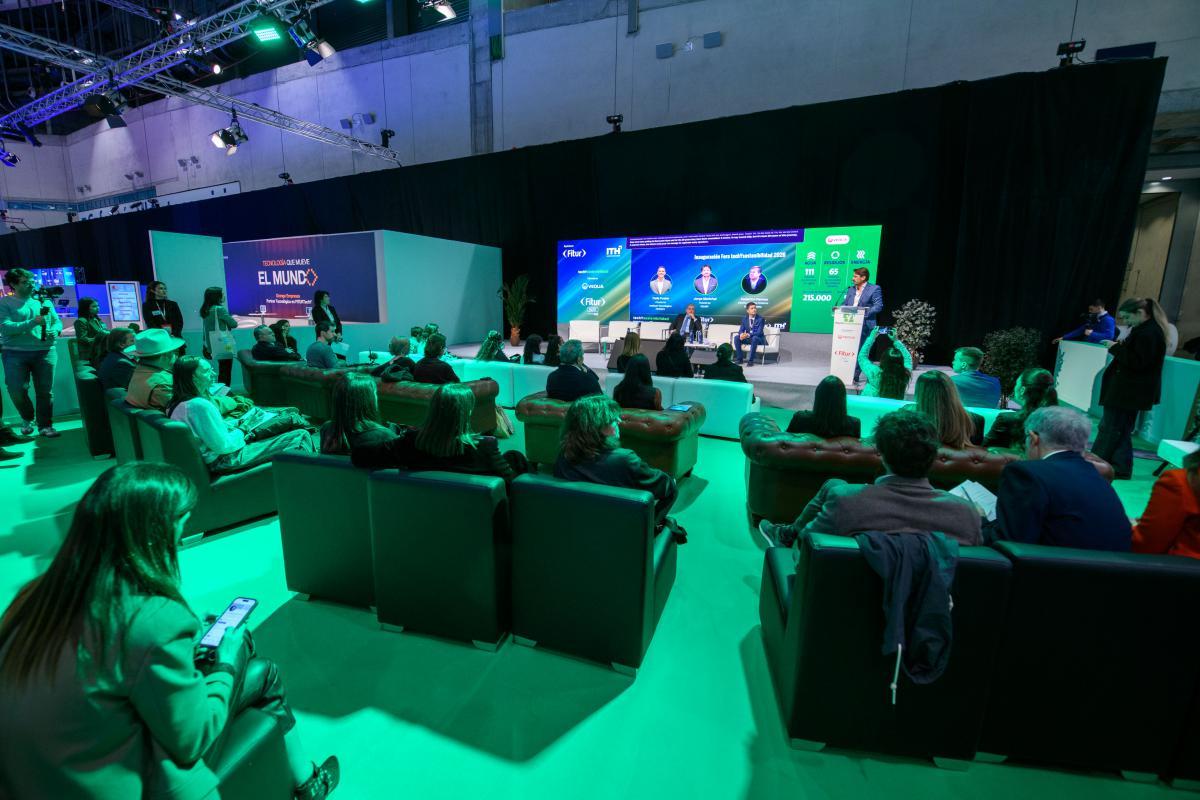
FITUR TechY, the specialised section on innovation, sustainability and tourism technology organised by FITUR in partnership with the Hotel Technology Institute (ITH), opened its 20th edition today. Under the slogan ‘From Robot to Ally’, it comes to claim its position as the leading forum on the transformation of the tourism sector.
High-tech, business and leadership: the key drivers of today’s and tomorrow’s hotels.
The day opened with a formal welcome from Fede Fuster, President of ITH, before moving into the TechY Business forum, which focused on how technological innovation is transforming hotel management and strategic decision‑making.
Early sessions included an interview with Bruno Hallé (Cushman & Wakefield) and Rafael del Castillo Ferreira (Studio Oriente), followed by a panel discussion on the key trends shaping today’s and tomorrow’s tourism, featuring Jorge Marichal (CEHAT) and Óscar Perelli (Exceltur), toned-down by Juan Garnica (Savills).
The practical application of technology in the hotel business took centre stage, with sessions on Revenue Advertising led by Daniel Romero (AdQuiver) and, notably, on artificial intelligence in hospitality. International expert Lasse Rouhiainen outlined the solutions already in use and those set to become essential by 2026.
In the afternoon, the discussion shifted to the impact of automation on daily operations in the panel “Humans & Robots: coexistence and optimisation”, featuring Alberto Bernabé (PwC), Miguel Villarroya (Spring Hotels Group) and Carlos Domínguez (Ilunion), moderated by Manuel Molina (Hosteltur). The programme also included a session on the profitability of integrating economic, environmental and social sustainability into hotel business models, with contributions from David Uclés (Banco Cooperativo Cajamar) and Gabriel Llobera (Garden Hotels). The day concluded with the Sergestur Awards, recognising individuals who contribute to the development and improvement of the tourism sector.
Sustainability and destinations: From efficiency to regeneration
The final session focused on sustainable mobility, with contributions from Juan Luis Barahona (FENEVAL), María Romera (AEDIVE) and Carlos Acha (EMT Madrid), moderated by Elena Galante (Observatorio de Movilidad Sostenible). The programme closed with the 9th edition of the FITUR–InterMundial Foundation Responsible and Sustainable Tourism Award, recognising initiatives committed to a more balanced model of tourism development.
Governance and data in tourism destinations
The TechYdestino forum rounded off the day with an in‑depth look at tourism governance in the age of artificial intelligence, the growing importance of data and the need for transparent, ethical management models. The session opened with contributions from Ramón Estalella (CEHAT and ITH) and Luis Martín (Comunidad de Madrid).
A keynote by Florence Kaci (Phocuswright) examined global tourism market trends for 2026, followed by panel discussions on how to balance innovation, data sovereignty and ethical responsibility to build a smarter, more transparent tourism model, with Daniel Méndez (Vueling), Daniel Sáez (Gaia‑X España), José de la Uz (Las Rozas and RECI), Ana Catalina (UN Tourism) and Dolores Ordoñez (AnySolution), moderated by Antonio Carmona‑Damians (Inetum).
This was followed by a debate on the future of tourism, where digital competitiveness emerged as a key factor for more sustainable economic development, featuring Helena Guitart (Hipotels), David González (Fergus Hotels), Antonio Balaguer (MarSenses Hotels & Homes) and Raúl Domínguez (Maarlab).
The afternoon focused on regenerative tourism and smart destinations, exploring how innovation can help create more resilient, liveable and sustainable places. The debate featured María García (Minor Hotels Europe and Americas), Juan Cortés (Arup), Ilona Shekyants (Spain’s Secretary of State for Tourism) and Miguel Aguíñiga (SECTUR, Government of Mexico), moderated by Luis Marzá (Sener).
The day concluded with the presentation of the 2026 eBook on robotics and automation in tourism by Álvaro Carrillo de Albornoz (ITH and Thinktur), followed by the closing ceremony of the ICAM’s 2nd Congress on Law and Tourism, dedicated to the legal challenges of biometrics and cybersecurity in the industry.
AI, architecture, and new experience models for tourism
The TechYfuturo forum joined the opening day with a programme designed to anticipate how spaces, experiences and management models will evolve in a landscape shaped by artificial intelligence and automation.
The session opened with remarks from Jesús Gatell (ITH), followed by the keynote ‘Artificial Architecture: How AI, Robotics & Mixed Reality Transform Experiences in Cities and Buildings’, delivered by Stefan Junestrand (Grupo Tecma Red and IA Lab COAM), offering insights into the convergence of AI, robotics and immersive realities in environmental design.
This was followed by the panel “New spaces and trends for living in the cities of the future”, bringing together Patricia García Zapico (Gijón), Jose María Mateo (meii estudio) and Víctor Martín (Escofet by Molins), moderated by Pablo Gago (Memorandum Tecnología), to discuss new ways of living in, designing and managing spaces that better respond to the needs of people and destinations.
The forum continued with the session “Keys to navigating times of change”, featuring Alberto Martín (Christie & Co.), Carlos González (Meliá Hotels International), David Uclés (Grupo Cooperativo Cajamar) and Javier Cabrerizo (HBX Group), moderated by Carlos Molina (Cinco Días).
In the afternoon, the programme explored the link between technology and purpose with the talk “Conscious hospitality: building loyalty through values and purpose” by Víctor Mayans (ARTIEM Hotels), followed by a masterclass on AI‑driven hotel management led by Ana Cochofel (Cloudbeds).
The day continued with the session “From Paradox to Action: Agentic AI and Its Real Impact on the Hotel Experience”, featuring Luis Méndez (WAM GLOBAL) and Lucía Martínez (AR Hotels & Resorts), followed by the debate “Data, AI and Personalisation: the new passport for tourism marketing”, with Rafael Murillo (Iberia Cards), Óscar Santamaria (AMKT) and Sandra Etcheverry (CoolRooms), moderated by Jorge Carriazo (WAM GLOBAL).
The programme also introduced the ITH Lab, structured into two areas: one showcasing the latest advances in robotics, including demonstrations such as the robotised buffet of the future and high‑rise window‑cleaning robots; and another focused on ITH TechYroom 3.0 technologies, accessible through virtual reality and hands‑on experiences such as producing soap from used vegetable oil or exploring biotechnology applied to tourism.
With Grupo Cooperativo Cajamar as main sponsor, and the support of Orange Empresas as technology partner and Enovam as energy partner, FITUR TechY opened its programme with a practical, strategic vision of innovation, placing technology at the service of people, the planet and business purpose.