




FITUR Lingua announces a record year for language tourism in Spain, with 177,576 students in 2025, up 12.7%


Most students came from Italy, followed by Germany, the United States, France, the United Kingdom, Poland, the Netherlands and Morocco
The International Tourism Trade Fair hosted the sixth edition of FITUR Lingua, organized by FITUR in collaboration with FEDELE, which analyzed the role of language as a driver of tourism
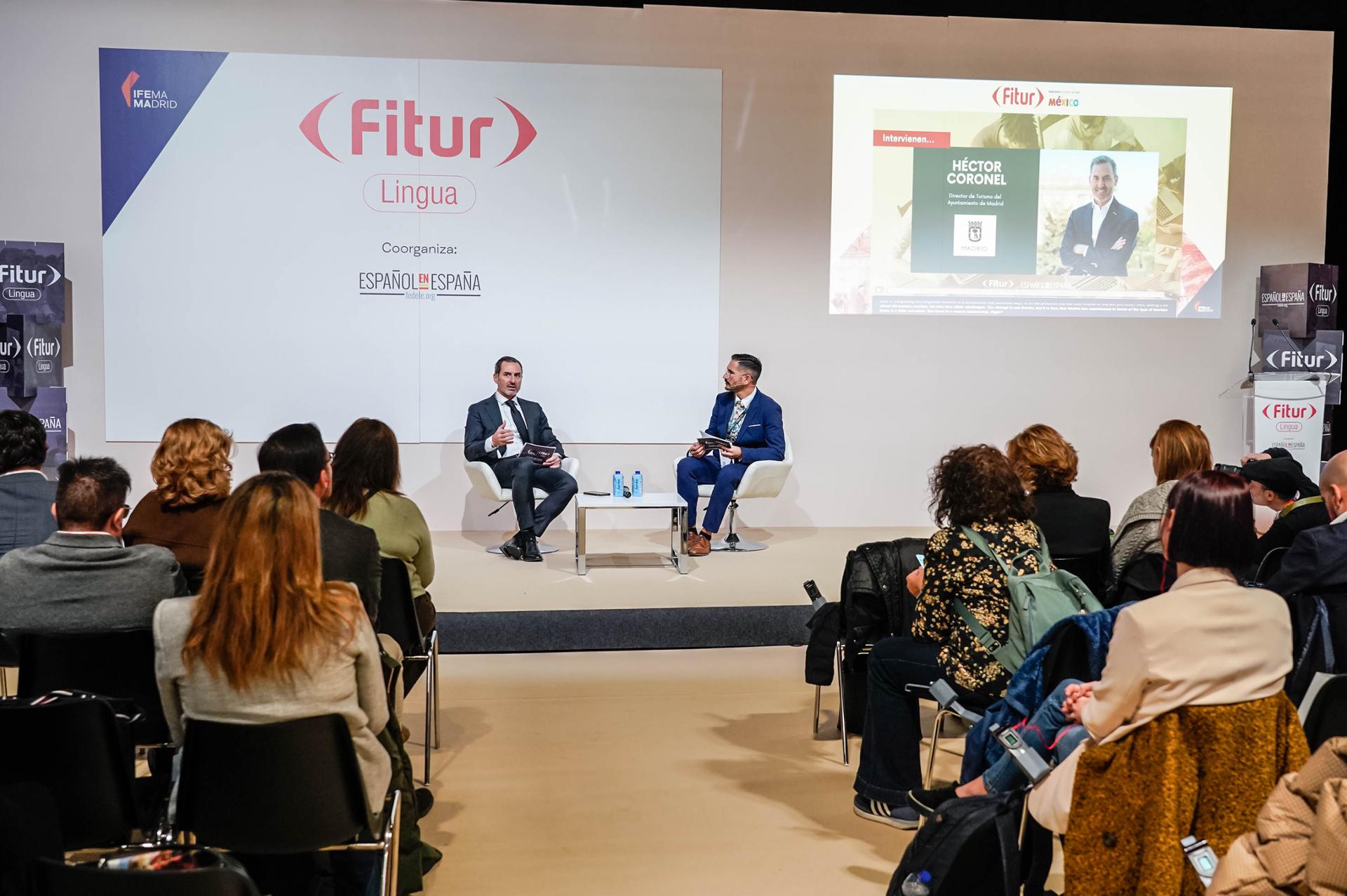
Participants in the sixth edition of FITUR Lingua, the section organized by FITUR in collaboration with FEDELE (Spanish Federation of Schools of Spanish as a Foreign Language), held today as part of the International Tourism Trade Fair at IFEMA MADRID, unveiled a preview of the findings of FEDELE’s Sector Report. According to the report, a total of 177,576 students of Spanish were enrolled in FEDELE-affiliated centers in Spain in 2025, representing a 12.77% increase compared to 2024. During the event, a range of experts also examined the role of language as a multiplier effect for tourism and as a key factor in the cultural and educational experience of destinations.
Speakers at FITUR Lingua highlighted the new profile of the language-tourist and how the interests, expectations and behaviors of international students have evolved. Based on the preliminary data from FEDELE’s report and the ELE Student in Spain study carried out jointly with the University of Seville, the current state of language tourism and the factors influencing destination choice were discussed.
Daniel Escalona, Marketing Director of FEDELE, noted that the more than 177,000 students studying Spanish at FEDELE-affiliated centers in 2025 represent “a record for language tourism in Spain, with an average of 1,585 students per center.” The largest number of students came from Italy, followed by Germany, the United States, France, the United Kingdom, Poland, the Netherlands and Morocco. “The average length of stay in Spain is 4.6 weeks per student, and the economic impact generated amounts to €475 million.” Meanwhile, Begoña Llovet, Vice-President of FEDELE, also stressed the significance of these figures and pointed to the need to “create differentiated programs and products for a more demanding student who is seeking a more authentic experience of the country.”
Paolo Barilari, President of the International Federation of Education Consultants Associations (FELCA), stated that “Spain has always been a very attractive country for Italians” and warned that “in order to attract even more students, schools must sell the full language experience, enabling students to gain an in-depth understanding of the people and culture of the cities.”
Accommodation needs
Another study conducted by EDUSPAIN and ICEX Spain Export and Investment, entitled The Impact of Real Estate on the Attraction of International Students, addressed how the property sector affects Spain’s positioning as a destination for international students. Bárbara García, co-author of the study, explained that “measures are needed in the area of student accommodation to ensure that Spain remains a preferred educational destination.” Cristina Grasset, Director of Spain Education Programs, added that “adequate accommodation has a direct impact on cultural integration, stress levels and academic performance,” and warned that “the loss of international students has a major economic impact and also affects the national education community.”
At another point during the event, new educational and tourism experiences aimed at enhancing destination quality were showcased, with the participation of the Spanish Association of Companies Promoting Language Courses Abroad (ASEPROCE), ASILS, Groupement FLE and Cooltourspain. In addition, international collaboration was highlighted as a fundamental pillar of the tourism multiplier effect, underlining the importance of partnerships and international cooperation in promoting the Spanish language abroad.
Public–private collaboration
This session also presented initiatives promoted by organizations such as TURESPAÑA, the Directorate-General for Spanish Worldwide at the Ministry of Foreign Affairs, and the Instituto Cervantes, all of which work to promote the Spanish language and academic mobility. Cristina Gozalo, Head of the MICE and Tourism Products Unit at TURESPAÑA, emphasized “the importance of public–private collaboration in language tourism in order to strengthen knowledge of Spanish and its international outreach.” Meanwhile, Mónica Colomer, Director-General for Spanish Worldwide, reviewed the different dimensions of the Spanish language (translation, artificial intelligence, legislation, among others) and explained “how all of these influence awareness of the language and act as incentives for studying Spanish in our country.”
The event concluded with a joint reflection session in which representatives from different destinations and organizations debated the new strategies that need to be developed by schools, regions and sector professionals. During the roundtable discussion, various regional entities that hosted Spanish Week, FEDELE’s flagship event, were interviewed, and language tourism strategies were presented from a local and regional perspective. The day also featured a number of networking activities aimed at encouraging knowledge exchange and the creation of synergies.