




FITUR Sports confirms that the synergy between tourism and sports is key to generating wealth, territorial cohesion, and international visibility


The section brings together the main players in the sector for its fourth edition to analyze trends, business, and innovation in sports tourism.
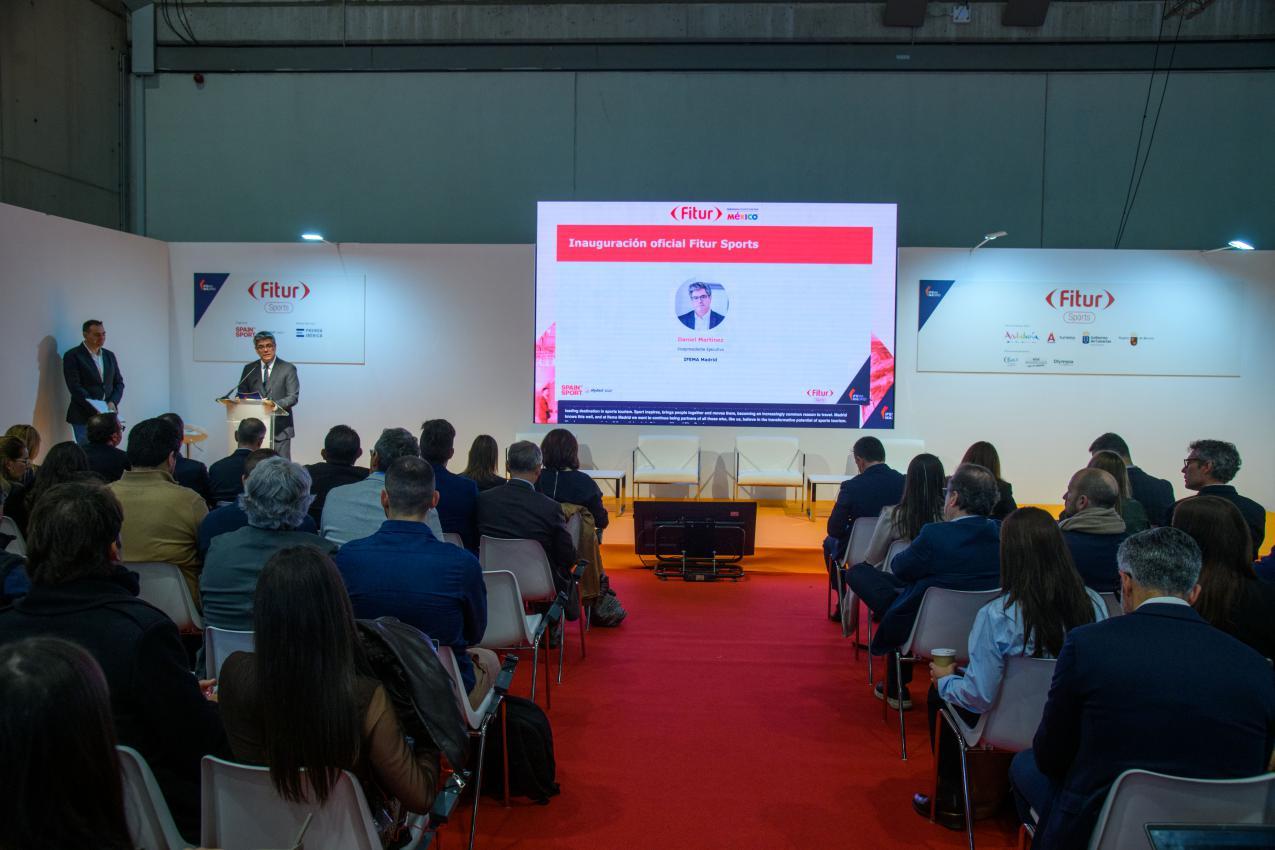
The fourth edition of FITUR Sports opens today as part of the International Tourism Fair, running from January 21 to 25, consolidating its position as an international meeting point for sports tourism professionals. Organized by IFEMA MADRID in collaboration with AFYDAD, the section will focus over three days on outdoor sports, competitive sports and sporting events, and Sports Business Travel, with a strong focus on the professional business.
At the opening of the section, Daniel Martínez, executive vice president of IFEMA MADRID, stated that “sport and tourism are two inseparable drivers of development, international projection, and social well-being,” highlighting the role of sports tourism as a lever for revitalizing regions and strengthening the brand of destinations. He also highlighted the value of FITUR as an “international platform for business and strategic knowledge exchange”, in an edition that is part of the new Knowledge Hub, a unique setting for networking and generating alliances. In this context, he highlighted the upcoming Spanish Formula 1 Grand Prix, which will take place at IFEMA MADRID next September and is expected to generate an estimated impact of €450 million and more than 8,200 jobs in the region.
Andrés de la Dehesa, president of AFYDAD, highlighted the “quantitative and qualitative” growth of FITUR Sports as a reflection of the sector's evolution and explained that “sports tourism is no longer a one-off activity, but a genuine regional strategy.” In this regard, he pointed out that this segment activates all local agents and contributes directly to deseasonalization, stable employment, and the creation of opportunities for young people. De la Dehesa expressed the need to develop sports clusters in the autonomous communities, the role of specialized commerce, and the need to strengthen the recognition of Spanish sports brands. He also recalled that, according to INE data, sports tourism reached €8.7 billion in 2024, with expected growth of between 5% and 10% by the end of 2025, data that demonstrated that it is a strategic segment for the territories.
Juan Cierco, president of the CEOE's Tourism Council, indicated that FITUR Sports “is the expression of a clear trend: sports and tourism mutually reinforce each other as economic and social drivers.” Cierco highlighted the segment's potential for companies and destinations, as well as the relevance of Sports Business Travel and public-private collaboration to improve the competitiveness of Spanish sports tourism.
At the round table dedicated to European funds in sports tourism, this segment was identified as a way to diversify the offering and boost the local economy. Participants agreed on the need to integrate sports tourism into regional strategies and strengthen collaboration to maximize return on investment. In this context, it was noted that European funds have enabled the improvement of at least 300 sports facilities and other equipment, as well as the launch of projects linked to sustainable tourism and sport, aimed at creating networks of experience and generating a social and economic legacy.
The conference also highlighted the potential of blue tourism and water sports, which enhance the appeal of coastal destinations and maintain tourist activity throughout the year. Lanzarote was presented as a success story where nautical tourism has generated an economic impact of more than €32 million, with the arrival of athletes and teams from more than 50 countries, as well as Vigo, where the hosting of nautical events generates an estimated economic impact of €5 million. The speakers agreed on the need to advance in professionalization, infrastructure, and nautical culture to consolidate this segment as a local economic driver.
During this first professional day, it was also demonstrated that golf and skiing are two sustainable sports that contribute to regional development. In the case of golf, it uses only 0.34% of available water and 56% of courses are irrigated with reclaimed water, as well as acting as CO₂ sinks and biodiversity spaces. In the case of skiing, its capacity to generate more than 3,000 jobs, boost the economy of the valleys, and contribute to stabilizing the population in rural areas was highlighted.
The conference also addressed the role of artificial intelligence and data analysis as key tools for managing sports tourism, with experts agreeing on the need to connect the data management capabilities of specialized companies with destinations’ willingness to share data, in order to achieve more efficient tourism models.
Finally, the first day of FITUR Sports concluded by highlighting mountain tourism and the management of sports activities in natural spaces, as well as success stories in adventure and sports tourism in Latin America, with notable experiences in countries such as Mexico, Colombia, and Chile. On Thursday, January 22, the section will showcase the latest trends and opportunities in competitive sports and sporting events, and on Friday, January 23, data related to Sports Business Travel will be presented.