
Profiles | Latin American Art


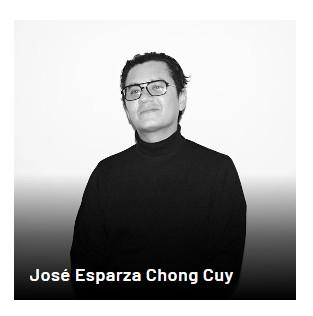
Curator: José Esparza Chong Cuy
This selection of artists offers an approach to practices that, although from different contexts, generations and languages, share a precise attention to how art is produced in relation to society, material and experiences.
Conceived as a section of individual presentations, Perfiles (“Profiles”) invites visitors to pause and carefully study the work of each artist, given that the single booth is a space for concentration and expanded reading within the framework of the fair.
Bringing together emerging and consolidated trajectories, as well as individual and collaborative practices, the artists presented here are not grouped by style or discourse but by a common sensitivity to the contexts in which they operate. Their works dialogue with local stories, shared memories and specific political tensions, questioning national borders and activating resonances that allow us to think of Latin American art as a multi-faceted, established and constantly changing field.
Agustina Woodgate (Barro, Argentina) has developed a practice focused on the analysis of systems, power relationships and theories of value that structure social life. Through sculptures, public interventions and actions of a playful and precise nature, she transforms maps, coins and discarded materials to dismantle institutional paradigms and reconfigure the ways in which public and private space are inhabited and understood.
Ana Claudia Almeida (Quadra, Brazil) works with painting, sculpture and video, exploring memory and corporeality through open material processes. By allowing her materials to fold, shift and accumulate, and by preserving traces of actions, her work uses abstraction as a tool to question the systems that shape the body and everyday life.
Gabriel Branco (Galatea, Brazil) works with painting and analogue photography, developing two distinct but deeply connected practices. While his photography is based on an autobiographical observation of urban life in São Paulo, his abstract painting – constructed through glazes and gradations of light – functions as an interior response, where body, form and luminosity suspend time and meaning.
Harold Mendez (Commonwealth and Council / Patron, USA) addresses history and memory through photography, sculpture and installation, combining research and archival materials from different places. His work explores the tensions between visibility and absence, fiction and truth, by examining how geography, rituals and erased histories shape a transnational experience marked by cultural memory.
Julia Gallo (Yehudi-Hollander Papi, Brazil) has developed a practice that straddles both action and volume, where the movement of the body is translated into sculptural forms and intense marks on paper, charcoal and metal. Its surfaces balance fragility and strength, density and lightness, constructing an imagery of anatomical radicality that evokes a deeply bodily and psychological experience.
Kelton Campos Fausto (A Gentil Carioca, Brazil) has developed a multidisciplinary practice that spans painting, video, ceramics and performance, articulating images that lie somewhere between the fantastic and the disturbing. From references to Afro-Brazilian deities and spirits to non-rational forms of knowledge, his work proposes other ways of understanding the body, energy and the transition between life and death, destabilising normative readings of reality.
Las Nietas de Nonó (Embassy, Puerto Rico), the Afro-diasporic duo formed by Mulowayi and Mapenzi have developed a practice that combines performance, personal archive, organic materials and installation. Through established fiction and micronarratives, their work evokes ancestral memories to address processes of expropriation, colonial violence and environmental justice, providing an intimate and geopolitical voice from the Caribbean perspective.
Miguel Cintra Robles (NASAL, Ecuador) has developed a practice that makes use of sculpture, agriculture and pedagogy as forms of collective learning linked to the land. Through walks, activations and community projects, his work combines biology, ecology and territorial politics, proposing models of socialisations based on the interdependence between bodies, ecosystems and established knowledge.
Paloma Contreras Lomas (Pequod, Mexico) is a visual artist and writer whose practice spans video, installation and drawing. Through humour and narration, her work constructs visual fictions that intertwine desire, violence and performance, bringing together domestic life, popular language and politics in scenes set in Latin American contexts.
Patricia Rengifo (Crisis, Peru) is a Shipibo-Konibo artist whose practice draws on a heritage deeply linked to her community’s memory and knowledge. Through painting and knowledge passed down through the family, her work encompasses the aesthetic and spiritual dimensions to evoke a process of recovery and projection of a cultural legacy in continuity.
Roberto Jacoby (Isla Flotante, Argentina) is a pioneer of Argentine conceptual art whose work has explored the intersection between art, media, politics and sociology since the 1960sy. Through projects, texts and actions that dematerialise the object and propose strategies of resistance and joy, his work questions the relationships between perception, communication and social life, expanding the role of art beyond traditional formats.
Far from offering a closed definition, Profiles | Latin American Art proposes a series of partial approaches that focus on the specificity of each practice. Taken together, these presentations reveal how the art produced in Latin America and by its diasporas is constructed on the basis of established relationships, shared tensions and ways of doing things that do not seek to be representative but are deeply involved in the contexts where they originate and in the dialogues that open up beyond them.
José Esparza Chong Cuy