
ARCO2045: The Future, for Now


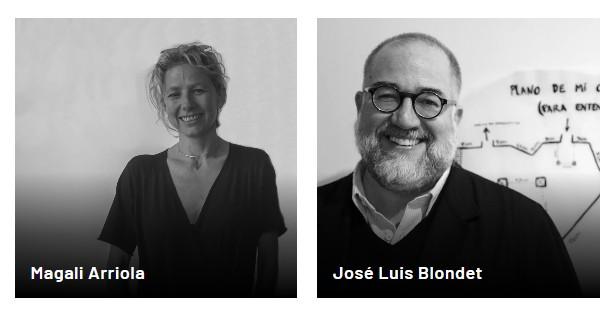
Curators: Magali Arriola and José Luis Blondet
“Whenever people talk to me about the weather, I always feel quite certain that they mean something else,” said a character in an Oscar Wilde play.
A couple of centuries later, David Lynch began posting short videos featuring the daily weather report for Los Angeles, with blue skies and a range of temperatures. He always signed off by wishing us a great day.
On August 21, 2020, Lynch reported low clouds, explaining that he was wearing dark glasses because the future he was seeing looked very bright. All forecasts are subject to change and should be taken with a grain of meteorological salt. This exhibition pursues the filmmaker’s paradoxical optimism and the immediate, subjective and unstable character of the future and it also suggests that what lies ahead is perhaps a recent memory, the gleam of a double-edged sword. At least For Now, as Nicole Miller’s laser projection spells out in glaring terms.
The exhibition makes use of déjà vu as a strategy to connect two spaces within the fair, where small mise-en-scènes, apparent repetitions, accurate forecasts, prophecies that no one believes, and moments of nostalgia play out. Dave McKenzie’s work – a pedestal on which the previous day’s newspaper is displayed each day – clearly embodies this experience. Given this premise, it’ll be difficult to walk through The Future... without encountering the eye-landscapes, eye-characters, and the blind and visionary eyes of the master Rodolfo Abularach, which are on display in both halls.
Barbara Bloom’s works unfold like stage sets devoid of actors or photographic devices without operators, capturing portraits suspended between foresight and memory. The layering of frozen moments reappears in the paintings by Paulina Olovska, who reclaims the intimate gaze of fashion photographer Deborah Turbeville from the dominant virility of her contemporaries, including the renowned Helmut Newton. Coincidentally, Sylvie Selig worked as the German photographer’s assistant before devoting herself fully to stage design and visual arts. Her theatricality is expressed in paintings, sculptures and mannequins that often evoke scenes and characters loaded with desire and violence, with a somewhat Victorian overtones.
The industrial and organic forms juxtaposed in June Crespo‘s sculptures reference fragmented bodies, stripped of all narrative scaffolding. The hybrid or fractured bodies by Heike Kabish and Milena Múzquiz’s ceramic ensemble contrast their softness with Crespo’s rigorous forms. The works of these artists share a surprisingly ominous character that isn’t apparent at first glance.
In his paintings, Akira Ikezoe turns to humor, creating diagrams whose implacable and absurd logic tells the bizarre story of the Coconut Heads as they visit three New York museums. Thomas Hirschhorn challenges us to measure the past by provocatively referencing the empowering potential of art. Patricia Fernández looks back, and even further back, to build her own lineage by literally framing original engravings by Francisco de Goya with wood carved by her grandfather and herself, transforming a historic artwork into a family tale. This game of appropriation has cruder echoes in Candice Lin’s food scenes: dismemberments, family dinners with Henry Kissinger’s head, and even edible drawings that magnify the commercial context of any art fair.
The works by Liv Schulman and Alessandro Balteo Yazbeck refer to those same predatory economies. Schulman’s Hombres argentinos (Argentinian Men) from the series La depresión (Depression) y La deuda (Debt) establishes, in the artist’s own words, “a dialogue on the future of the national debt, depression as a bargaining chip and a particular theatricality that allows us to consider craft – a task historically performed by women – as a potential way to correct failed models.” The Last Oil Barrel, by Balteo Yazbeck, is a miniature sculpture produced as an unnumbered and unlimited edition with its date postponed. This apparent souvenir from an oil-producing country takes on another dimension in relation to Ali Eyal's paintings, based on memories of the artist’s childhood in a Baghdad besieged by US military operations in Iraq in the 1990s and early 2000s. On his canvases, José Luis Sánchez Rull also alludes to the tension between trauma and memory, where text and image become a form of exorcism and a performance of survival. Roi Soleil (The Sun King), a video installation by Albert Serra, recreates the endless agony of Louis XIV, the pinnacle of absolutism, an allegory of decadence that strikes a particular chord in these times of rising authoritarianism.
From this interlacing of works and discourses, as promising and unreliable as a weather report, the future looks like a stage bathed in the dim, fickle light of Allora & Calzadilla's Lightbound. Inspired by the ability of rainforest vines to adapt to their environment by climbing in search of light, these blown-glass pieces intertwined with fiber optics explore our relation to nature and technology. Their pulsing reflects the city’s electrical load while also conveying the sensory and collaborative logic between species, including our own. Slowly, it reveals a form of resistance that is built one day at a time.
Have a great day!
Magalí Arriola and José Luis Blondet
Magalí Arriola
Is a writer and curator based in Mexico City. For over thirty years, her projects have focused on the intersection of art and politics, exploring how artistic practices reveal broader social, economic, and historical contexts. With a critical perspective on power structures, institutional histories, and the legacies of colonial capitalism, Arriola has developed multi-nodal initiatives such as Un Lugar Fuera de la Historia (2010–2018) and El círculo que faltaba (2017–2020)—long-term, episodic projects that challenge normative narratives and foster transnational dialogues. Through her leadership roles at institutions such as Museo Tamayo in Mexico City (Director, 2019–2025), Art Basel Miami (Meridians, 2019–2023), and the KADIST collection in San Francisco and Paris (Lead Curator for Latin America, 2017–2020), she has consistently supported experimental practices that question how knowledge is produced and disseminated across both local and international art scenes.
Arriola was curator of the Mexican Pavilion at the 58th Venice Biennale (2019) and of the 8th Panama Biennial (2008). Her exhibitions have been presented at institutions including Museo Tamayo, Museo Jumex, MAM Medellín, MoMA PS1, SMAK, and Kunst Institute Melly (formerly Witte de With). She has written extensively for books and catalogues, and contributed to publications such as Artforum, Frieze, Mousse, Manifesta Journal, and The Exhibitionist, among others.
José Luis Blondet
Is Senior Curator at the Museum of Contemporary Art (MOCA), Los Angeles, where he has organised Fictions of Display (2025), Olafur Eliasson: OPEN (2024), and FOCUS: Ana Segovia (2024). Previously, he served as Curator of Contemporary Art at the Los Angeles County Museum of Art (LACMA), where he organised numerous exhibitions including Magdalena Suarez Frimkess: The Finest Disregard (2024), NOT I: Throwing Voices, 1500 BCE–2020 (2020), Merce Cunningham: Clouds and Screens (2018), A Universal History of Infamy (co-curator, 2018), Various Small Fires (Working Documents) (2017), and Liz Glynn: The Myth of Singularity (2016). As a guest curator, he has organised exhibitions at Museo Tamayo, Mexico City (2023), CAPC Musée d’Art Contemporain de Bordeaux (2017), and REDCAT, Los Angeles (2017). In 2018, he co-curated the SITE Santa Fe Biennial in New Mexico.
In Venezuela, his country of origin, Blondet worked at the Museo de Bellas Artes in Caracas and at the Central University of Venezuela. He has also taught at CalArts and the University of California, Los Angeles.