




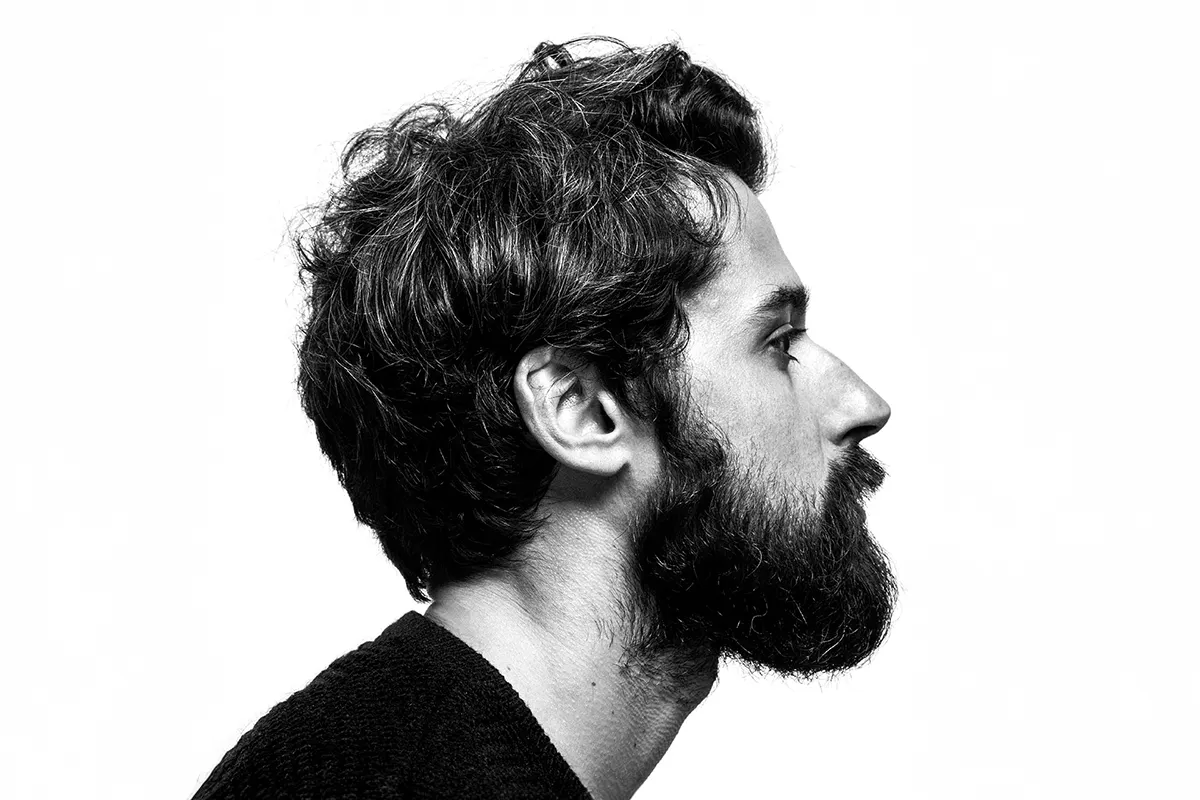
About Moisés Nieto
Moisés Nieto is a sustainable fashion brand founded in 2011 by the designer whose name it bears. He graduated from the Istituto Europeo di Design in 2010, and his thesis became his first collection.
Moisés Nieto is defined by the fusion of craftsmanship and attention to detail, with a refined sense of taste. His collections foster a dialogue between tradition and innovation, social culture and personal history, national art and the global industry, always focusing on the use of 100% Spain-made materials.
A firm advocate that sustainability is an essential value in designer fashion, the designer recognizes the power of clothing as a driver of change and communication. Moisés Nieto expanded internationally in 2014, beginning to sell his pieces abroad.
In 2016, he won Who’s on Next by Vogue Spain and was awarded the National Fashion Prize. He is also the creator of La Hacería, a platform connecting artisans, and actively collaborates with other brands to generate synergies
Moisés Nieto at MBFWMadrid
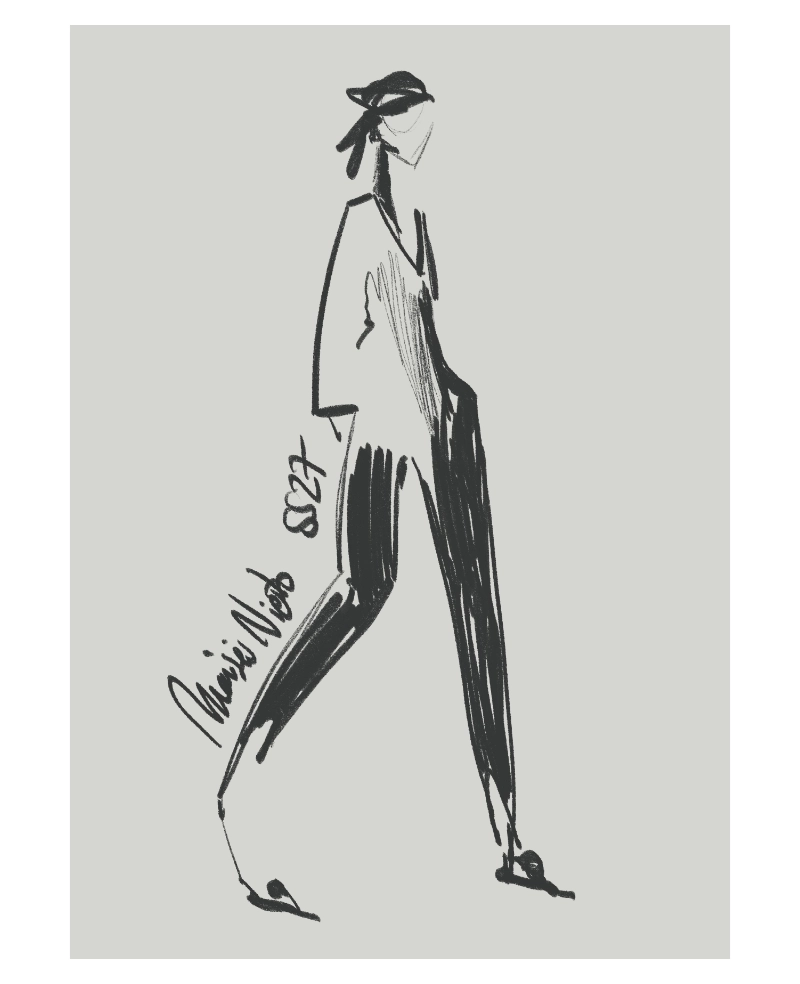
Collection lines
When I think of Andalusia, I don’t just think of the colours, the folklore or the most recognisable image of Andalusian life. I think of something much more intimate. I think of the villages, of childhood, of growing up surrounded by silences, glances and things that are never quite said. There is something mysterious about living in a village, a sort of collective intimacy where everyone knows one another, everyone observes and, at the same time, everyone keeps secrets. That mystery, far from being negative, forms part of a way of understanding life and also beauty.
My Andalusia has a great deal to do with the women of Julio Romero de Torres. When I look at his paintings, I recognise those serious faces, those gazes that seem to conceal a story, a restrained emotion that is never quite revealed. They are strong women, but they do not need to prove it. There is dignity, mystery and an enormous capacity for resilience in them. That way of expressing without explaining, of suggesting rather than showing, is very much present in my understanding of this collection.
There is also Lorca. His Andalusia is capable of being dark and luminous at the same time, tragic and profoundly beautiful. Desire, death, silence, the land, destiny and also celebration all feature in his world. It is precisely this contradiction that interests me: a land where emotion is almost always restrained, but which, when the time comes to celebrate, is completely transformed.
Because celebrations are also a fundamental part of that memory. In villages, a celebration isn’t just about having fun; it’s a way of escaping, of coming together, of breaking free for a few hours from the daily grind and from whatever weighs you down. And for me, open-air festivals represent that moment of freedom.
The music, the lights, bodies coming together, the movement… an almost exaggerated joy that contrasts with the sobriety of everyday life. They are spaces where anything seems possible, where people allow themselves to be a different version of themselves.
In the collection, black takes centre stage. I do not see it as an absence, but as a memory. It is the colour of mourning, of the earth, of the night, of secrets, and also of an elegance that needs no explanation. Set against this backdrop are the light and energy of the festival, understood not so much in terms of folklore as in terms of that deeply human need to celebrate after having experienced silence.
I wanted to talk about an Andalusian woman whom I recognise and who, at the same time, belongs to the present. A hard-working, strong and sensitive woman; aware of her heritage, but without the need to reproduce it literally. A woman who carries a story within her, even when she does not tell it.
That is why I am not interested in depicting Andalusia in an overt way. I am interested in speaking of what lies beneath: of childhood, of secrets, of mourning, of restrained emotion, of the land and of the women who inhabit it. And also of joy, of festivals and of those nights of street parties when, for a moment, everything lights up.
This collection stems from that contradiction which, for me, defines Andalusia: darkness and light, silence and celebration, austerity and desire, tradition and the present. An Andalusia that needs no representation, because it already lives on in memory.