



The potato, the main protagonist at Fruit Attraction 2026


By Javier Montes Castrillo, agri-food journalist The potato will be the star product of the 18th edition of Fruit Attraction, the major international showcase for fruits and vegetables, which will be held at IFEMA Madrid from October 6 to 8. The fair has decided to highlight this tuber due to its strategic role in food security, its culinary versatility, and its key importance in the global diet. This institutional move aims to place the potato at the center of attention for producers, distributors, chefs, and technology companies, with the goal of revitalizing a sector that, at a national level, is facing uncertainty driven by oversupply, falling prices, and the effects of climate change.
The potato and its return to the center of the conversation
From October 6 to 8, the potato will be at the core of debates, demonstrations, and the first International Potato Symposium, which will bring together more than four hundred global experts, as confirmed by María José Sánchez, director of Fruit Attraction. She highlights the role of Fruit Attraction as a platform to showcase solutions that connect the field and the market, and to address key challenges such as plant health, drought, and genetic improvement.
In areas such as Innova & Tech and Fresh Food Logistics, meetings between producers, buyers, and technologists will be facilitated with the aim of showcasing an essential crop—the third most important in the world, after rice and wheat—for food security and the fruit and vegetable industry.
At the national level, the potato sector accounts for nearly two million tons annually, consolidating its position as the seventh-largest producer in the EU. Castilla y León represents nearly 40% of total production, followed by Galicia, Andalusia, the Region of Murcia, and the Valencian Community. Even so, the sector is going through a phase of dependency on imports—exceeding one million tons—and faces strong pressure from rising costs.
From staple food to star product: why the potato matters now
In Spain, the decline in cultivated area in recent years (from more than 270,000 hectares in 1990 to 66,700 hectares recorded last year, according to the Ministry of Agriculture, Fisheries and Food) and the increase in imports have made the reactivation of the national supply chain a priority. This explains the focus on this tuber at the upcoming edition of Fruit Attraction, with consumption figures in Spain exceeding one million tons annually.
“The designation of the potato as a star product does justice to a crop that contributes to global food security due to its high nutritional value and culinary versatility, and aims to highlight its economic and social importance both in Spain and in Europe,” emphasize representatives from the Association of Fruit and Vegetable Producers and Exporters of Andalusia (Asociafruit).
The unseen potato: the work behind every sack, net, or display
Behind every potato there are agronomic and logistical decisions: varietal selection, soil management, mechanical grading, washing, and storage systems that extend shelf life. Traceability and sustainable packaging are increasingly demanded by both buyers and consumers.
The sector highlights the enormous human, technical, and economic effort involved from the moment the seed is planted to when the consumer purchases it in the supermarket. “In the food industry, quality is not accidental. It is the direct result of rigorous daily processes, of people who produce, control, and organize so that every detail matters and is reflected in the final product,” emphasize the Association of Potato Operators at Origin in Castilla y León (Asopocyl).
In this regard, they stress that paying a fair price at origin is not optional, but the only way to ensure that farming families can cover the “exorbitant” production costs and secure generational renewal in rural areas.
Snapshot of a horticultural protagonist
There are clearly differentiated segments: fresh consumption, processing industry, and potatoes for freezing. Each channel requires different sizes, textures, and yields; and B2B opportunities lie in adapted formats (sacks, nets, pre-washed bags), supply contracts, and value-added services such as quality grading and origin certifications.
In Spain, potatoes are mainly classified according to their harvest time, which defines their properties and freshness. Early potatoes are harvested in spring; they are firm, with thin, clean skin, and highly valued as the first fresh potatoes of the year in Europe. Mid-season potatoes are harvested in summer and are the most balanced and suitable for all segments. Finally, late potatoes are harvested at the end of the year and are characterized by thicker skin.
At the B2B level, the potato market offers interesting business opportunities. The HORECA channel, for example, increasingly demands fifth-range products—companies that market peeled, cut, ready-to-cook potatoes. Supermarkets, meanwhile, demand netting and bags that do not use plastic. Another business avenue is the use of surplus: so-called “ugly” or misshapen potatoes rejected by large retailers can be used to produce flours, industrial starches, and animal feed.
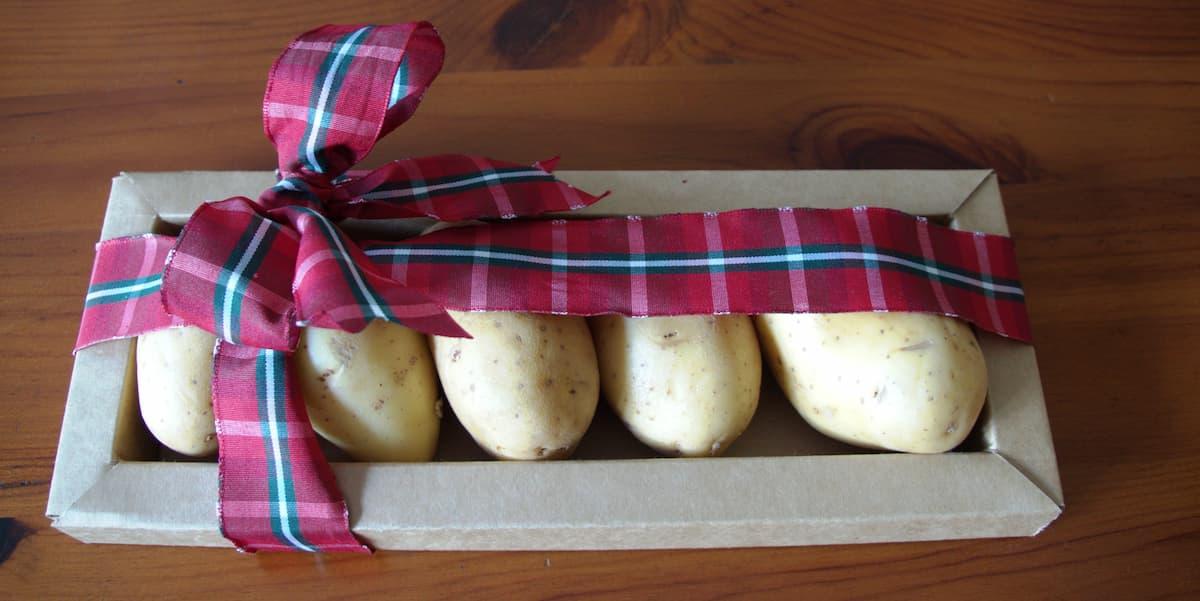
From field to stand: the potato’s journey to Fruit Attraction
The process includes planting, irrigation, mechanized harvesting, washing and brushing, size grading, storage chambers, and refrigerated logistics until reaching the exhibition stand. The Fruit Attraction organizers expect to gather more than 121,000 professionals and 700 international buyers, making the fair an unparalleled opportunity to close supply agreements.
Innovation with soil on the hands: technology applied to a traditional product
In the potato sector, innovation goes beyond the digital factors that affect all industries. It includes soil sensors, data-driven varietal selection, smart storage, and sustainable packaging. These advances and solutions are transforming competitiveness, optimizing shelf life, and reducing waste. All of them will have a prominent showcase at Innova & Tech, as highlighted by FEPEX.
What a professional buyer looks for when it comes to potatoes
Supply consistency, shelf life, and traceability are decisive factors that shape long-term agreements, according to industry sources. In addition, format and visual quality also determine the choice between retail, HORECA, and industry.
Frequently asked questions about the potato as the protagonist of Fruit Attraction
Why is the potato the star product at Fruit Attraction 2026?
Because it is a strategic crop with an impact on food security, industry, and gastronomy. Its recognition as a “star product” has been promoted by Asociafruit, in collaboration with the Potato Sector Committee of FEPEX, with the aim of revitalizing its value chain.