





Spanish Ports, the Best Option for Fresh Produce Traffic


Spain’s state-owned port system plays a key role in the logistics of fresh produce. Spain is Europe’s leading country in maritime connectivity, with more than 200 international connections. In addition, it has a first-class logistics platform and cutting-edge technology in refrigeration systems, traceability and quality control at each of its ports
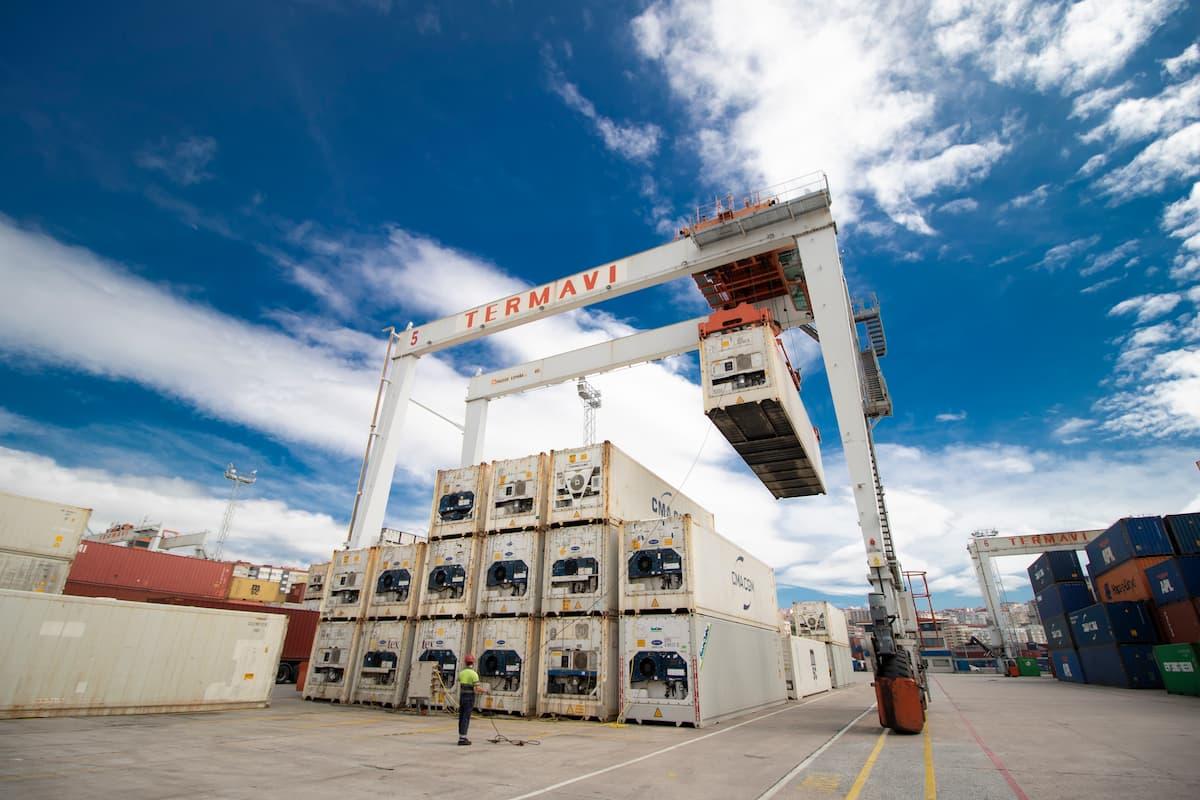
Spanish ports are a key player in the international fruit and vegetable sector, thanks to their nearly 100 million m² of land and storage areas, almost 2 million m³ of refrigerated warehouse capacity, reefer connections, nearly 395,000 linear metres of berthing space, advanced Border Control Posts (BCPs), phytosanitary services and comprehensive logistics solutions.
The high quality of their facilities, together with the strong technical expertise of port professionals, ensures the capacity and specialisation required to handle perishable goods. Spain has a coordinated port system that enables it to offer consistent and efficient solutions nationwide.
In addition, Spain’s state-owned ports are committed to the continuous improvement of technology and operational efficiency. They are currently undergoing a digital transformation process, with the development and implementation of the SIMPLE platform standing out. This platform is designed to improve supply chain traceability and logistics interoperability, while simplifying and streamlining administrative procedures.
Another key commitment of Spain’s state port system is sustainability
The competitiveness of Spanish ports is closely linked to their decarbonisation strategy, which includes projects involving new fuels, the deployment of marine renewable energy and the provision of Onshore Power Supply (OPS) connections to berthed vessels. These initiatives aim to reduce emissions and adapt ports to the new generation of more efficient vessels powered by less polluting alternative fuels.
In addition, several ports are implementing circular economy initiatives to reuse the cold generated during the regasification of Liquefied Natural Gas (LNG). This cold energy can be used by port concessions that require refrigeration for their operations, generating significant energy savings and reducing emissions.
Spain is one of the main gateways for fruit and vegetable trade to and from Latin America, North Africa and Europe. In 2025, nearly 11 million tonnes of fruit and vegetables passed through Spanish port facilities.
They will be located at Fruit Attraction in Stand 4C18.