




Nutrition claims in fruit and vegetables: a commercial challenge for the sector


By Natalia Calle, agri-food journalist Why nutrition claims are a challenge for fruit and vegetables From health message to regulated claim Labelling — and doing it properly — is one of the key requirements the fruit and vegetable sector must address every day. And not only because of regulatory obligations. Carrying out this task as carefully and thoroughly as possible translates into trust and, therefore, benefits for every link in the value chain. Above all, it means guaranteeing the traceability of the fruit or vegetable in question and, ultimately, protecting what is its main pillar: consumer health and safety.
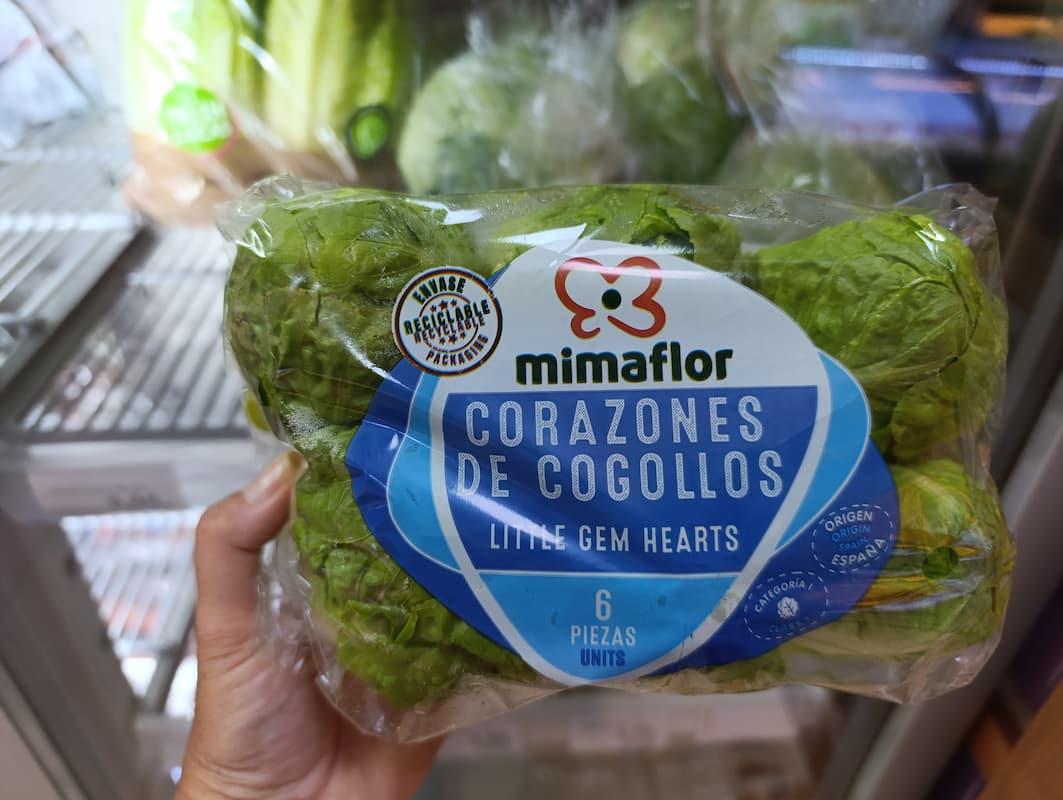
This protection begins with the so-called mandatory particulars or mandatory information, which must appear clearly, legibly and in Spanish on the packaging label for the consumer — or on a sign placed near the product in the case of bulk sales. In this way, at a glance, the customer must be able to know the name of the product, its country of origin or place of provenance, and its price per kilo. In addition, depending on the type of fruit or vegetable, additional mandatory information must also be provided regarding its quality category, variety where applicable, and size. Furthermore, if these products are packaged in nets, trays or boxes, the corresponding label must also include a batch number, the name or corporate name of the operator responsible for placing them on the market and, where different, the name of the packer.
However, the fresh produce sector’s commitment to the person it seeks to convert into a buyer tends to go further. Alongside the mandatory particulars that accompany fruit and vegetables, labels are increasingly incorporating, in a more relevant and prominent way due to the significant commercial value they add to the crop, other voluntary messages. We are referring to nutrition claims and health claims. Their purpose is clear: they provide additional information and are effectively seen as an added advantage for winning customers. But caution is required: not everything is allowed. If an operator decides to introduce this type of message on the label, it must comply with the conditions of use established for each claim and respect the triple rule common to all of them: they must be truthful, demonstrable and must not mislead. As the European Commission emphasises, the aim is to protect consumers, while also encouraging innovation and ensuring fair competition.
There is no doubt that moving from the health and nutrition messages that, until 1 July 2007, could be used in the European Union on food labelling, advertising or marketing with very few restrictions, to these health claims or statements of health properties that must necessarily be supported by scientific evidence, represents a major commercial challenge for the sector. And it does so for several reasons. Firstly, because of the very living nature of fruit and vegetables, which makes it difficult to standardise values for a fixed nutrition label. Secondly, because of the cost of the studies required to scientifically support the information to be included, as well as the additional expense and complexity involved in transferring it to the packaging of products that, whether for basic protection or commercial strategy, are increasingly sold packaged. As if that were not enough, the natural fluctuations mentioned in these fresh products entail additional exposure to fines or penalties for misleading advertising, which are always difficult to assume, both economically and in terms of brand reputation.
To add or not to add these voluntary claims. That is the question, the dilemma for a sector which, in any case, must be clear that, beyond the drawbacks, strict compliance with the established rules for incorporating these optional messages brings significant competitive advantages. Not only do they create a shield of legal certainty, but they also allow companies to connect directly, transparently and responsibly with an increasing number of consumers who actively seek health, read labels, want to make informed choices and, ultimately, prioritise buying an honest product over a cheaper one.
A practical definition for the fruit and vegetable sector
To make a reasoned decision, the first step is to refer to Regulation (EU) No 1169/2011, which sets out the mandatory rules on food labelling in the European Union; and from there, to have a very clear understanding of what is and what is not a nutrition claim.
We have already said that these claims are voluntary and that there is specific legislation regulating them, in this case Regulation (EC) No 1924/2006 of the European Parliament and of the Council of 20 December 2006. According to this text, a nutrition claim means “any claim which states, suggests or implies that a food has particular beneficial nutritional properties” due to the energy value it provides or does not provide, and/or the nutrients or other substances it contains, contains in reduced or increased proportions, or does not contain. All claims that have been assessed and approved, in this case by the European Food Safety Authority (EFSA), are compiled in the EU Register of Nutrition and Health Claims.
However, operators are also free to propose the use of new claims in accordance with the procedure established by the European Authority itself. In that case, particular care must be taken to ensure that they are clear and useful for consumers and, in addition, truthful and reliable; in other words, they must be supported by the solid scientific basis mentioned above. Verifying this scientific justification is the task of EFSA, whose opinion in turn serves as the basis for the European Commission and national authorities, which ultimately decide whether or not to authorise the inclusion of that nutrition claim for a food. In Spain, the body responsible for granting this final approval is the Spanish Agency for Food Safety and Nutrition (AESAN).
Nutrition claim versus health claim
The same patterns and requirements apply to this second type of voluntary claim, known as health claims. In this case, they do not highlight the composition of a food, but rather suggest or explicitly imply that there is a relationship between that food, a category of foods or one of its constituents, and health.
The use of these messages entails significant risks for consumers, hence their strict regulation within the EU framework. It is not surprising that customers tend to overestimate the benefits, create unrealistic expectations and assume that a product is automatically healthy simply because it includes health claim messages on its label, thereby ignoring the overall nutritional profile of the food and the risks this may involve — for example, bananas are notable for their high potassium content, but they also contain around 25% sugars (glucose and fructose), meaning their consumption should be controlled in people with kidney problems.
COMPARATIVE TABLE
|
NUTRITION CLAIM |
HEALTH CLAIM |
|
|
What it communicates |
Provides information on the presence, absence or modification of calories or specific nutrients. |
Provides information on a physiological benefit or the prevention of disease associated with consumption of the food. |
|
Common examples |
"No added sugars", "Low fat", "High in fibre". |
"Vitamin C contributes to the normal functioning of the immune system", "Phytosterols lower cholesterol". |
|
Risks and hazards |
• Halo effect: Consumers may assume that because a product is “low in calories” it is healthy overall, ignoring other undesirable compounds. |
• Overconfidence: Believing that a food prevents serious diseases, while neglecting the overall diet or a healthy lifestyle. |
How claims affect packaging, retail and B2B sales
The use of claims or statements which undoubtedly have a persuasive component on labels, sales sheets, catalogues, e-commerce platforms and trade fair materials has an immediate impact across all elements of the supply chain. In fact, what may appear to be just three simple words — for example, “Source of fibre” — becomes, once printed on a label or box, a powerful tool capable of instantly transforming a commodity fruit or vegetable into a value-added product, ensuring legal compliance, accelerating retail turnover, justifying higher margins in the B2B channel and convincing the customer. Its adaptation to different formats and objectives is therefore far from trivial.
In primary packaging such as nets, trays or punnets, space is limited, so messages need to be direct, such as “Locally grown”. In secondary and tertiary packaging, such as corrugated cardboard boxes or reusable plastics, the message is aimed more at shelf stockers and supermarket managers to help them meet their own CSR objectives — for example, “Zero waste”. For sales to wholesalers, purchasing centres and the hospitality channel, claims become more technical and focus on profitability, replacing emotion with verifiable data. In e-commerce, where the environment offers greater storytelling capacity, it is important to open the door to search filters and provide scannable certificates and detailed digital labels to win over consumers who use that channel precisely to learn more in depth. At trade fairs, the fruit and vegetable sector tends to rely on innovation and sustainability messages through impactful phrases printed on stands, banners and materials in a highly visual and eye-catching way.
Focusing strictly on the product itself — fruit and vegetables — the claims that companies can communicate with greater legal certainty on their labels and packaging are the nutrition claims included in the aforementioned European Register, which also specifies their conditions of use, the minimum amounts of the nutrient required to use the claim and the target audience.
Specifically, according to the European Union website, the permitted claims are those related to: low energy, reduced energy, energy-free, low fat, fat-free, low saturated fat, saturated fat-free, low sugars, sugars-free, no added sugars, low sodium/salt, very low sodium/salt, sodium-free or salt-free, no added sodium/salt, source of fibre, high fibre, source of protein, high protein, source of [name of vitamin/s and/or mineral/s], high content of [name of vitamin/s and/or mineral/s], contains [name of nutrient or other substance], increased [name of nutrient], reduced [name of nutrient], light/lite, naturally/natural, source of omega-3 fatty acids, high omega-3 fatty acids, high monounsaturated fat, high polyunsaturated fat and high unsaturated fat.
The Register also includes more than 260 authorised health claims, divided into four groups that link the consumption of a food with: the reduction of disease risk; children’s development and health; the maintenance of bodily, physical or psychological functions; and new effects supported by scientific evidence that are protected by industrial property rights.
Communicating one type of claim or another in compliance with the rules ensures that these messages are accurate and supported by AESAN in Spain and, therefore, by the EU legal framework. It is also essential that what is said about that fruit or vegetable is consistent with how it is produced. In this way, if a company conveys its message with legal rigour and consistency, it is in fact approaching consumers with trust, transparency and responsibility in order to win them over as customers.
|
Claim category |
Examples of authorised claims |
Support: requirements and evidence |
Recommended controls |
|
Energy |
"Low energy", "Energy-free", "Naturally low in calories". |
It must meet the condition of being a food of natural origin with fewer than 20 kcal per 100 g. |
Visual inspection of the packaging and laboratory analysis to verify the calorie count. |
|
Sugars |
"No added sugars", "Naturally low in sugars". |
It must not contain added sugars. The free/total sugar content must be ≤ 5 g per 100 g. |
Documentary review of the ingredient list and laboratory chromatography to detect hidden sugars. |
|
Fibre |
"Source of fibre", "High fibre". |
"Source" requires ≥ 3 g of fibre per 100 g. "High" requires ≥ 6 g of fibre per 100 g. |
Analytical determination using enzymatic-gravimetric methods (AOAC) on the product. |
|
Vitamins and Minerals |
"Source of Vitamin C", "Rich in Potassium", "Helps reduce tiredness". |
The food must provide at least 15% of the Nutrient Reference Value (NRV) per 100 g. |
Official sampling and analysis using spectrophotometric or chromatographic techniques. |
|
Health and Wellbeing |
"Contributes to normal intestinal function" — for example, in kiwi fruit. |
Based on the scientific support approved by EFSA and the European Register of claims. |
Border or market inspection by official control systems — for example, AESAN. |
How to turn compliance into a commercial advantage
Trust, differentiation, transparency and relationships with professional buyers
As mentioned above, incorporating nutrition claims and health claims in accordance with Regulation (EC) 1924/2006 turns what may initially appear to be merely a legal obligation into a true commercial asset. Under Article 8 of Regulation (EU) No 1169/2011, responsibility for labelling lies mainly with the food business operator under whose name the food is marketed; if that operator is not established in the EU, responsibility falls to the importer, while in the case of products sold loose, the retailer is responsible for verifying that those fruit and vegetables are correctly labelled.
Displaying this regulatory compliance explicitly on the label, or offering a QR code linking to the nutritional profile of a fruit or to the origin of its cultivation, increases its value in the eyes of buyers and conveys trust, because they know that there is rigorous scrutiny behind the message and that the product’s credibility is backed by EFSA. Moreover, labelling with accurate claims allows potential customers to distinguish at a glance between healthy options and other ultra-processed products, and therefore helps educate them towards healthier eating. The benefits, however, go further and are equally relevant for the rest of the value chain, as they help avoid penalties and product withdrawals — in other words, losses. A good label is therefore highly valued by supermarkets and large retail chains, which seek suppliers that minimise legal risks and provide ready-to-use information. It is also essential support in B2B marketing, where providing sales dossiers that include technical sheets based on EU regulations enables retail buyers to design reliable and direct health-promotion campaigns.
- Low energy value / Low calorie: The food provides ≤ 20 kcal per 100 g, or per 100 ml for liquids. Highly applicable to vegetables such as courgette or celery.
- Calorie-free / Energy-free: The product provides less than 4 kcal per 100 g. Typical of water, but applicable to natural plant infusions.
- Source of fibre: The food contains at least 3 g of fibre per 100 g, or 1.5 g per 100 kcal. Common in apples with skin, pears and artichokes.
- High fibre: Contains at least 6 g of fibre per 100 g. Typical of fresh pulses, raspberries and avocados.
- Source of [name of vitamin] or [mineral]: The product contains at least 15% of the recommended daily intake (RDI) per 100 g or 100 ml. This is frequently highlighted for Vitamin C in citrus fruit or Potassium in bananas.
- Low fat: The product contains ≤ 3 g of fat per 100 g. Common in most fresh fruit and vegetables, which are naturally almost fat-free.
- Fat-free / No fat: Contains ≤ 0.5 g of fat per 100 g.
- No added sugars: The food contains no added mono- or disaccharides. The sugars present are naturally occurring in the food itself, such as fructose in an unsweetened fruit salad.
- Naturally / Natural content: Used when the food naturally has the nutritional characteristics stated, for example “Naturally rich in Vitamin C”.
It is any message on packaging or in advertising that states or suggests that a food has specific nutritional properties.
What is the difference between a nutrition claim and a health claim?
Nutrition claims indicate what a food contains, for example “high in fibre”, while health claims describe the benefit that food provides to the body, for example “Vitamin C contributes to the normal functioning of the immune system”.
Can it be said that a fruit is rich in Vitamin C?
Under Regulation (EC) No 1924/2006, yes, it is legal, but only if the fruit contains at least twice the amount required to be considered a “source” of Vitamin C. Specifically, the statement Source of Vitamin C may be included on the label if the specific fruit or vegetable contains at least 15% of the Recommended Daily Allowance (RDA), that is, 12 mg per 100 g. However, it may only be declared as High in Vitamin C or Rich in Vitamin C if it contains at least twice the amount required to be considered a source, equivalent to 24 mg per 100 g.
What are the risks of using unauthorised claims?
Using unauthorised nutrition or health claims on fruit and vegetables infringes European regulations and therefore entails serious legal risks, ranging from product withdrawals to substantial fines, as well as economic risks arising from unfair competition claims and, most importantly, loss of consumer trust if consumers feel exposed to misleading advertising. Fraudulent use of claims that mislead patients, for example by stating that a food cures a specific disease, may even entail criminal consequences.
Who should validate a nutrition claim before publication?
The European Food Safety Authority (EFSA) and the European Commission are the bodies that scientifically validate the use of claims. However, the legal responsibility for checking that the product complies with the exact conditions set out in Regulation (EC) No 1924/2006 before publication lies with the operator or manufacturer of the food business. In Spain, AESAN and the regional health authorities inspect and impose penalties if they detect that published claims are false or misleading.
List: key principles for communicating rigorously
Communicating rigorously in the fruit and vegetable sector helps avoid unjustified concerns among consumers, who know that if they see a nutrition or health claim on a product in the EU, they can trust its transparency regarding origin, regulatory compliance and scientific support.
To achieve this, the following are key:
institutional evidence, meaning that any communication should be supported by recommendations from health bodies and institutions, such as the aforementioned EFSA or AESAN;
regulatory compliance with labelling rules and with nutrition and health claims themselves: Regulation 1169/2011 on food information provided to consumers and Regulation (EC) No 1924/2006 of the European Parliament and of the Council on nutrition and health claims made on foods;
absolute transparency about origin and cultivation itself: where the product comes from, but also the agricultural practices used to produce it and the harvesting methods followed to bring it into consumers’ hands;
the promotion of fresh, seasonal produce, which respects natural production cycles and the environment;
and an educational approach, always seeking to ensure that recipients understand the nutritional benefits, vitamins and minerals of each product.
In summary
Beyond these key principles, it is important not to forget that it is essential to avoid claims that link a fruit or vegetable to the cure of diseases, encourage excessive consumption, mislead by omission or may otherwise mislead consumers. It is also important to remember that, as part of the social and ethical commitment of any company — and even more so for those related to food — companies must help raise social awareness about the fact that there are no magic solutions and establish as a basic principle that, when it comes to looking after our health, nothing compares to a balanced diet combined with physical exercise. Of course, adding colour to the plate — the colour provided by fruit and vegetables — already brings a good dose of health to everyday life.