





School canteens and fruit and vegetables: an opportunity for the fruit and vegetable sector


By Sonia Cortés, agri-food journalist The new shift towards healthier eating in educational settings opens up a growth opportunity for the fruit and vegetable sector School canteens, cafeterias and vending machines can become new strategic spaces for bringing fresh produce closer to children, teenagers and families, provided the fruit and vegetable supply chain can respond with adapted formats, efficient logistics and innovation.
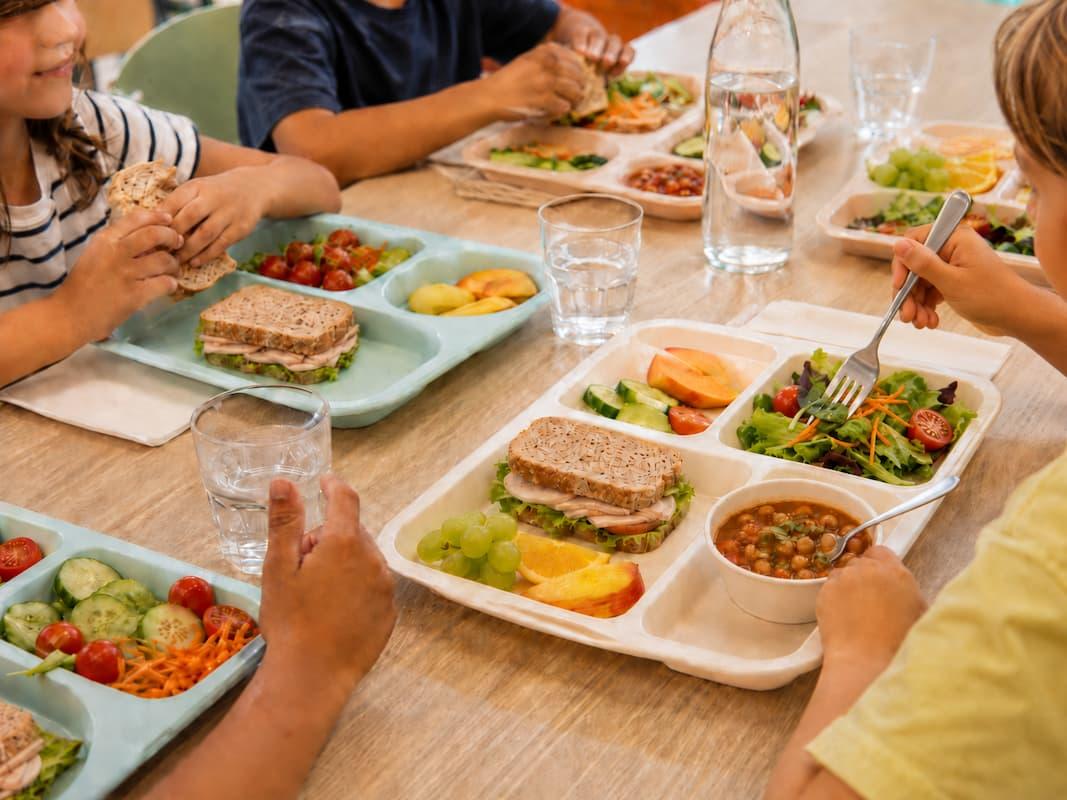
Why school canteens and vending open up a new opportunity for fruit and vegetables
Children’s nutrition is playing an increasingly important role in social, educational and health debates. Concern about the eating habits of children and teenagers, the prevalence of products with a poor nutritional profile and the need to encourage healthier choices have placed educational centres firmly in the spotlight.
In this context, school canteens, cafeterias and vending machines are no longer secondary spaces; they are becoming environments with real power to influence behaviour. The issue is no longer limited to the lunch menu, but to the entire food environment: which products are available, which options are normalised and what role fresh foods play during the school day.
For the fruit and vegetable sector, this shift represents a clear opportunity. Fruit, vegetables and fresh produce have a natural advantage: they are recognisable, fresh foods aligned with a balanced diet. However, that advantage must be turned into specific solutions for each channel: incorporating whole fruit, cut fruit, salads, ready-to-eat vegetables and vegetable snacks at different times of day, in formats that are convenient, safe and appealing for minors.
The opportunity lies not only in increasing the presence of fresh produce, but in doing so consistently, accessibly and in a way that fits the real routines of educational centres.
What the legislation says about school food and healthy vending
The base text refers to Royal Decree 315/2025, aimed at promoting healthy and sustainable eating in educational centres. From a sector perspective, this framework reinforces the importance of balanced menus, an improved food offer and the presence of products with a better nutritional profile.
The regulatory trend points towards school environments offering healthier options, both in the canteen and at other consumption points. This may support a greater presence of fresh produce, simple options, adapted portions and foods that help improve the quality of the daily diet.
In this scenario, fruit and vegetables can gain ground over products that are high in sugar, fat or salt, provided they are presented in a way that is convenient and viable for operators, educational centres and public administrations.
How the regulation could affect growers, distributors, vending operators and technologists
The potential impact extends across the entire supply chain. For growers, cooperatives and producer organisations, the school channel may open up new planning opportunities, especially when working with seasonal, local produce and supply calendars aligned with crop campaigns.
For marketers and distributors, the challenge will be to design specific proposals for contract catering and vending: suitable sizes, manageable formats, regular delivery, traceability and the ability to respond to tenders or service contracts.
Companies specialising in fresh-cut produce may find particularly favourable ground in washed, cut, packaged and ready-to-eat products.
For technologists, packaging companies and vending operators, the challenge will be to resolve issues around refrigeration, shelf life, restocking, rotation and user acceptance.
Comparative table: school canteen versus healthy vending
|
Aspect |
School canteen |
Healthy vending |
|
Consumption occasion |
Mainly lunchtime meals |
Breakfasts, mid-morning snacks, afternoon snacks or occasional consumption |
|
Product type |
Fruit as dessert, vegetables on the menu, salads, side dishes |
Whole fruit, cut fruit, crudités, vegetable snacks, individual salads |
|
Logistics requirement |
Regular supply to the kitchen or concession company |
Frequent restocking and temperature control |
|
Commercial driver |
Price, volume, traceability and menu adaptation |
Convenience, shelf life, visual appeal and ease of consumption |
|
Sector opportunity |
Greater presence in contract catering |
New fresh consumption channel outside retail |
Which fruit and vegetables could gain prominence in educational centres
The products with the greatest potential will be those that combine ease of consumption, resilience, good post-harvest performance and acceptance among children and teenagers.
Whole fruit remains a basic option because of its simplicity, but it can be strengthened through more convenient formats. Cut fruit, provided it is properly preserved, can make consumption easier in playgrounds, cafeterias or refrigerated vending. Individual salads, fruit pots, crudités and vegetable snacks can expand the presence of fruit and vegetables beyond the canteen.
There is also scope to work with seasonal produce, which makes it possible to vary the offer, educate pupils about food diversity and connect school consumption with the agricultural calendar.
Characteristics table: fruit and vegetable formats for canteens and vending
|
Format |
Advantages |
Main challenges |
|
Whole fruit |
Simple, recognisable and easy to distribute |
Sizing, ripeness and acceptance |
|
Cut fruit |
Convenient and appealing |
Preservation, refrigeration and shelf life |
|
Individual salads |
Complete and healthy solution |
Packaging, restocking and price |
|
Ready-to-eat vegetables |
Convenience and nutritional value |
Texture, presentation and rotation |
|
Vegetable snacks |
Adapted to quick consumption |
Communication, flavour and differentiation |
|
Single-serve portions |
Portion control and ease of service |
Cost, packaging and sustainability |
From field to educational centre: how to organise the supply chain
For this opportunity to become established, the sector must organise an efficient chain from origin to point of consumption. Traceability, food safety, preservation, delivery frequency and adaptation for minors will be decisive factors.
Produce destined for educational centres requires regularity and planning. It is not enough to have high-quality fruit and vegetables; it is necessary to ensure they arrive at the right time, at the correct stage of ripeness and in formats compatible with the needs of kitchens, canteens or vending.
Collaboration between producers, fruit and vegetable hubs, logistics operators, contract catering companies and educational centres will be key to avoiding waste, adjusting costs and ensuring an attractive offer.
Healthy vending: the channel that can extend fruit and vegetable consumption
Healthy vending still represents a developing opportunity for the fruit and vegetable sector. Its potential lies in bringing fresh produce to consumption moments where other categories have traditionally dominated.
To compete in this environment, fruit and vegetables must be more than a healthy option. They need to be visible, appetising, easy to consume and reliable. Refrigerated machines, single-serve packaging, clear information, appropriate rotation and well-managed shelf life will be determining factors.
Success will also depend on user acceptance. In the case of children and teenagers, the product must communicate freshness, flavour and convenience immediately. The consumption experience will be just as important as nutritional value.
Practical glossary on school canteens, vending and food legislation
School canteen: contract catering service for pupils within an educational centre.
Healthy vending: vending machines offering products with a better nutritional profile.
Fresh-cut produce: washed, cut, packaged and ready-to-eat fruit and vegetables.
Contract catering: companies or operators that prepare and serve meals for groups, such as educational centres.
Traceability: the ability to follow a product’s journey from origin to consumer.
Shelf life: the period during which a food maintains appropriate quality and safety conditions.
Frequently asked questions about school canteens, vending and fruit and vegetables
What does the legislation require regarding school canteens and vending?
The regulatory approach reflected in the base text points to the promotion of healthier and more sustainable eating in educational centres, with particular attention to balanced menus and a food offer with a better nutritional profile.
Can fruit and vegetables be offered in vending machines?
Yes, provided the formats, preservation, restocking and food safety conditions are adapted accordingly. Refrigerated vending can open up an interesting route for fresh fruit, cut fruit, salads and vegetable snacks.
Which fruit and vegetable formats work best in educational centres?
Those that make consumption easier work particularly well: whole fruit of a suitable size, washed fruit, cut fruit, ready-to-eat vegetables, single-serve portions and formats designed for children’s servings.
What does a company need in order to sell to the school or vending channel?
It needs regular supply, traceability, logistics capacity, format adaptation, quality control, competitive pricing and an understanding of the needs of contract catering or vending.
How can the fruit and vegetable sector make the most of this opportunity?
Through partnerships with foodservice operators, vending companies, public administrations, educational centres, technologists and packaging companies, developing specific solutions for each channel.
List: key points for understanding the school and vending opportunity
- Healthy eating can act as a growth lever for fruit and vegetables.
- The school channel helps build consumption habits from an early age.
- Healthy vending expands consumption occasions beyond the canteen.
- Format innovation will be decisive in gaining acceptance.
- Logistics and refrigeration will condition the viability of fresh produce.
- Public-private collaboration will be key to consolidating sustainable models.
- Fruit Attraction offers an ideal framework for generating partnerships, visibility and innovation.