





AI in the fruit and vegetable sector: how to anticipate demand, prices and markets


By Alberto García, agri-food journalist Why AI is changing decision-making in the fruit and vegetable sector Artificial Intelligence is profoundly transforming Spain’s agri-food supply chain by offering innovative tools to address key challenges such as sustainability, efficiency and competitiveness. This technology has become a fundamental pillar for optimising production processes, improving product quality and ensuring food safety. In this context, AI is positioned as a true catalyst for technological innovation in the agri-food sector, enabling companies to adapt to a constantly changing environment and respond to the demands of a globalised market. Its impact ranges from advanced data analysis to task automation, opening up new opportunities for growth and development in the sector.
What artificial intelligence can predict in fruit and vegetables
AI can make highly useful predictions in the fruit and vegetable sector, although it cannot guarantee exact results because it depends on factors such as weather, pests, logistics and consumer behaviour. In practice, it usually combines historical data, weather information, market data, satellite images and sales figures to estimate what may happen.
In terms of demand, AI can predict which products will see higher consumption in the coming weeks or months, how promotions or price changes will affect sales, demand by region, customer or channel (supermarkets, exports, Horeca), and the impact of events, public holidays or temperature changes on consumption.
As for whether AI can help with price formation, it can predict upward or downward trends, likely price ranges at source and in specific markets, the effects of supply and demand on prices, and the influence of external factors such as energy costs, transport or imports. For example, an AI model could detect that a heatwave in northern Europe will increase demand for certain products, while high production in Spain, for instance, would exert downward pressure on prices.
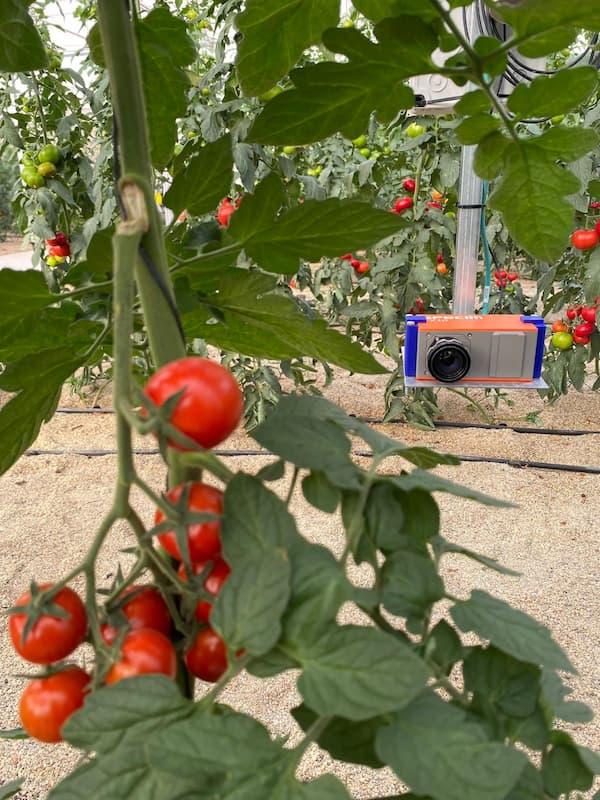
Regarding agricultural crop planning, AI already has forecasting models for likely campaign start and end dates, weekly production volumes and yield per hectare, including kilos per square metre, the optimal harvest date, risk of diseases or pests, and irrigation and fertilisation needs.
How a predictive model applied to foreign trade works
To obtain good AI predictions for foreign trade, historical data on prices, sales, production and crop estimates are needed, as well as climate data, import and export data, logistics costs and campaign calendars. In this way, a fruit and vegetable company can use AI to decide when to sell or store products, negotiate contracts with more information, adjust production to expected demand, reduce food waste, and optimise purchasing and logistics.
AI models for anticipating demand and prices
There are several AI approaches for anticipating demand and prices in fruit and vegetables. The choice depends on whether forecasts are needed for a company, a cooperative or a wholesale market.
Time series models are among the most widely used when historical price or sales data are available.
Examples include ARIMA/SARIMA, which are useful for seasonal patterns; PROPHET, which is easy to implement and effective with seasonality and public holidays; LSTM (Long Short-Term Memory), neural networks that capture complex relationships over time; and TRANSFORMERS for time series, which usually perform very well when large volumes of data are available.
They are suitable for predicting weekly tomato prices, monthly cucumber demand or production by campaign.
Other models are based on Machine Learning. These models incorporate many variables in addition to historical data, such as XGBoost, LightGBM, Random Forest and CatBoost. They can also use variables such as temperature indicators, rainfall, hours of sunshine, estimated production, exported volume, previous week’s prices, and transport and logistics costs.
Another model is Deep Learning. This is used when millions of records are available. Examples include LSTM, GRU, Temporal Fusion Transformer (TFT) and N-BEATS.
The Generative AI + Machine Learning model combines language models with structured predictions. These models can summarise sector news, analyse market reports, detect geopolitical risks, interpret weather reports or explain why a rise or fall in prices is expected. With quality data, it is common to obtain demand forecasts with an error of 5–10%, production forecasts with an error of 5–15%, and price forecasts with an error of 8–15%.
For a fruit and vegetable marketing company or cooperative, an effective architecture would be:
- XGBoost or LightGBM for the main price and demand prediction.
- LSTM or Temporal Fusion Transformer to detect trends and seasonality.
- Weather models to incorporate climate forecasts.
- A language model such as GPT to generate explanations, prepare reports and answer questions from commercial managers.
Use cases for growers, distributors and technologists
AI can add value across the entire fruit and vegetable chain, from cultivation to the point of sale. Its greatest impact is usually in increasing profitability, improving planning and reducing waste.
In the case of growers, AI supports crop planning, selecting which varieties to plant based on expected demand, estimating expected profitability by crop, optimising the sowing and harvesting calendar, avoiding overproduction and improving the prices obtained.
AI also has an impact on crop forecasting: estimating kilos per plot weeks before harvest, detecting deviations from previous campaigns, adjusting irrigation according to weather, soil and crop condition, reducing water and energy consumption, and detecting pests early.
For distributors and marketing companies, AI is focused on demand forecasting, estimating how much each customer will buy, anticipating consumption peaks and estimating market evolution. In terms of waste reduction, this is one of the greatest benefits of AI.
AI can also detect diseases, adjust irrigation and predict losses before harvest. During harvesting, AI helps harvest at the optimal time and automatically classify products by quality. In storage facilities, AI prioritises the dispatch of the most perishable batches, controls cold rooms and detects temperature anomalies.
Glossary of predictive AI for fruit and vegetables
Predictive AI: a branch of AI that uses historical data to anticipate future events.
Machine Learning: algorithms that learn patterns from data without being explicitly programmed.
Predictive model: an algorithm trained to make predictions.
Variable: a characteristic used by the model.
Prediction: an estimate of a future value.
Forecast: a prediction based on models and data.
Validation: checking the model’s performance using data not used during training.
Anomaly detection: identifying unusual behaviours.
Computer vision: the use of images for automated inspection.
Digital twin: a digital representation of an agricultural holding.
Precision agriculture: data-based management to optimise resources.
Frequently asked questions about AI, demand and prices
What data does AI need to forecast demand for fruit and vegetables?
It needs sales data, production data, weather data, calendar and seasonality data, market prices, inventory and stock data, logistics data, import and export data, consumer trend data, quality data and economic factors.
How does artificial intelligence help adjust prices in foreign markets?
AI can help adjust prices in foreign markets by forecasting market prices and prices by country, analysing competitors, enabling dynamic price adjustment and optimising margins.
Can AI reduce waste in the fruit and vegetable sector?
Waste reduction is one of the AI applications with the highest return on investment (ROI) in the fruit and vegetable sector. By anticipating problems and optimising decisions at every stage of the chain, AI helps more products reach consumers in better condition.
Is AI useful for small and medium-sized fruit and vegetable companies?
Yes. They may benefit the most, because many of their decisions depend on personal experience. AI does not replace that knowledge; it complements it with data analysis and predictions.