





Advances in NGTs for Fruits and Vegetables


Latest advances in new genomic techniques and their impact on the fruit and vegetable sector Author: Elena Fernández Guiral, agri-food journalist
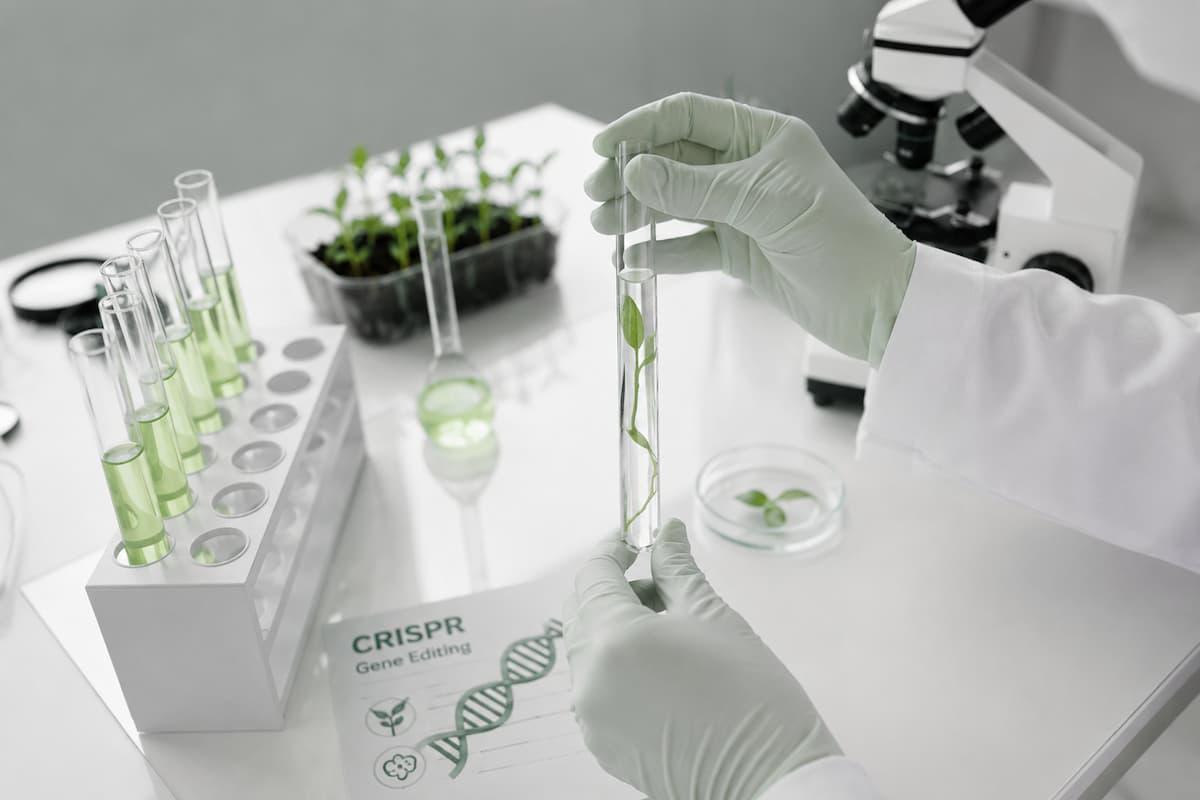
What NGTs are and why they are gaining prominence
New Genomic Techniques (NGTs) represent one of the most significant innovations in agricultural biotechnology over the past decade. They are a set of tools that make it possible to modify the DNA of living organisms in a targeted and precise way, without introducing genetic material from unrelated species, as is the case with Genetically Modified Organisms (GMOs).
Their emergence has triggered a true revolution in plant breeding. Where decades of crossbreeding and selection were once required, it is now possible to introduce specific changes into a plant’s genome within months. NGTs act on the organism’s own DNA. They can add, remove, silence, or rearrange sections of genetic material with unprecedented precision. The result can, in many cases, be indistinguishable from that produced by a natural mutation or conventional selection.
Scientific recognition of this technology peaked in 2020, when Jennifer Doudna and Emmanuelle Charpentier received the Nobel Prize in Chemistry for the development of CRISPR-Cas9, the best-known of these techniques.
Difference between NGTs, GMOs, and traditional plant breeding
Understanding what distinguishes NGTs from Genetically Modified Organisms (GMOs) and from classical breeding is essential to assess their real scope. Traditional breeding operates through successive crosses to select plants with desired traits. It is a slow process that can take decades and inevitably carries unwanted genetic variations.
GMOs incorporate genes from other species into the plant genome. This technology was at the center of intense social and regulatory debate during the 1990s and 2000s and remains subject to strict legislation in Europe.
NGTs represent a third pathway, as they modify the genome of the same species without introducing foreign DNA. Their results are, in most cases, equivalent to those that nature could produce spontaneously or that classical selection could achieve, but in a much shorter timeframe.
This equivalence forms the basis of the new European regulatory framework agreed between the Council and Parliament in December 2025, which distinguishes between NGT-1 and NGT-2 plants.
The NGT-1 category considers these plants similar to varieties developed through traditional methods. They will be verified by national authorities and will not require further checks for their progeny nor labeling as NGTs in the final product, except for seeds.
The NGT-2 category refers to plants with more complex modifications, which will remain subject to strict GMO legislation, including authorization, monitoring, and mandatory labeling.
Latest advances in NGTs applied to crops
CRISPR-Cas9: precise editing to accelerate plant breeding. And emerging technologies.
CRISPR-Cas9 is the technique that has democratized plant genome editing. It works like molecular scissors capable of locating specific regions of DNA and modifying them with great precision. An RNA molecule guides the Cas9 protein to the exact point in the genome where the cut must be made, allowing specific genes to be deactivated, corrected, or modified with a speed and accuracy unimaginable just ten years ago.
Its proven applications include tomatoes with higher lycopene content, strawberries with longer shelf life and better aroma, cucumbers more resistant to saline soils, and varieties with reduced allergens. A recent milestone is the Sicilian Rouge High GABA tomato, marketed in Japan since 2021 and the first CRISPR-edited food to reach the mass consumer market. This tomato contains between 4 and 20 times more GABA, an amino acid that helps promote relaxation and reduce blood pressure.
Base editing is an evolution of CRISPR that addresses one of its main limitations: the need to cut both strands of DNA. This technique enables rewriting individual letters of the genetic code without making full cuts, reducing the risk of unintended errors.
Finally, prime editing represents the most advanced generation of genome editing. It works like a word processor for DNA, enabling search, deletion, and replacement of genetic information directly in the genome. It can insert, remove, or substitute short DNA sequences with even greater specificity than previous techniques, without double-strand breaks or external DNA templates.
Cisgenesis and targeted mutagenesis: key techniques in the European debate
Cisgenesis transfers genes from the same species or from species that can naturally crossbreed. Targeted mutagenesis induces specific mutations at defined points in the genome. Both are at the core of the new European regulation, adopted by the EU Council in April 2026 and expected to come into force by mid-2028. They are therefore the techniques with the most immediate pathway to the European market in the short term.
Advances with the greatest impact on fruits and vegetables
One of the areas with the greatest potential impact is the development of varieties capable of resisting diseases that currently require large amounts of plant protection products. Xylella fastidiosa in olive and almond trees, downy mildew in vineyards, or Botrytis in strawberries are examples of pathologies where classical breeding has faced major limitations. NGTs make it possible to identify and activate resistance genes already present in the plant genome and introduce them precisely into high-performing commercial varieties without losing their agronomic or organoleptic characteristics.
NGTs also offer a fast route to adapt existing varieties to climate change by editing genes that regulate water stress, which have shown yield improvements of up to 30% in field trials. These varieties help combat climate change from multiple angles, maintaining production with less water and energy.
Post-harvest losses account for between 20% and 40% of global fruit and vegetable production. NGTs make it possible to act on genes that regulate ripening and oxidation, producing varieties that better maintain texture, color, and flavor during transport and commercialization. They also enable a qualitative leap in response to growing demand for functional, value-added products.
What is the real difference between an NGT plant and a traditional GMO?
The fundamental difference lies in the origin of the genetic material used. A GMO incorporates genes from a non-compatible species into the plant genome. An NGT plant, in the vast majority of cases, has only been modified within its own DNA or using genes from species with which it could naturally crossbreed. The result may be genetically indistinguishable from a variety obtained through conventional selection.
Do foods obtained through NGTs need to be labeled in supermarkets?
According to the regulation agreed in December 2025, NGT-1 products will not require specific labeling for the final consumer. The only exception is seeds and plant reproductive material, which must be identified to ensure traceability. NGT-2 products will maintain mandatory labeling equivalent to that for GMOs. The logic of the system is proportional: not to stigmatize what is functionally equivalent to conventional products, while still providing information when modifications are significantly more complex.
How to assess NGTs from a fruit and vegetable company perspective
Before incorporating NGT varieties into a production or commercial strategy, it is advisable to ask key questions: Does this variety solve a real agronomic problem? Will target markets accept these new varieties and value them economically? How will consumer perception evolve?
Can NGTs be used in organic farming?
The official answer, for now, is no. The European regulation agreed in December 2025 explicitly states that no category of NGT may be used in organic production. However, internal debate is growing. Some experts point out that less invasive techniques, such as targeted mutagenesis within the same species, are difficult to distinguish from natural processes. The regulatory debate remains open.
Conclusions: key takeaways for the sector
New Genomic Techniques have moved from being a laboratory promise to becoming a regulatory and commercial reality that is rapidly evolving. For the fruit and vegetable sector, operating under increasing climate pressure, NGTs represent one of the most relevant innovation tools for the coming decade.
The main value drivers offered by NGTs are: resistance to diseases and pests without the use of plant protection products, adaptation to climate stress, reduction of post-harvest losses, and improvement in nutritional and organoleptic quality aligned with increasingly demanding, health-oriented consumers.
Quick glossary on NGTs
CRISPR-Cas9: Genome editing system that acts as guided molecular scissors, allowing DNA to be cut and modified at specific points in the genome.
Base editing: A CRISPR variant that enables the modification of individual nucleotides without cutting both DNA strands.
Prime Editing: Next-generation technique capable of inserting, deleting, or replacing short DNA sequences with high precision and without double-strand breaks.
Cisgenesis: Introduction into a plant of genes from the same species or from species with which it can naturally crossbreed.
Targeted mutagenesis: Induction of specific mutations at defined points in the genome without inserting external genes.
FAQs on the latest advances in new genomic techniques
|
Question |
Answer |
|
Are NGT varieties already available on the European market? |
Not yet in a widespread manner. The new regulation was adopted by the Council in April 2026 and is pending ratification by the European Parliament. With a 24‑month transitional period, the framework will apply from mid‑2028. |
|
Are foods obtained with NGTs safe? |
The European regulation states that they must be as safe as conventional varieties. NGT‑1 varieties go through a simplified procedure, while NGT‑2 require a full evaluation prior to authorization. |
|
Can EU countries ban the cultivation of NGT plants? |
Member States may restrict the cultivation of NGT‑2 plants, but not NGT‑1, which are considered equivalent to conventional varieties. |
|
When will Spanish farmers be able to access NGT seeds? |
The first seeds under the new framework could be available from 2028, although the actual commercial offering will expand progressively in the following years. |