





TIMAC AGRO is helping to reduce the fertilisation footprint


TIMAC AGRO and INTERMALTA have reduced the carbon footprint of malting barley by up to 40 per cent and are strengthening their partnership to produce malting barley with a lower environmental impact, following positive results over the last three growing seasons.
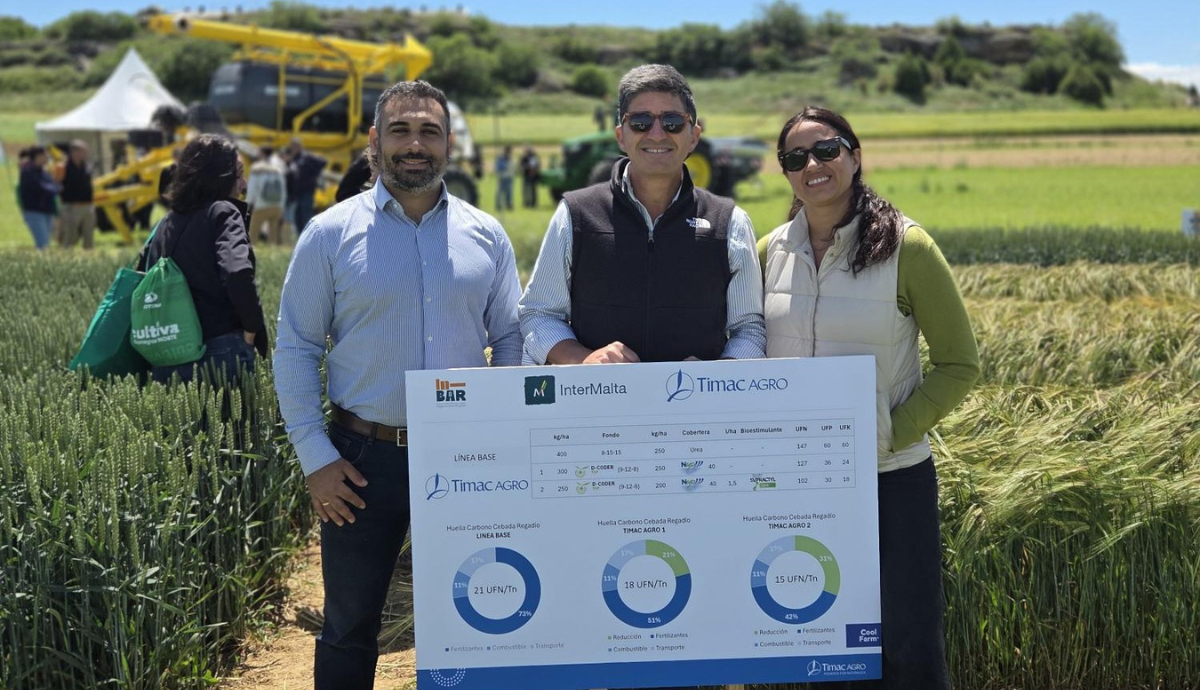
TIMAC AGRO has helped to reduce the fertilisation footprint by combining high value-added fertilisers with efficient management through bespoke fertilisation plans. In this case, trials have recorded a 40 per cent reduction in the carbon footprint and a 35 per cent reduction in the amount of fertiliser applied, whilst production has increased by 10 per cent.
The fertiliser company TIMAC AGRO and the leading malt producer, Intermalta, are strengthening their collaboration to produce malting barley with a lower environmental impact, following positive results over the last three growing seasons.
This collaboration forms part of the InBAR Programme promoted by the malting company—which supplies the malt used in two out of every three beers—alongside other industry stakeholders. The aim is to reduce emissions throughout the crop’s value chain, from its cultivation in the field to industrial processing.
TIMAC AGRO, as one of the companies participating in the project, has, through its proposals, reduced the carbon footprint of barley by up to 40 per cent and the application of nitrogen fertiliser units by up to 35 per cent compared with conventional practices. Furthermore, a 10 per cent increase in production and improvements in quality have been recorded.
Given that fertilisation accounts for 70 per cent of emissions in this crop, Intermalta is thus fulfilling a significant part of the InBAR initiative’s objective, which aims to market a total of 100,000 tonnes of low-emission barley.
An efficient fertilisation strategy: key to reducing the carbon footprint
To achieve a reduction in the carbon footprint of malting barley within the framework of this programme, Intermalta has drawn on a guide to good agricultural practices, using a methodology based on the international protocol for quantifying and reducing greenhouse gas (GHG) emissions, verified by AENOR.
In this regard, TIMAC AGRO has contributed a comprehensive strategy that incorporates the know-how gained from years of advising on this crop and utilises standard products from its portfolio. It has thus employed a combination of efficient fertilisers and biostimulants alongside bespoke fertilisation plans, where management has proved key: adjusting the dose, determining the optimal time of application and ensuring greater efficiency in nutrient uptake. All of this has been carried out with the support of its technical staff, who have advised farmers and distributors throughout the process.
“Our aim is to help produce sustainable barley that ensures a lower environmental impact, alongside quality and profitability, and we have achieved this,” said TIMAC AGRO.
For their part, Intermalta has stated that “collaboration with companies such as TIMAC AGRO is essential to ensure we remain in step with the realities of the sector”. They added: “Demonstrating that the expected reductions can be achieved through more efficient fertilisation helps us to consolidate the InBAR Programme and secure its future”.
This season, the InBAR Programme will cover 40,000 tonnes of barley with reduced emissions. Looking ahead to future seasons, it plans to continue growing with increasingly ambitious targets, both in terms of volume and emissions reductions, until the final objective is achieved.
TIMAC AGRO will be at Fruit Attraction at stand 9D26