





The year of defending value: a snapshot of Spanish fruit and vegetable exports in 2025


By: Míriam Pérez Mena, agri-food journalist. @miriamcarnica The trade balance for Spain’s fresh fruit and vegetable sector throughout 2025 offers a clear reading: international markets no longer measure the success of a campaign by the gross volume shipped, but by the strategic ability to defend the unit value of production at destination. Consolidated data from the Department of Customs and Excise, processed by FEPEX, show a year marked by clear paradoxes, in which a contraction in supply at origin coexisted with record export turnover figures. Spain ended the year with overall fruit and vegetable exports in 2025 of 12 million tonnes of fresh fruit and vegetables, representing a 4% decline compared with the previous year. However, the economic balance offset this fall with almost geometric precision: the value of overseas sales grew by 4%, taking total returns to a historic figure of €18.666 billion. This scenario highlights the efforts made by producers and marketers to pass on to destination prices the rising cost of inputs, water scarcity and the regulatory costs associated with the demanding standards of the European Union’s Green Deal. The Spanish sector therefore demonstrates its resilience by prioritising profitability over volume in an increasingly competitive international landscape.
Vegetable exports in 2025: the decline of strategic crops
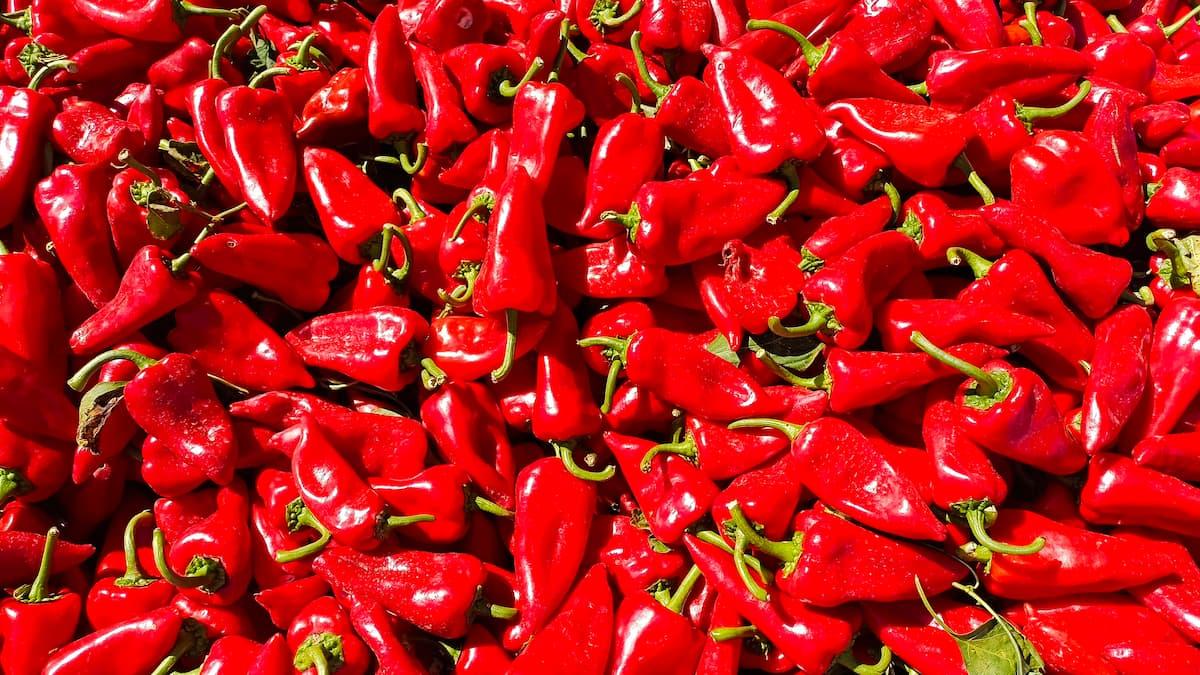
The performance of exports by product family reveals that the fall in national volume was driven almost entirely by the category of vegetables. Overseas shipments of fresh produce fell by 7% year on year, reaching 5.3 million tonnes. Turnover in this segment showed barely any variation compared with the previous year, recording slight stabilisation of 0.4% to close at €8.167 billion.
Within this group, the situation of tomato exports is particularly symptomatic of the structural changes facing the sector at origin. Considered a key crop because of its social and economic impact, Spanish tomatoes suffered a 15% contraction in export volume, falling to 581,361 tonnes. This loss of share on international shelves was also reflected financially, with a 5% decline in value to €1.052 billion, under pressure from the strength of third countries and the overlap of their calendars in European markets.
Similarly, high-volume winter crops such as lettuce and cabbage also recorded downward trends. Lettuce fell by 4% in volume (740,258 tonnes), while managing to keep its value flat at €954 million, whereas cabbages dropped by 2% both in tonnes shipped (515,530) and in revenue received (€771 million). These figures show how rising production costs and weather-related factors had a greater impact on the consistency of volumes in leafy and winter-cycle vegetables.
Fresh fruit exports: quality and sizes command higher prices
The performance of the fresh fruit segment followed a very different path, becoming the main driver of economic growth for Spanish exports. Although total export volume recorded a very slight downward correction of 1%, totalling 6.6 million tonnes, revaluation in destination markets was outstanding. The overall value of exported fruit climbed by 6.5% to reach €10.499 billion.
After citrus fruit, which indisputably maintains its position as the backbone of Spain’s export sector, watermelon recorded a clearly expansive year. Breaking with the contractionary trend seen across the rest of the category, overseas sales increased by 3% in volume and 8% in value, translating into 820,611 tonnes and €604 million for exporting companies.
Meanwhile, stone fruit showed that the European market is willing to pay premiums when quality, freshness and size are optimal, overcoming production declines caused by spring weather conditions. This was the case for nectarines, whose shipments fell by 2% in volume (332,831 tonnes) but whose value surged by a notable 16%, approaching €577 million. A similar pattern was seen in flat peaches, whose overseas sales fell by 9.5% in volume (185,142 tonnes), while returns grew by 10% to reach €349 million. In the berries category, strawberries reaffirmed their leading position with a 1% increase in tonnes (265,182) and solid 8% growth in turnover, reaching €871 million.
The Autonomous Communities exporting the most fruit and vegetables
The regional distribution of Spain’s fruit and vegetable export business retains a very clearly defined structure, with four Autonomous Communities accounting for almost all international marketing capacity.
Andalusia leads the national ranking, handling the export of 3.9 million tonnes. Although this figure was down 2% compared with the previous year, it accounted for 33% of all Spanish exports. In economic terms, the Andalusian region made a highly significant qualitative leap (+6%), raising its export turnover to €7.145 billion.
The Valencian Community retained second place with 3.3 million tonnes (5% less than the previous year) and a 28% share of overall volume, while defending 2% growth in value (€4.790 billion). The Region of Murcia took third place on the agro-export podium with 2.3 million tonnes (-4%), representing 20% of national volume, and export revenue of €3.489 billion (+2%). The leading quartet is completed by Catalonia, with a volume of 978,584 tonnes (-3%) and excellent performance in value terms, up 6% to €1.391 billion.
Destinations for Spanish exports: Europe as the undisputed stronghold
As regards destination markets for production, 2025 once again made clear that Spain’s true natural and essential market is the European continent. The borders of the European Union absorbed 84% of Spanish fruit and vegetable exports, totalling 10 million tonnes and generating €15.249 billion, representing a 5% year-on-year increase in turnover.
If the United Kingdom —a key, established market in the post-Brexit period— and the remaining markets in the continental environment are added to the EU-27 bloc, European dominance is overwhelming: 97% of fruit and vegetables leaving Spain are bound for European destinations, equivalent to 11.7 million tonnes and a combined value of €18.188 billion (4% more than in 2024).
This focus on short- and medium-distance markets stands in stark contrast to the progressive loss of weight of sales to non-European countries. Shipments by Spanish companies to overseas markets fell by 14% in volume, to barely 316,772 tonnes. The economic impact of this decline translated into an 11% drop in the value of operations, down to €478 million.
According to FEPEX’s sector analysis, this continued decline outside Europe is due to structural factors that are very difficult for Spanish companies to overcome: the proliferation of protectionist policies in third countries and the immense technical and bureaucratic complexity that slows down, and sometimes paralyses, the negotiation and opening of the mandatory phytosanitary protocols required to operate in these markets.
The close of 2025 confirms that the success of Spanish fruit and vegetable exports depends on consolidating their role as Europe’s preferred supplier, leveraging food safety, traceability, logistical proximity and the high quality that non-EU competitors are still unable to match.