





From the Gulf to China: the new map for Spanish fruit and vegetables


By Elio Sancho, agri-food journalist The landscape of Spanish fruit and vegetable exports is redrawing its commercial borders. In a context marked by the maturity of the European market and the growing demands of large continental retailers, diversification into third countries has shifted from being a recommended option to a strategic imperative. The designation of the United Arab Emirates and China as guest importing countries at Fruit Attraction 2026 underlines this shift: the axis of high-value opportunities is moving decisively towards the Persian Gulf and the Asian giant. This alliance comes at a time of sector reconfiguration. Despite local climate challenges and global logistics constraints, the value of Spanish exports continues to show resilience, consolidating a competitive position that is seeking new ceilings. Entering these long-distance destinations requires understanding a commercial, logistics and human framework that is very different from the one governing road transport to the European market.
The product route: from the Spanish field to the international shelf
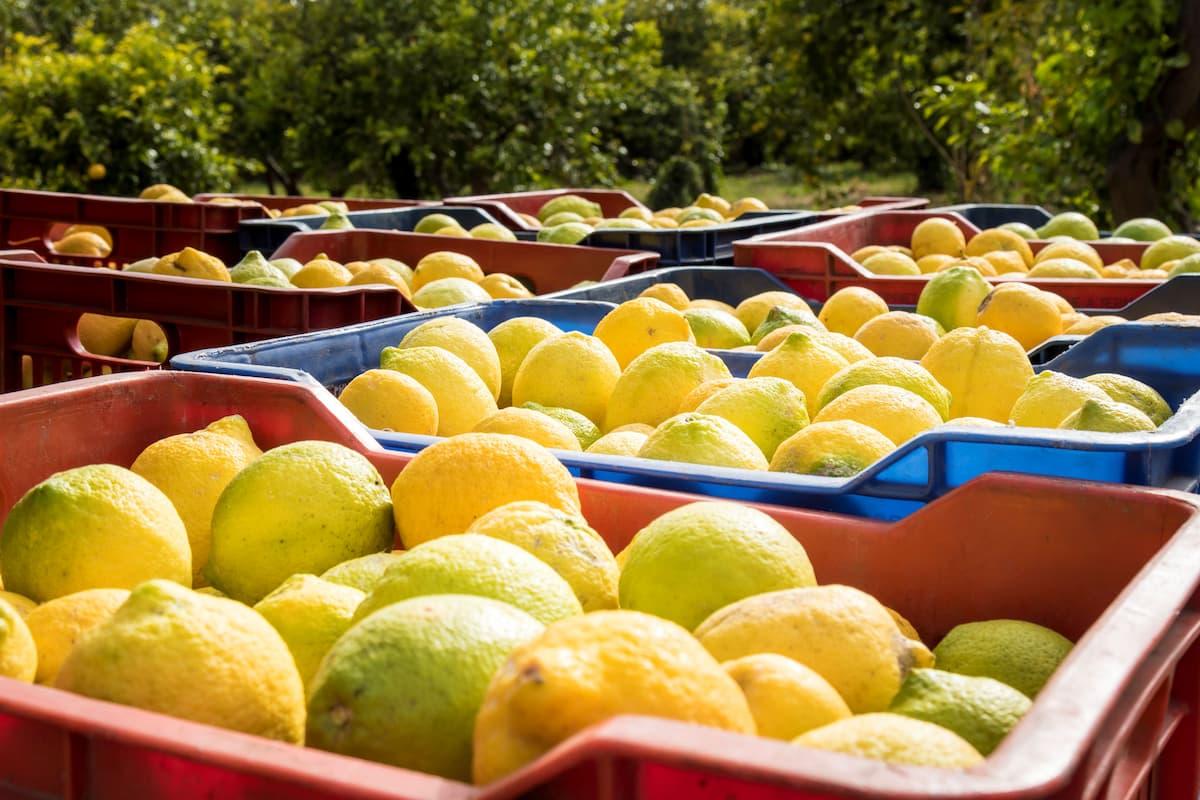
Logistics to third countries is a race against the clock where there is no room for error. Unlike refrigerated trucks that transport vegetables from Almería or lemons from Murcia to European shelves in 48 or 72 hours, the journey to Dubai or Shanghai completely transforms the supply chain.
Everything starts at origin. Fruit intended for transcontinental export must be selected according to rigorous criteria at packing centres. Not all production is suitable for long journeys; varieties are chosen for optimal firmness and an exact commercial ripeness point, preventing physiological ripening from accelerating before arrival at destination.
The critical link is the cold chain. From harvesting, rapid pre-cooling is vital to slow the fruit’s metabolism. Once the goods are palletised, they are loaded into state-of-the-art refrigerated containers (reefers), equipped with controlled atmosphere systems that regulate oxygen and carbon dioxide levels, simulating a state of ‘dormancy’ in the product.
Maritime transit is the real time bottleneck. A shipment to the port of Jebel Ali (Dubai) requires between 15 and 20 days of sailing from the ports of Valencia, Algeciras or Barcelona. In the case of China (ports such as Shanghai or Nansha), the journey stretches to a range of 30 to 40 days. During this interoceanic voyage, telematic monitoring systems record every temperature variation, as a deviation of barely one degree Celsius can ruin a container worth several thousand euros.
Upon arrival at destination, the role of the local importer is decisive. This agent must handle customs management, urgent phytosanitary clearance and have refrigerated logistics platforms to load and distribute the goods with agility. Finally, the product reaches the sales channel. While in the United Arab Emirates distribution is divided between premium supermarkets (such as Spinneys or Waitrose) and traditional wholesale markets, in China the final destination is usually specialised large-scale retail (for example, Alibaba’s Hema, Sam's Club) and powerful fresh e-commerce platforms serving the growing urban middle class.
What is not seen in an export operation
Behind the shine of a pallet of Spanish citrus fruit displayed in a shop in Beijing lies a complex invisible machine that ranges from interstate bureaucracy to financial risk management.
- Phytosanitary protocols: they are the fruit’s passport. China stands out as one of the most restrictive countries in the world. Each product authorised to enter its territory (such as citrus fruit, stone fruit or table grapes) has a specific bilateral protocol signed with the General Administration of Customs of China (GACC). These documents require meticulous inspections at farms of origin, official registration of packing centres and specific cold treatments during transit to ensure the eradication of pests such as the Mediterranean fruit fly (Ceratitis capitata).
- Shelf-life management: extending the product’s commercial durability without altering its organoleptic qualities is the major R&D&I challenge. This is where modified atmosphere technologies, natural edible coatings that slow dehydration and ethylene absorbers inside the container come into play.
- International certifications: complying with European regulations is not enough. To operate in Gulf countries, Halal certification may be required for certain processed or fresh-cut foods, while traceability standards such as GlobalGAP and social responsibility audits are mandatory for top-tier importers in both regions.
- Margins and competition: logistics costs and tariffs reduce unit margins, forcing Spanish companies to position themselves in premium quality segments. Competition is fierce: in the Gulf, Spain competes with the proximity of Egypt, Turkey and India. In China, counter-seasonal supply from southern hemisphere countries such as Chile or South Africa, together with massive local production, define the commercial windows.
- Commercial trust: in these cultures, business is not merely transactional. Trust is built over years of personal relationships, strict contract compliance, consistent supply and physical presence at trade missions and fairs.
Market voices: what a company must listen to before deciding
Successfully entering these distant markets requires alignment between producers and marketers. Their experiences define the ideal roadmap to reduce risks.
The producer’s perspective: caution around fresh produce and opportunity in high value. From the agricultural organisation COAG, the designation of the United Arab Emirates and China as guest countries at Fruit Attraction 2026 is analysed pragmatically. Farmer and COAG secretary general Andrés Góngora lowers expectations around a potential export ‘boom’ in fresh vegetables and fruit by volume to these destinations, identifying logistics and the cost of air transport as the main bottlenecks.
“Working commercially with these two countries in fresh produce is very difficult for a simple matter of logistics and air transport costs; the potential and our main market will continue to be Central Europe,” says Góngora.
Even so, Góngora points out that there are very specific niches where Spanish production does have clear room for penetration. The focus should not be on mass-market tomatoes or lettuce, but on heavy, long shelf-life products with a perception of superior quality. “Where we do see a clear opportunity, without the transport-related problems, is in nuts —such as Mediterranean almonds, hazelnuts or pistachios— and in gourmet preserves, which are high value-added products that are highly appreciated in those markets due to their purchasing power,” he explains.
In the specific case of China, the COAG representative highlights the driving role of international tourism in consolidating consumption habits at origin, creating demand for emblematic products such as almonds or turrón after visits to Spain. “Chinese tourism has high purchasing power and, during trips, develops a taste for certain Spanish agri-food products, later generating consumer demand when visitors return to their country,” he notes.
COAG’s analysis invites us to look at the Asian giant not only as a buyer, but as a global technological and industrial player. With greenhouse surface area constantly expanding and massive domestic consumption absorbing its own production, China’s interest in Spain is moving more towards knowledge transfer and the auxiliary industry than traditional fruit and vegetable trade. “China’s real interest is not in buying fruit or vegetables from us, or selling them to us, but in the auxiliary industry and technology applied to the field, alongside its own growth in production area and its global control over raw materials for fertilisers.”
From Fepex, they highlight the complexity of selling to China and the high costs of shipping fruit and vegetables to the United Arab Emirates. “China is a very limited market for both Spanish and EU producers,” the association states. In 2025, Spanish exports of fruit and vegetables stood at just 1,784 tonnes, representing 0.01% of Spain’s total export volume. The same applies at EU level: the EU’s 27 Member States exported only 10,084 tonnes of fresh fruit and vegetables to China.
“China is a highly complex market when negotiating access for EU fruit and vegetable production, requiring protocols whose negotiation can take four or five years. Nevertheless, in recent years progress has been made in opening the Chinese market to Spanish fruit and vegetable products,” Fepex notes.
The following fruit, vegetables and nuts can currently be exported: citrus fruit, stone fruit —peaches and plums—, grapes, persimmons, almonds and cherries. Protocols have also been approved for dried figs and pistachios, but the relevant administrative process has not yet been completed to allow exports, the national fruit and vegetable organisation specifies.
“The choice of China as guest country at Fruit Attraction 2026, a country that has already held this role in previous editions, will help strengthen trade relations between operators on both sides.” According to Fepex, although highly complex, the Chinese market is of great interest to fruit and vegetable exporters because, with a population of more than 1.4 billion inhabitants and a rapid urbanisation process, the country has seen a significant change in consumption patterns, driven by a growing middle class that demands fresh, healthy and high-quality products.
Regarding the United Arab Emirates, Fepex highlights that it has been one of the main non-European destinations for Spanish fruit and vegetable exports. In 2021, 40,441 tonnes were exported, a volume very similar to that of 2022, but since then there has been a sharp decline, with shipments in 2025 standing at 13,621 tonnes.
This decline is due to several factors, but Fepex points especially to the increase in overall costs and, above all, logistics costs. “In recent years, maritime freight rates have risen, even doubling on some routes. In addition, geopolitical tensions make transport more expensive and slower, resulting in a loss of competitiveness in distant destinations and, therefore, a reduction in volumes,” they state.
However, they stress that the image of Spanish products in this country was and remains positive. “It is associated with quality and competitive pricing, which increases the chances of reaching agreements with the country’s food companies, whether to cover domestic consumption or to supply the channels serving the tourism sector, since the United Arab Emirates and, specifically, Dubai, have become one of the world’s most visited destinations in recent years.”
Fepex concludes that “this is why the United Arab Emirates has been chosen as guest country for this 18th edition of Fruit Attraction, because it will help revitalise this market as one of the most promising outside Europe, also taking into account that Dubai acts as a logistics and re-export platform for the entire Gulf, Asia and Africa.”
From the distribution sector, the National Association of Large Distribution Companies (ANGED) recognises that these countries are markets with strong potential. Spanish fruit and vegetables have a good reputation for quality, variety, safety and supply capacity, and that is a clear advantage, they point out.
This is highlighted by María Sánchez, Food Director at ANGED Distribution: “The United Arab Emirates can work both as a destination market and as an entry platform to other countries in the region. Presentation, consistent quality, convenience and product shelf life are highly valued there,” although she acknowledges that logistics is a critical factor due to distance and climate conditions.
“China offers enormous scale, but it requires a very carefully developed strategy. Access protocols, logistics times and consumer preferences can vary greatly depending on the product and the region,” María Sánchez points out.
In these markets, packaging is highly important, both for protection and for image. For this reason, she emphasises that origin, brand, trust and formats suitable for gifts or individual consumption can make the difference. “There are real opportunities, but these are not markets that can be entered through a one-off operation. They require continuity, local knowledge, product adaptation and long-term investment,” she says.
To address the logistics challenge, experts in technology applied to the agri-food sector point out that post-harvest technology is the bridge that makes it possible to shorten distances and reduce risks. Advances in real-time container monitoring through IoT sensors —the Internet of Things— enable quality departments to know the humidity, temperature and gas concentration conditions during the journey, making it possible to renegotiate or divert the cargo in the event of any technical incident.
Common questions about Arab and Chinese fruit and vegetable markets
When considering the commercialisation of fruit and vegetables in the United Arab Emirates and China, several questions may arise that should be clearly addressed.
Why can the United Arab Emirates be a gateway to Arab markets?
The United Arab Emirates and, more specifically, the emirate of Dubai, acts as the major logistics and financial hub for the Middle East and North Africa (MENA) region. Its port infrastructure and free zones allow a substantial share of the fruit and vegetables entering the country to be swiftly re-exported to neighbouring markets such as Saudi Arabia, Kuwait, Oman or Qatar, multiplying the reach of Spanish exporters.
What makes the Chinese market attractive for the fruit and vegetable industry?
Mainly the size of its consumer market and the development of an urban middle class with high purchasing power, increasingly aware of food safety and health. Chinese consumers perceive imported European products as a guarantee of the highest quality and strict sanitary standards, and are willing to pay a significant price premium for fruit that delivers freshness, flavour and impeccable presentation.
Juan Carlos Pérez Mesa, coordinator of the Market Intelligence Department at Coexphal and professor at the University of Almería, believes that China sees Europe more as a potential destination than as a supplier of fruit and vegetables. “I hope reality proves me wrong, but the Middle East is closer to major real and potential suppliers. I am referring to Egypt or Turkey. Finding room for a unique product with a strong tradition in Spain should be the objective,” he says. Regarding the United Arab Emirates, he does not believe that “there is a technological difference in horticulture that puts us one step ahead of competitors in countries such as Turkey and Egypt, or even Morocco.” He stresses that “there is a spearhead of innovative auxiliary industry that manages to sell at origin and create a local competitive advantage; what gives us an advantage, and does exist, is know-how, empathy and a service-oriented mindset towards the buyer (retailer) and end customer (consumer), which regions such as Egypt, Turkey or Morocco do not have.”
Which Spanish fruit and vegetables may have the greatest international potential?
In these long-transit destinations, products with greater natural structural strength lead the options for commercialisation.
- Citrus fruit (oranges, mandarins and lemons): their peel gives them optimal resistance for long sea crossings.
- Stone fruit (peaches, nectarines, flat peaches and plums): they have highly attractive marketing windows in China during the European summer, when local Chinese production does not meet high-quality demand.
- Seedless table grapes: a rising product with sustained growth in Asian consumption habits.
- Garlic and onions: thanks to their excellent shelf life, they have a very stable commercial flow towards the Gulf region.
What barriers should a company anticipate before exporting to these destinations?
The main initial barrier is administrative: the slow process of obtaining phytosanitary market-opening permits and farm approval. This is compounded by logistics barriers stemming from instability on global maritime routes —such as transit crises in the Red Sea, which force vessels to circumnavigate Africa, increasing costs and travel days—, the risk of customs delays and language and cultural differences when negotiating quality claims.
How can Fruit Attraction help validate opportunities in these markets?
By designating China and the United Arab Emirates as guest countries, the fair brings together in Madrid the main buyers, supermarket chains, state importers and distributors from these regions through trade missions. This allows Spanish companies to hold top-level face-to-face meetings (B2B) without leaving Spain, facilitating product validation, contract negotiation and direct testing of buyer demand without incurring the high costs of an individual commercial prospecting trip.
What this journey from the Gulf to China leaves behind
The new global map of fruit and vegetable exports requires a profound shift in mindset within the Spanish agricultural business fabric. The future of the sector no longer depends solely on consolidating traditional European markets, but on learning to operate confidently in distant, highly competitive and culturally diverse commercial environments.
The prominent presence of the United Arab Emirates and China on the international stage of Fruit Attraction 2026 should be read as an unequivocal call to action. Those companies and cooperatives that invest in export consortia to gain volume, commit to innovation in post-harvest preservation and understand the rigour of international protocols will not only be able to overcome short-term crises in the continental market, but will also lead the fruit and vegetable supply to the major consumption centres of tomorrow. The route from the Spanish field to the East has already been mapped out; completing it successfully is the great test for the coming years.