




Auto industry and aftermarket sector gather at Global Mobility Call to redefine the future


Manufacturers, dealerships and aftermarket service providers come together in Madrid to tackle the biggest transformation of the auto industry in decades.
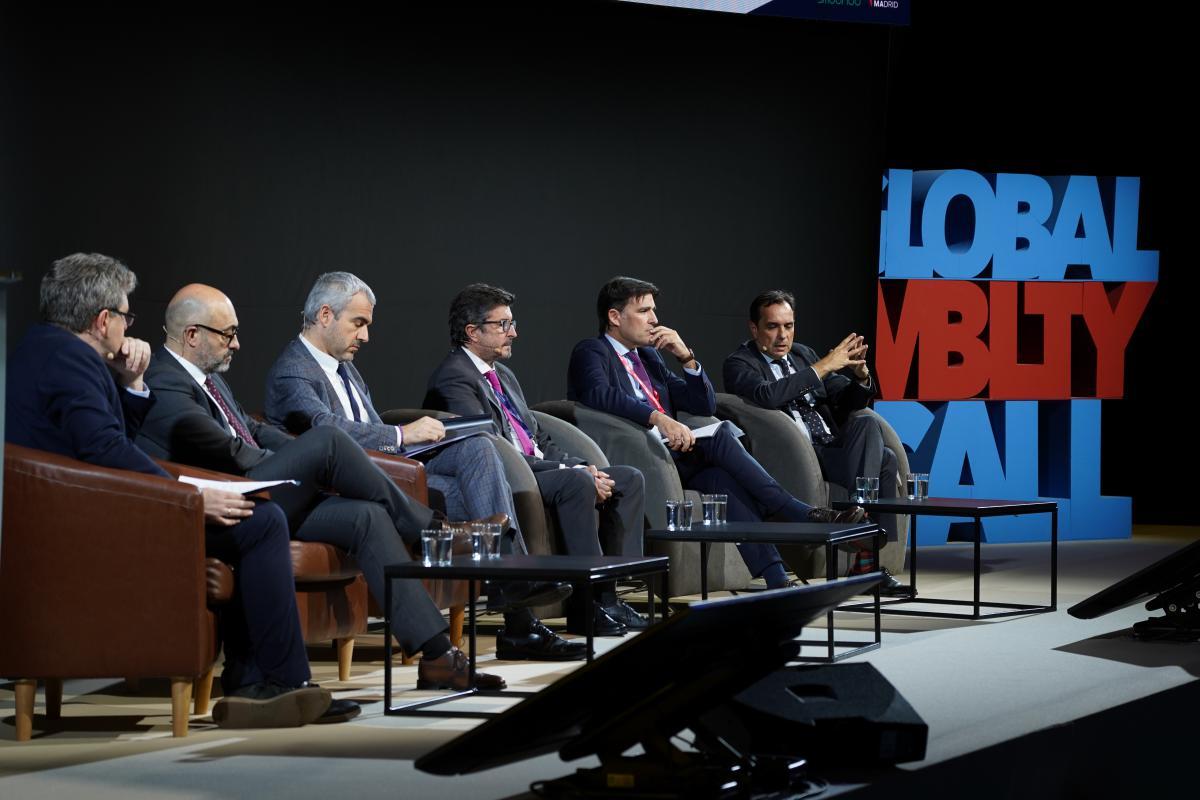
The automotive industry is at a crossroads. Electrification, connected vehicles, regulatory pressure and new business models are forcing the entire ecosystem – from manufacturers to the final link in the aftermarket chain – to redefine their roles. Against this backdrop, Global Mobility Call, which takes place from 9 to 11 June at IFEMA MADRID, stands out as one of the key meeting spaces where the sector charts its course.
The event, structured around ten major strategic pathways, positions the automotive sector as one of the cornerstones of future mobility, particularly through the block dedicated to the auto and software industry, bringing together technology, business and innovation.
ANFAC and manufacturers facing industrial challenge
One of the highlights of the conference will be the España Auto CEO Summit, which will take place on 10 June at 10.30 am in the Auditorium (Hall 5, IFEMA MADRID), with the participation of the leading manufacturers operating in Spain, including Toyota, Stellantis, Iveco and Omoda & Jaecoo, and will be moderated by ANFAC.
The main challenges facing the sector will all be on the agenda: from industrial competitiveness in Europe to the acceleration of the shift towards electric vehicles, including the transition to the software-defined vehicle, a change that goes far beyond the product itself and reshapes the entire value chain.
On the same day, at 11.30 am in the Auditorium, José María Galofré, CEO of Volvo Car España, will lead the “Conscious Mobility” session, offering a strategic vision of the role of the auto industry in a more responsible mobility model.
Following that, at 12.30 pm, the Auditorium will host the session “Connected Car Services: Safety and New Business Models”, focusing on how connectivity is redefining both user protection and opportunities for data monetisation.
Faconauto: the new era of car dealerships
At the same time, the official distribution sector is undergoing its own revolution. Marta Blázquez, Chairwoman of Faconauto, will focus on how the dealership is adapting to an environment shaped by electrification, digitalisation and an increasingly demanding customer base.
The dealership is no longer just a point of sale; it has become a centre for experience, advice and service, key to facilitating the adoption of new technologies by the end user.
This transformation process will also be discussed in the section “Brand and Dealerships: a partnership for a more demanding customer”, on 10 June at 5.10 pm in the Ágora Change by Commitment (Hall 5, IFEMA MADRID).
The session will examine the evolution of the relationship between manufacturers and distribution networks, based on the study “Dealer–Manufacturer Relationship (DMR) – European Insights”, presented by Alex Fava (Quintegia). Participating will be Borja Llordén, General Secretary of the Spanish Association of Mercedes-Benz Dealerships; Fabio Barbisán, Chief Operating Officer at Quintegia; Alex Fava, Research Manager at Quintegia, and José Ignacio Moya, CEO of Faconauto.
Talent, diversity and transformation
Talent will be another key focus of the programme. On 10 June at 12.30 pm in the Ágora Progress by Performance (Hall 5), the panel discussion “Women Driving Mobility: Initiatives, Talent and Transformation in Action” will take place, focusing on promoting female talent in the auto industry.
The session will explore real-world initiatives currently underway, as well as the challenges involved in scaling up diversity across the entire ecosystem. The participants will be: Marta Blázquez, Chairwoman of Faconauto; Mirenchu del Valle, President of UNESPA; Laura Gómez Palet, Head of Fleets, RAC and Used Cars at Skoda Spain; Raquel Fanjul-Fanjul, Director of Operations at Renault Spain; Elisa Gil, President of AMDA; and Ángeles Santamaría, President of the Women and Engineering Council of the Royal Academy of Engineering.
Aftermarket facing its biggest transformation
But if there is one area where the transformation is particularly intense, it is the automotive aftermarket. Global Mobility Call will bring together the sector’s leading associations — ANCERA, CETRAA, CONEPA, FAGENAUTO, GANVAM and SERNAUTO — for a series of round-table discussions focusing on the challenges facing the entire ecosystem in the current context of change in mobility.
The event will bring together representatives from across the entire value chain—automotive, distribution, repair, components and mobility services—with the aim of sharing insights into the sector’s technological, regulatory and industrial developments.
Over the course of the series, key issues such as sustainability, digitalisation, connectivity, electromobility and new shared mobility models will all be addressed, along with their direct impact on garages, component manufacturers, distribution networks and aftermarket services.
In this context, talent and professional training are becoming increasingly important. SERNAUTO will therefore be hosting the session “Workshop on Talent Strategy in the Automotive Industry: Agile Upskilling/Reskilling Training to Lead the Way in Mobility”, which will take place on 10 June at 10.30 am, focusing on adapting professional skills to the technological transformation of the sector and promoting new approaches to continuing professional development.
The programme will be rounded off with the session “ADAS: Road Safety and Progress Towards Automated Driving”, on 9 June at 12:00 pm at the Foro Zero by Zeta (Hall 5, IFEMA MADRID), where Ricardo Olalla (Bosch) will analyse the evolution towards the software-defined vehicle and advances in automated driving, with the aim of moving towards the goal of zero accidents.
Sustainability and the circular economy
Decarbonisation will take centre stage on the 11th with two key sessions. At 1.15 pm in the Ágora Change by Commitment, there will be a session entitled “The Circular Economy of the Vehicle: Sustainable Solutions”, featuring a presentation by Natalia Turon, SEAT’s Global Director of Corporate Strategy. The panel will discuss how to move towards more efficient production models, promoting the reuse of materials and reducing the environmental impact throughout the value chain.
Following that, at 1.45 pm in the Auditorium, the session “Neutral in Motion” will take place, an initiative that brings together AEDIVE, ANFAC, FENEVAL, GANVAM, AER, FACONAUTO, SERNAUTO and ANESDOR. The aim: to drive a technological transformation to achieve sustainable and decarbonised mobility, with sights set on carbon neutrality by 2050, while maintaining Spain’s industrial leadership.
A comprehensive overview of the auto industry
All in all, Global Mobility Call 2026 reflects an undeniable reality: the future of the auto industry is not shaped by a single player, but through the coordination of the entire value chain. Manufacturers, distributors and aftermarket service providers now face a common challenge: adapting to a structural shift that is redefining the product, the business and the relationship with the customer. And for three days, Madrid will be the place where that future begins to take shape.