




Buses are cementing their role as the backbone of a more connected, accessible and decarbonised transport system


Global Mobility Call and FIAA are turning the sector-wide debate into four specific pilot schemes, involving public authorities, operators, manufacturers, the energy sector and the technology sector, to create a practical roadmap for improving service and public confidence.
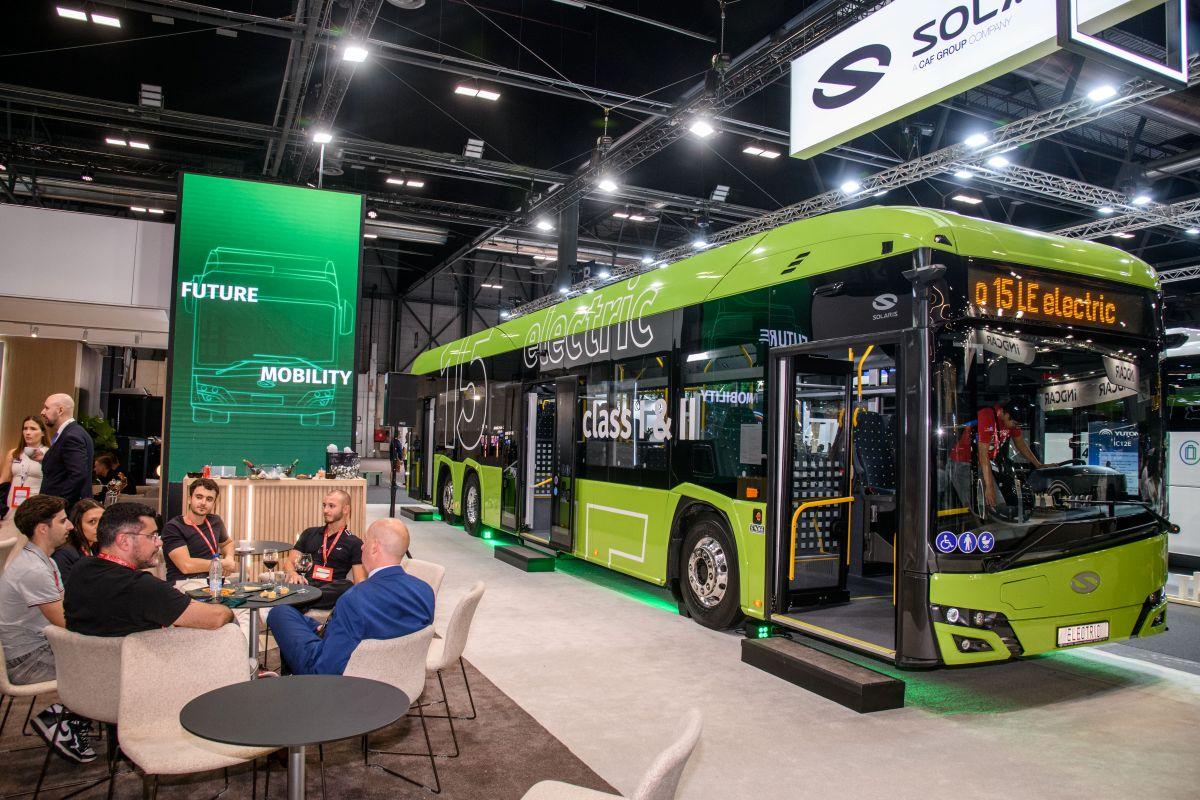
Buses took centre stage at the Global Mobility Call Corner held at FIAA, the International Bus and Coach Exhibition, at IFEMA MADRID, with a four-hour session designed to analyse how this mode of transport should evolve to meet new mobility needs. The event brought together perspectives from the government, operators, manufacturers, energy and technology companies, and other stakeholders in the ecosystem, all with a common goal: to turn the sector’s challenges into practical solutions.
The debate began with a shared view: the bus can no longer be seen simply as a vehicle. Its ability to connect regions, bring employment, education and healthcare within reach, reduce emissions and offer a genuine alternative to private cars depends on a comprehensive system in which services, infrastructure, energy, data and the traveller’s experience all work together in a coordinated manner.
The main conclusion was a cross-cutting one: the future of the bus does not depend on a single innovation, but on the ability to coordinate vehicles, energy, infrastructure, data, operations and funding. The aim of the meeting was not to draw up a list of trends, but to identify specific barriers and translate them into actionable proposals that can be further developed within the GMC ecosystem.
Four challenges in making the bus a more attractive option
The round-table discussion identified the flexibility of buses as one of their main strengths but also pointed out that this flexibility must be accompanied by operational priority, more precise planning, infrastructure adapted to electrification, and the use of data to anticipate demand. The user experience — from real-time information to ease of payment and the reliability of the service — emerged as a key factor in encouraging the public to use public transport on a regular basis.
- Service and coverage: improving coverage without sacrificing frequency, integrating transport modes and facilitating on-demand solutions in less densely populated areas.
- Decarbonisation: approaching electrification as an ecosystem that encompasses vehicles, charging infrastructure, the electricity grid, financing, training and operations.
- Data and AI: using real-time information to anticipate demand, optimise fleets and provide a more tailored service, using explainable and reliable models.
- Trust: enhancing security, accessibility, useful information and ease of use to make the travel experience more intuitive.
From the findings to pilot proposals
The four working groups brought the session to a close with proposals that will enable the debate to be translated into demonstrable projects. These included plans to roll out a pilot route featuring smart stops and on-demand transport in an area with access issues; to design the electrification of an operation from a comprehensive and scalable perspective; to develop a digital twin that aggregates and standardises the data generated by the bus; and to use connected vehicles to identify risk points and subsequently take action on the urban infrastructure.
The conclusions also highlighted the need to reduce administrative and technological barriers, improve coordination between different levels of government and strengthen public-private partnerships. The aim, as was made clear during the closing session, is to ensure that the Corner’s work does not remain a one-off discussion but rather feeds into the Global Mobility Call observatory and ecosystem, and translates into projects, responsible actions and next steps.
Six messages for the sector
- Electrification must be assessed as a complete system: vehicle + energy + charging + grid + financing + operation.
- Passenger service must not be compromised during the technological transition; range and recharging must be designed to support operations.
- The bus’s operating speed and priority remain crucial to gaining a competitive edge over private vehicles.
- AI must move beyond pilot projects to accurate, explainable and scalable operational decisions.
- Without standardisation, interoperability and cybersecurity, the growing volume of data will not be turned into value.
- The connected bus can also serve as an information platform to improve road safety and urban infrastructure.