




J. L. Fernández Pazos (Gradhoc): C&R 2025 provided an opportunity to see how refrigeration is changing


Refrigeration should be given greater weight in corporate decision-making, argues the Gradhoc Chairman. “It is not just a technical service required to preserve the product. It is an area that has a direct impact on profitability, product preservation and safety, resource efficiency and environmental commitments." Fernández also explains how “the participation of Gradhoc Smart in C&R 2025 was particularly valuable because it allowed us to see first-hand how the conversation surrounding refrigeration is changing”.
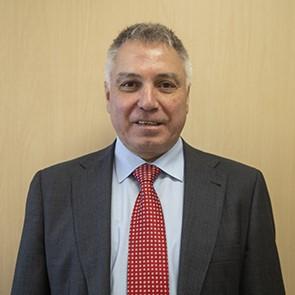
How has the world of refrigeration changed in recent years, and how does Gradhoc help drive improvement in the sector?
Gradhoc Smart helps improve the sector by enabling companies to manage their refrigeration facilities with more information, greater foresight and better control over their energy and operational performance.
For many years, refrigeration has been viewed primarily as a technical infrastructure: a system that was expected to function, maintain the temperature and ensure the product was preserved. Today, that vision falls short. A refrigeration system has a direct impact on energy consumption, maintenance costs, business continuity, food quality and the reduction of emissions. It must therefore be managed on the basis of technical criteria, but also economic, environmental and strategic considerations.
Our contribution lies precisely in this shift in approach. Gradhoc Smart enables you to convert installation data into useful information to detect deviations, identify early signs of anomalous operation, improve maintenance planning and make more accurate decisions. It is not just a question of digitising refrigeration, but of making it easier to understand, more predictable and more efficient in day-to-day operations.
With this in mind, what management models does the sector need to move towards?
The sector needs to move towards less reactive management models, capable of detecting deviations before they lead to a breakdown, excessive consumption or a risk to product preservation. Improvements will not come solely from installing more efficient equipment, but also from understanding how the plant behaves under real operating conditions, when it deviates from optimal performance, and what actions can be taken to correct these deviations before they lead to cost overruns, loss of efficiency or risks to the product.
Here, Gradhoc Smart provides a layer of intelligence for refrigeration installations, ensuring refrigeration is no longer overlooked within the organisation and becomes a genuine driver of competitiveness, quality and sustainability.
What services does the company offer in this area, and what are its objectives?
Gradhoc offers an AI-based SaaS platform for the advanced management of refrigeration facilities. Its aim is to help companies understanding better how their systems actually perform, improve energy efficiency and prioritise technical measures more effectively.
The platform combines advanced monitoring, energy analysis, predictive maintenance, customised reporting, simulation of scenarios relating to electricity bills, and support for food quality through the monitoring of critical operating parameters. It also incorporates external variables, such as weather forecasts, renewable energy and dynamic energy prices, to help improve the planning of the facility’s operations.
One of the things that sets Gradhoc apart is that it doesn’t force clients to start from scratch. It is a multi-protocol, multi-vendor and scalable platform, meaning it can be integrated into existing installations and expanded gradually. A company may start with a single plant, a single facility or a limited set of assets, and later expand its scope to include several sites or territories.
As well as the technology, we offer consultancy, implementation and technical support. Every refrigeration installation has its own unique circumstances in terms of digitalisation, sensor coverage, energy consumption, maintenance and operational objectives; that is why we tailor the implementation and help the customer to interpret the information, prioritise improvements and turn the data into concrete actions.
In projects that have already been validated, Gradhoc can help save between 10% and 40% in kWh, reduce maintenance costs by around 25%, reduce CO₂ emissions by up to 35%, depending on the characteristics of each installation, the baseline and the extent to which it can be optimised.
What importance do you place on efficiency and sustainability?
One of the most important issues for the sector is that energy efficiency can no longer be treated as a one-off measure. It must become an ongoing management practice. A refrigeration system may maintain the required temperature whilst still consuming more energy than necessary, requiring more maintenance or operating outside its optimum operating range.
It is also important to understand that sustainability in refrigeration does not depend on a single measure. The use of refrigerants with a lower environmental impact, improved energy efficiency, integration with renewable energy sources, the reduction of emissions associated with consumption, and more stable operation of equipment must be addressed in an integrated manner. To this end, data measurement and analysis are essential.
What challenges are posed by the increasing complexity of installations?
That’s another important challenge. There are an increasing number of connected systems, more regulatory requirements, greater pressure on energy costs and a growing need to ensure business continuity. In sectors like the food industry, distribution, cold-chain logistics and retail, a temperature deviation or an unplanned shutdown can have very significant consequences.
That’s why refrigeration must be afforded greater priority in companies’ decision-making processes. It’s not just a technical service required to preserve the product. It’s an area that has a direct impact on profitability, product preservation and safety, resource efficiency and environmental commitments.
The future of the sector lies in more connected and better-managed facilities. But, above all, it involves turning technical information into useful decisions. That will be one of the key factors in ensuring that refrigeration makes a real contribution to the competitiveness and sustainability of businesses.
How important was participation in C&R 2025, and how has it helped you grow your business and expand your knowledge of the sector?
Gradhoc Smart’s participation in C&R 2025 was particularly valuable because it allowed us to see first-hand how the conversation around refrigeration is changing. The trade fair wasn’t just about equipment, facilities or maintenance. Many discussions centred on issues that are becoming increasingly important for businesses: how to reduce energy consumption without compromising product preservation conditions, how to anticipate faults, how to justify investments in efficiency, how to manage multiple sites using consistent criteria, and how to integrate refrigeration into a broader strategy for sustainability and cost control.
This direct contact with installers, the food industry, the retail sector, engineering firms, manufacturers and other professionals in the sector confirmed a clear trend: refrigeration is no longer seen as an isolated technical system but is increasingly understood as a strategic asset. For Gradhoc Smart, this validation was very significant, as it is fully in line with our vision of the market.
C&R 2025 also helped us better explain the role of artificial intelligence in this field. In the refrigeration sector, artificial intelligence should be explained in terms of its practical applications: analysis of operational data, pattern detection, identification of deviations, support for energy optimisation, prioritisation of technical interventions and improvement of operational decision-making.
From a business perspective, the trade fair enabled us to broaden our conversations with companies that already have a clear need for digitalisation, but are seeking solutions that can be applied to real-world installations, involving equipment from different manufacturers, varying levels of sensor integration and their own specific operational constraints. That dialogue provided us with very useful information to help us continue to tailor our proposal to the sector’s priorities.
C&R 2025 reinforced an important point: the market demands a better understanding of how its refrigeration systems operate and a more informed approach to energy consumption, maintenance and product preservation. That is where Gradhoc Smart adds value.