




Nuno Roque (APIRAC): We face a labour shortage for decarbonisation


"Not only in Portugal, but throughout the European Union, we are facing a shortage of labour and skills in critical sectors, including those necessary for decarbonisation and the green transition," warns Nuno Roque, General Manager of APIRAC (the Portuguese Association of the Refrigeration and Air Conditioning Industry).
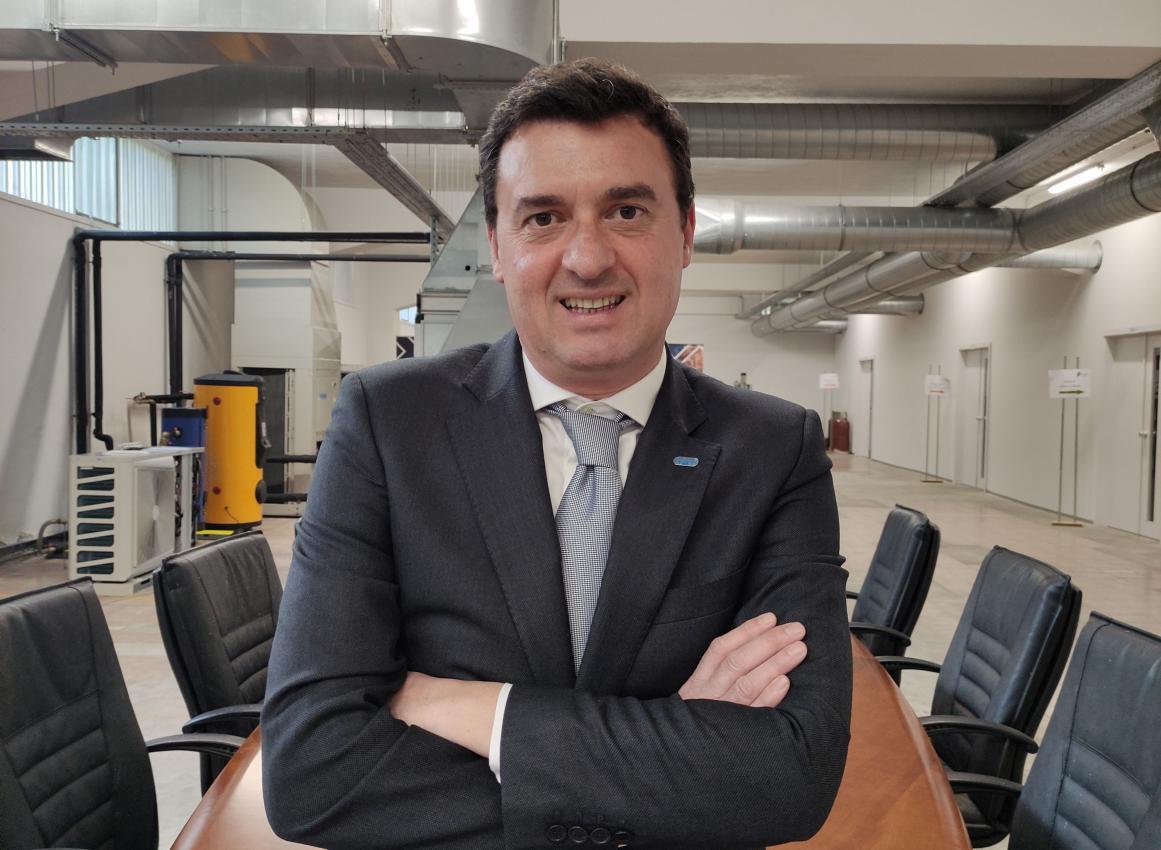
According to Roque, "technological changes, the rise of artificial intelligence and the green transition are accelerating the demand for specialised skills".
How did the Portuguese energy, electronics and environmental sectors perform in 2025?
The value chain represented by APIRAC members accounts for €3 billion, corresponding to 1% of national GDP, 25,000 jobs and 3% of national machinery exports. Thousands of market players are focused on reducing energy consumption, improving performance, acting with environmental responsibility and ensuring end-customer satisfaction.
2024 was a year of stagnation; however, 2025 was a remarkable year, with average growth of approximately 30%. Sectoral activity was heavily influenced by an extraordinary factor: the end of the reduced VAT rate for air conditioning and heat pump goods and services. With the public perception that the 6% VAT rate would end for transactions of goods and services related to air conditioning and heat pumps, there was a precipitation of transactions, especially in June and July.
In 2025, we observed remarkable growth across various equipment categories, with a special emphasis on the heating and direct expansion market segments. Notable increases occurred in the sale of compact tank heat pumps (DHW), air-to-water heat pumps (DHW), air-to-water heat pumps (DHW/climate control) and air-to-water heat pumps for pools, with growth of 36%, 56%, 27% and 65% respectively compared to 2024.
Regarding direct expansion, mono-splits (growth of 35% for ≤7 kW and 28% for >7 kW), multi-splits (33% for ≤7 kW and 25% for >7 kW), and compact water-to-air units (+39%) stand out. Among hydronic systems, compared to 2024, the increase in water-to-water chillers (+55%) and air-to-water chillers (+29%) showed significant increases, while fan coils followed the trend (+22%). In the ventilation segment, all categories were protagonists, with an average variation of +30% compared to 2024.
What are your forecasts and predictions for 2026?
We enter 2026 with an agenda full of associative work, either due to the completion of projects started last year or the continuity of actions related to sector commitments. Technological innovation has been a driver of economic development and quality of life.
Technological innovation has been a driver of economic development and quality of life. Environmental and energy-related technological differentiation will point towards continuous growth and competitiveness, but will also impose significant demands: the need for greater competence to meet the challenges of innovation in adopting new technological solutions.
Factors such as political decisions, regulation and supervision are of great relevance. Traditionally, the latter factor arises a posteriori, in order to prevent the use of new technologies from creating situations of unfair competition and, above all, to protect the rights of entrepreneurs and consumers.
The European Commission has been promoting extremely ambitious objectives that are difficult for economic operators to implement and lack specificity at both European and national levels. Implementation places a responsibility on the government to decide in an informed and agile manner, in defence of the interests of those who invest (companies) and those who buy (consumers), fulfilling the global commitment to the necessary transformations.
In this context, legislative proposals must be technically sound and supplemented by monitoring procedures to effectively drive process improvements and facilitate the adoption of technological innovation. Imposing technology on consumers without adequate incentives to reward the transition effort is problematic.
What are your views on F-gas phase-outs, certification and technologisation?
The phase-out schedule for fluorinated gases (F-gases) requires a uniform language for technical and safety aspects, especially given the transition towards flammable A2L and A3 fluids, as well as high-pressure (CO2) and toxic (NH3) alternatives. The methodology used for F-gas regulations should be the reference for the correct application of the EPBD and REDIII directives.
The importance of these regulations lies in establishing objective criteria for Member States, companies and professionals. In this sense, professional certification is the only possible answer. While truly qualifying training is essential for knowledge transfer, professional certification ensures that everyone speaks the same language and that competencies are tested and valid across Portugal, Spain or any other EU Member State.
Technical updates for both technologies and people must be accompanied by the strengthening of social and leadership skills. Effective communication, adaptability and teamwork will be essential as the sector evolves, particularly with the integration of AI, automation and building control.
What other building and energy efficiency issues are pending in Portugal?
In previous revisions of the EPBD, and contrary to constant requests from APIRAC, existing buildings were totally ignored in terms of national energy reduction. Regulating new construction is important for the long term but has a negligible short-to-medium-term impact, given the annual renovation rate of buildings, which is around 1-2% per year.
The latest EPBD revision sets targets to boost the renovation of existing buildings to increase efficiency and reduce consumption. One of the primary objectives is to boost the renovation of existing buildings to increase their energy efficiency and reduce energy consumption. The Directive also mandates energy performance monitoring systems and introduces incentives to improve energy efficiency in the public and private sectors. Furthermore, it promotes the digitalisation of buildings through the use of technologies that enable the intelligent management of energy consumption and savings.
New technological solutions help, but, given the financing difficulties for both the state and private sectors, they will never be enough to reach the ambitious decarbonisation goals that the country has committed to; therefore, it will always be necessary to act on existing buildings if concrete results are to be obtained in the short-to-medium term, with investment requirements lower than those associated with new construction.
Furthermore, any improvement in the efficiency of energy generators in buildings, although significant, is far exceeded by the efficiency losses across the rest of the system, which have been shown to exceed average values of 20%. This is precisely where energy savings are most significant.
In this context, technical building system inspections, which have been mandatory in Portugal since 2006, have never actually taken place. On this occasion, the decarbonisation of buildings necessitates their implementation; otherwise, Portugal's committed decarbonisation targets will receive no contribution from the building sector, and in fact, the opposite will be true.
What are the requirements of the Portuguese labour market regarding the green transition?
Both in Portugal and across the European Union, we are facing shortages of labour and skills in critical sectors, including those essential for decarbonisation and the green transition. This shortage is exacerbated by an ageing workforce, a lack of digital skills and insufficient engagement in lifelong learning. Technological shifts, the rise of AI and the green transition are accelerating the demand for specialist skills.
The sector is currently experiencing a state of full employment. There is no unemployment. Demand for labour exceeds supply. This creates a greater need for operational capacity. On the other hand, we are in a period of generational handover. This reality constitutes a clear obstacle not only to business development, but also to meeting customer demands. Companies have to choose which projects they can undertake.
The sector requires 5,000 additional workers. This corresponds to approximately 20% of the available workforce. Labour shortages are causing companies in many cases to turn down contracts due to a lack of capacity, both in terms of quantity and quality. Indeed, this is not merely a national issue, as the shortage of mid-level professionals is a pan-European problem.
At APIRAC, we are committed to driving a shift within the educational pipeline that is capable of adapting to this landscape, as there is currently a lack of awareness within the school and academic environment regarding the professional opportunities available in our sector.