




Ignacio García Rodríguez (Community of Madrid): We are going to improve thermal comfort in schools


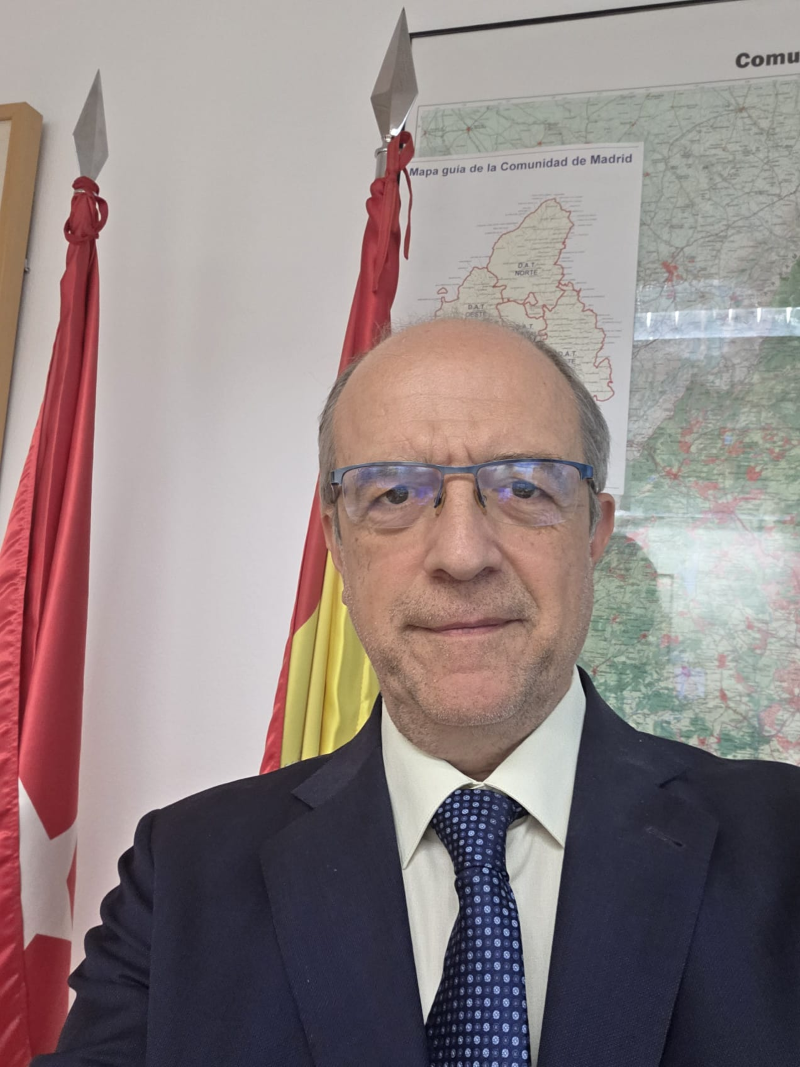
The Community of Madrid is set to invest €1.24 billion to improve heating and cooling systems, energy efficiency and accessibility in public educational facilities across the region, a measure that will benefit more than one million students. Ignacio García Rodríguez, Director General of Infrastructure and Services at the Regional Ministry of Education, Science and Universities of the Community of Madrid, explains what these improvements will involve.
How important is improving heating and cooling systems and energy efficiency in the Community of Madrid's educational facilities?
This initiative represents a comprehensive structural transformation of the region's public educational buildings, adapting them to changing climatic conditions. The main objective is to ensure that schools provide suitable levels of comfort throughout the year, in both winter and summer. This strategy combines three main goals: improving thermal comfort inside and outside classrooms, reducing energy consumption and operating costs, and improving the overall condition and sustainability of school buildings.
What investments are planned, and which areas will they cover?
The regional government has developed a ten-year plan with a projected investment of €1.24 billion. Funding will be channelled through two main routes. The Regional Ministry of Education, Science and Universities will provide up to €840 million for improvements to educational facilities owned by the regional government, while the Regional Ministry of the Presidency, Justice and Local Administration will allocate up to €400 million to municipally owned schools through the Regional Investment Programme (PIR).
The planned work goes beyond simply installing cooling equipment. It involves a comprehensive approach encompassing two categories of measures. Passive measures will include thermal insulation of façades and energy-efficient roof refurbishment; replacement of window frames and glazing to improve the building envelope; installation of solar protection and shading elements, such as awnings, pergolas, canopies and sunshades; and bioclimatic improvements to playgrounds and outdoor spaces, including shaded areas, tree planting and measures to encourage cross-ventilation. Active measures will include replacing obsolete heating systems, particularly oil-fired systems, and upgrading inefficient equipment; introducing mechanical ventilation, heat recovery systems and optimised cooling solutions; and integrating renewable energy technologies, including photovoltaic solar power and solar thermal systems for hot water production.
How many educational facilities will benefit from the investment?
The project will benefit more than one million students across the Community of Madrid's 179 municipalities. In total, improvements are planned for approximately 1,400 buildings, including public secondary schools and nursery schools managed directly by the Community of Madrid, as well as municipally managed early childhood and primary education centres, which will receive funding through the PIR.
Why have you decided to make this investment now, and what benefits will it bring to the school community?
The decision to undertake this major structural investment responds to the need to improve and adapt educational infrastructure to changing climatic conditions, while also upgrading the condition of the region's existing school buildings. To optimise resources, objective prioritisation criteria will be applied according to building type. Priority will be given to solar protection, ventilation, regulation and control systems, and improvements to façades, roofs and windows. The direct benefit for the school community will be the continued provision of healthy, comfortable and modern learning environments for students and teachers, while also achieving more efficient and sustainable management of public resources over the long term.