




Biomethane: an optimal solution for decarbonisation in building renovations


Carlos Saldaña, member of the Technical Committee of the Spanish Association for Heat Generator and Emitter Manufacturers (FEGECA), says biomethane is cementing its place as an efficient, mature and readily available solution for decarbonisation in the construction sector, especially in retrofitting.
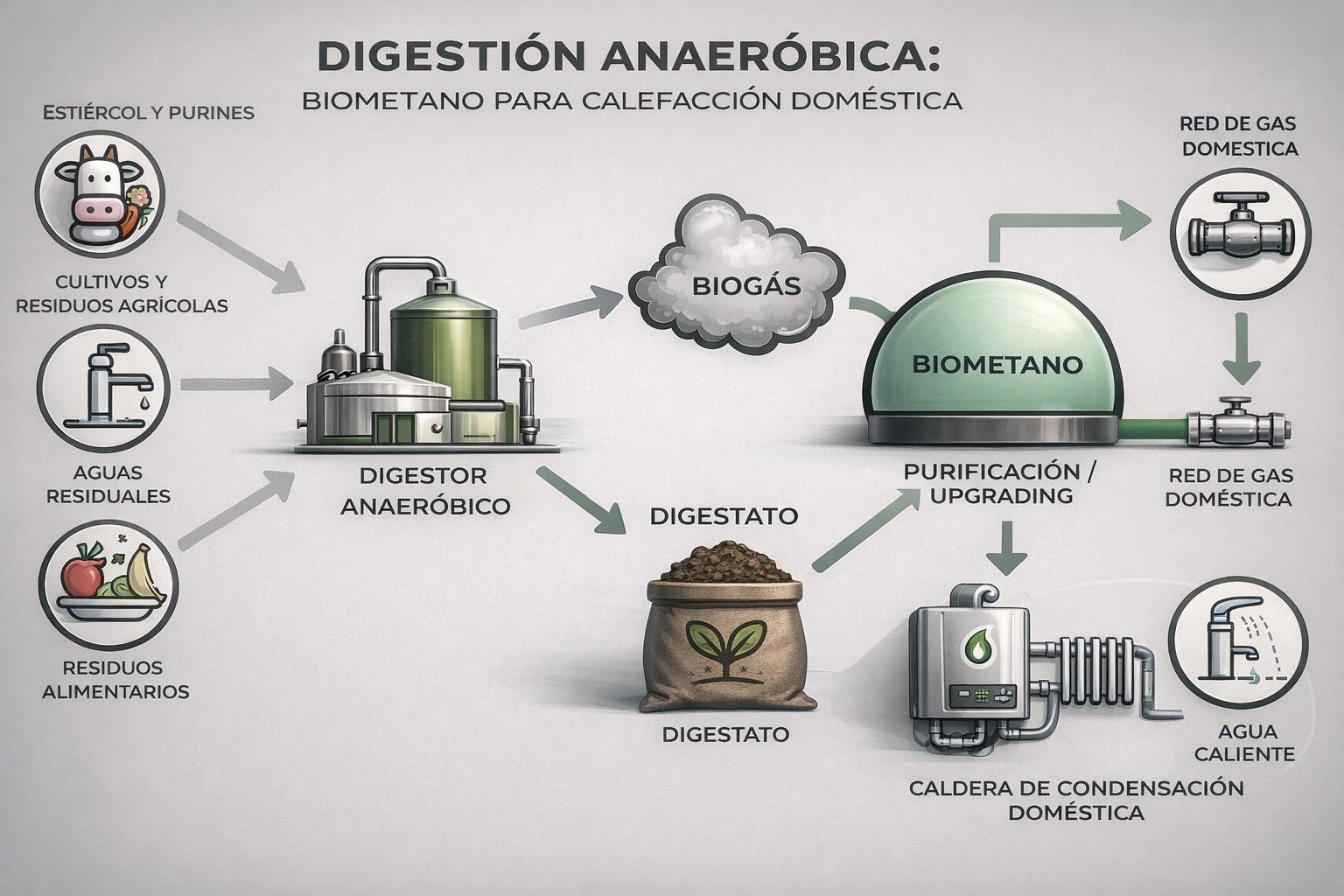
He explains that the ability to reduce emissions immediately, without compromising on efficiency or requiring major additional investments, makes it a key energy carrier in the mix of technologies needed to meet climate targets.
The Spanish Association for Heat Generator and Emitter Manufacturers (FEGECA) plays a key role in technical dissemination, the defence of technological neutrality and the promotion of solutions combining efficiency, sustainability and real viability, says Carlos Saldaña, warning that the 2030 and 2050 targets will require the coexistence of different efficient and renewable technologies. Biomethane, fully aligned with this approach, shows the energy transition can move forward on a pragmatic, orderly and efficient basis, taking advantage of the resources and infrastructures already available.
The energy transition in the building sector is at a turning point. "The combination of the climate emergency, the energy crisis and the ambitious European regulatory framework makes it necessary to accelerate the reduction of greenhouse gas emissions, especially in those sectors with the greatest weight in final energy consumption". In this context, heating and domestic hot water (DHW) production represent "one of the main challenges and, at the same time, one of the greatest opportunities for progress on decarbonisation".
Through the European Green Pact, the EU has established the Fit for 55 legislative package, a binding target to reduce net emissions by at least 55% from 1990 levels by 2030, with the ultimate goal of achieving climate neutrality by 2050. The buildings sector has a strategic role here, accounting for approximately 40% of energy consumption and more than 36% of related CO₂ emissions.
At national level, Law 7/2021 on Climate Change and Energy Transition and the National Integrated Energy and Climate Plan (PNIEC) reinforce this approach, committing to a more efficient and renewable energy mix. In it, renewable gases - biogas, biomethane, synthetic natural gas and renewable hydrogen - are consolidated complementary energy carriers to electrification. Within this group, biomethane stands out for its capacity to offer immediate and effective decarbonisation, especially in the retrofitting of existing buildings, thanks to its total compatibility with current infrastructures and thermal systems.
Energy rehabilitation
The Spanish building stock is characterised by its advanced age: more than 60% of residential buildings were built before the first energy efficiency regulations came into force. Retrofitting of these buildings is therefore one of the biggest challenges to meeting climate targets. In this scenario, technological solutions must satisfy three fundamental conditions: technical feasibility, without requiring complex interventions in the building; economic profitability, with reasonable payback periods; and immediate impact on emissions reduction.
Biomethane effectively meets these three requirements. By taking advantage of existing gas infrastructure and existing heating systems, it avoids the need for comprehensive renovations, reducing costs, lead times and technical barriers. The National Integrated Energy and Climate Plan (PNIEC) also explicitly recognises the role of renewable gases in decarbonisation for thermal uses, especially where full electrification is not technically or economically feasible.
Emission reductions
One of the great advantages of biomethane lies in its emissions balance. Considering the life cycle, use of methane leads to a reduction of CO₂ emissions of between 80% and 100% compared to fossil natural gas, depending on the type of waste used and the production process. This high percentage of decarbonisation is due, among other factors, to the use of waste that would otherwise generate diffuse methane emissions; the direct substitution of fossil fuels; and its integration into a circular economy model, where energy and waste management converge.
From a systematic perspective, biomethane not only contributes to the reduction of emissions, but also to the improvement of energy independence, the development of the rural environment and the creation of local employment through new production plants.