




Ricardo García San José: Safety is a fundamental objective in HVAC&R installations


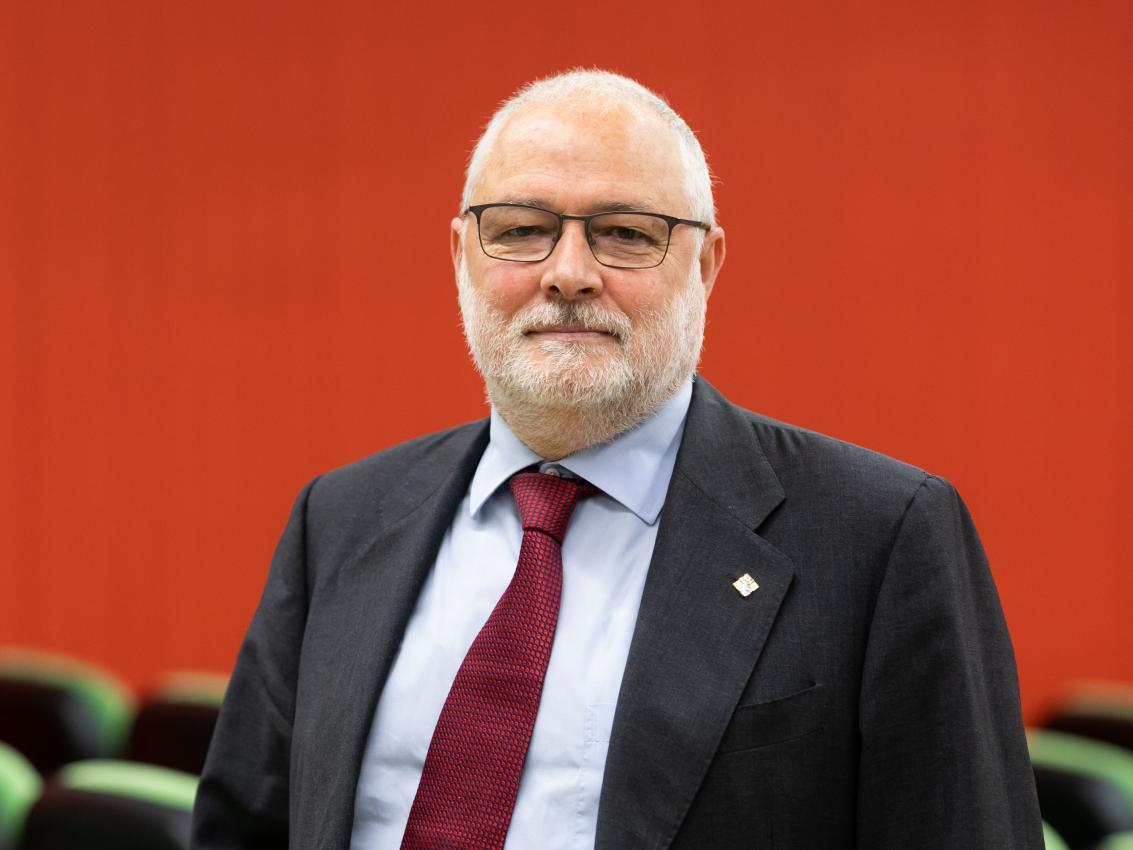
Safety is a fundamental objective in installations, which requires greater precautions when flammable and/or toxic refrigerants are used, warns Ricardo García San José, vice-president of the technical committee of ATECYR (Spanish Technical Association for Air Conditioning and Refrigeration). According to this expert, safety is not a secondary aspect of design, but rather the criterion that determines everything from refrigerant selection to the complete architecture of the installation.
Why are refrigerants with flammability and/or toxicity risks used?
The manufacture of Chlorofluorocarbon (CFC) refrigerants in the 1930s appeared to be a universal solution, as they presented no flammability or toxicity risks. As a result, they were widely used not only in air conditioning and refrigeration, but also in applications such as aerosol propellants, foaming agents for plastics and insulation materials, cleaning solvents, and more, with the consequence of creating the hole in the ozone layer, mainly due to chlorine.
For that reason, refrigerants containing chlorine, with an Ozone Depletion Potential (ODP) greater than 0, were banned, leading to the use of Hydrofluorocarbons (HFCs), which have zero ODP but a high Global Warming Potential (GWP), contributing significantly to the greenhouse effect.
This has led us to use refrigerants with zero ODP and very low GWP, which are toxic or flammable refrigerants, whether slightly or highly so. If refrigerants had been used exclusively for air conditioning and refrigeration applications, and if strict control of leaks and proper recovery of fluids from equipment had been maintained, perhaps the current situation could have been avoided. However, the excessive use of these substances in multiple applications has brought us to this point, making it necessary to use refrigerants that require greater precautions.
What importance does safety now have in the use of these refrigerants in the field of air conditioning and refrigeration?
Safety is a fundamental objective in installations, which requires greater precautions when flammable and/or toxic refrigerants are used in air conditioning and refrigeration systems. It is not a secondary aspect of design, but rather the criterion that determines everything from refrigerant selection to the complete architecture of the installation.
The regulatory framework itself is based on this principle: refrigeration systems must be designed to prevent and limit risks to people, property and the environment, taking into account both the toxicity and flammability of the refrigerant. In this regard, the risk does not depend solely on the selected fluid, but also on the amount released in the event of a leak, the volume of the room and the ventilation conditions. This explains why regulations establish charge limits, room classifications and specific ventilation and detection requirements.
When flammable refrigerants are used, the design must prevent the formation of hazardous atmospheres, control ignition sources and ensure gas dilution. In the case of toxic refrigerants or those with an asphyxiation risk, the objective is to prevent a leak from reaching dangerous concentrations in occupied areas. Hence the importance of measures such as the following: natural or forced ventilation sized according to the refrigerant charge; leak detection systems with automatic response; containment in machinery rooms or ventilated enclosures; and charge limitations depending on the refrigerant, type of room and intended use.
These requirements are not theoretical: they directly determine whether a system can be installed in an occupied space or must be relocated to a dedicated machinery room, or even whether the use of a particular refrigerant is viable for a specific application.
Which refrigerants are mainly involved?
These refrigerants used in air conditioning can be grouped according to their level of risk. The flammable refrigerants (classes 2L, 2 and 3) are the following: R-290 (propane, class 3), R-32 and R-454B (slightly flammable, class 2L), and other hydrocarbons (R-600a, etc.). They are characterised by their low environmental impact, but require special attention due to their flammability. Meanwhile, toxic refrigerants or those with greater inhalation hazards include R-717 (ammonia). Classified in higher toxicity categories, it requires strict containment and ventilation measures.
In the current context, the transition towards low-GWP refrigerants (such as hydrocarbons or HFOs) means accepting stricter safety requirements. Therefore, the evolution of the sector is not simply about changing refrigerants, but about raising the engineering standards of installations.
In summary, safety is not a limitation, but the framework that makes the use of more sustainable refrigerants viable. Without this rigorous approach, based on regulations, design and risk control, their widespread implementation simply would not be possible.
What regulations govern this issue in Spain and how are they being applied?
In Spain, the main framework consists of two regulations that operate in a complementary manner. On the one hand, there is the Refrigeration Installation Safety Regulation (RSIF), approved by Royal Decree 552/2019, which specifically regulates installations using refrigerants, establishing conditions for design, implementation, maintenance and safety. On the other hand, there is the Regulation on Thermal Installations in Buildings (RITE), approved by Royal Decree 1027/2007, which applies to air conditioning and comfort systems, integrating both energy efficiency and safety requirements.
This is complemented by the European framework, especially Regulation (EU) 2024/573 (F-Gas), which promotes the reduction of fluorinated refrigerants and, indirectly, encourages the adoption of natural or low-GWP refrigerants.
In practice, implementation is progressing gradually: traditional refrigerants are being replaced by lower environmental impact alternatives, but with a much more demanding approach in terms of risk analysis, charge limitations and safe design. It is not merely a change of refrigerant, but a change of technical paradigm.
More specifically, what requirements must installations using flammable and toxic refrigerants meet?
The requirements stem directly from risk control and affect the entire design of the installation. First, refrigerant charge limitation: regulations establish maximum permissible charges depending on the volume of the room, the category of use (public access, supervised, restricted) and the classification of the refrigerant (toxicity and flammability). Second, the classification of the system and its location: a distinction is made between refrigerants located in occupied spaces, machinery rooms or ventilated enclosures, which determines the applicable safety requirements.
Another requirement is ventilation: machinery rooms must have sufficient ventilation (natural or forced), sized according to the refrigerant charge, in order to prevent dangerous accumulations. This is combined with leak detection and control: in certain cases, automatic leak detection systems are required to activate ventilation or alarms.
Control of ignition sources is also important: this is essential for flammable refrigerants (A2L, A3), avoiding hot surfaces, sparks or unsuitable equipment. Likewise, compartmentalisation and location are key considerations: in many cases, equipment must be installed in dedicated machinery rooms or outdoors, avoiding direct installation in occupied spaces. Finally, there is tightness and quality of installation: the system must be designed to minimise leaks, with strict requirements regarding joints, pressure testing and leak-tightness verification.
Overall, the approach is clear: prevent leaks, and if a leak does occur, prevent it from creating a hazardous situation.
What role does training play in enhancing safety in this field?
It is absolutely decisive. Regulations require that refrigerants be handled by authorised companies and qualified professionals with specific training in both installation and maintenance. But beyond the formal requirement, there is a deeper shift taking place. The sector is moving away from working with refrigerants considered “inherently safe” (A1) towards refrigerants that require technical judgement (A2L, A3, B). The installer is no longer simply an operator, but becomes a key agent in risk management. Knowledge of concepts such as LFL, ATEL, ventilation and room classification becomes essential. Without adequate training, the use of these refrigerants is not viable. With proper training, however, it is viable, and can be carried out safely.