




Cristina Aparicio (Community of Madrid) asserts that decarbonisation must be addressed through a diverse technological approach


Cristina Aparicio, Director General for Energy Transition and Circular Economy of the Community of Madrid, emphasised during the presentation of the FEGECA 2025 Heating Sector Report that the energy transition must be efficient, fair and inclusive; and must consider both the diversity of Spain’s existing housing stock and the socioeconomic reality of families. She also pointed out that no single technology is capable of meeting the challenge of decarbonisation; rather, a diverse technological approach is essential.
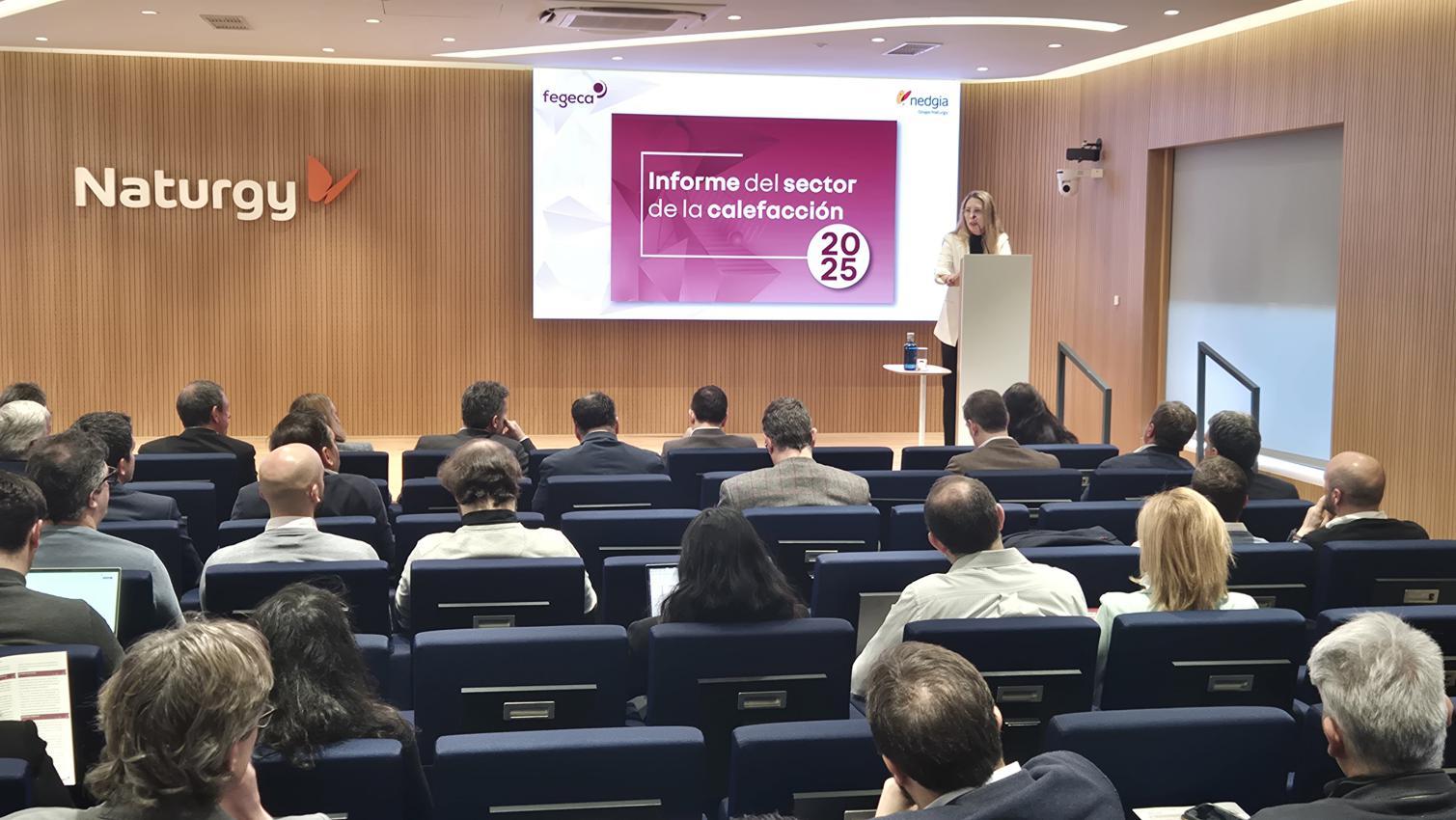
Cristina Aparicio stressed that the energy transition must leave no one behind, especially within the current European context, which is marked by profound change. In this regard, she argued that the transition must be efficient, fair and inclusive, considering both the diversity of Spain’s existing housing stock and the socioeconomic circumstances of families. She also pointed out that no single technology is capable of meeting the challenge of decarbonisation; rather, a diverse technological approach is essential.
Aparicio also defended the value of the existing gas network, which is prepared to incorporate renewable gases such as biomethane and hydrogen, and emphasised that high-efficiency condensing boilers represent a technically and economically viable and advantageous solution for the modernisation of the housing stock, especially when combined with renewable fuels. In this regard, she reaffirmed the Community of Madrid’s commitment to the development of "green gas". She underscored that the residential sector represents one of the greatest challenges in the decarbonisation process and highlighted the importance of providing users with technologies tailored to their specific circumstances and needs.
UNE Standardisation
Furthermore, Rafael Postigo, Project Manager for Industry and Equipment at UNE (Spanish Association for Standardisation), gave a presentation on the contribution of UNE standardisation to the business community and its importance in creating a common framework to ensure quality, safety and trust, whilst boosting the economy and protecting both businesses and consumers.
In his presentation, titled “The Contribution of UNE Standardisation to the Business Community”, Postigo explained the role of UNE as a multisector, not-for-profit association recognised by the government as the National Standards Body. During his presentation, he provided an overview of the Spanish standardisation system and how it adds value to organisations, illustrating this with the example of how standards are applied within the heating sector. He also highlighted FEGECA’s importance within CTN 124 and noted that it sits on the UNE Board of Directors, thereby reinforcing its strategic role in the development of standardisation in Spain.
Ignacio Cabané, Head of Biomethane Connections at Nedgia, was tasked with presenting the development plans and the current state of biomethane in Spain. During his speech, he explained that biomethane is an energy source produced from food waste or livestock manure. It is a gas equivalent to natural gas which, owing to its identical composition and properties (CH₄), can be injected directly into the existing gas network and used for the same energy purposes. The main difference between the two lies in their origin: whilst natural gas is a fossil fuel, biomethane is a renewable energy source.
The Role of Biomethane
Cabané emphasised that the benefits of biomethane extend beyond its role as a sustainable energy alternative, as it also contributes to waste recovery and the decarbonisation of the energy system. Although biomethane is beginning to gain ground in the Spanish energy sector, it has been a firmly established reality in many other European countries for years. Germany, France, Denmark, the United Kingdom and the Netherlands are currently leading the way in the development of this technology. In Spain, the outlook is very promising, owing not only to the high production potential but also to the current dynamism of the market and the level of investment being channelled into the development of new plants. The number of requests for grid injection into Nedgia’s networks, as well as the volume of contracts signed, reflects the growing interest in this technology nationwide.
Furthermore, Jorge Ginés, Director General of ASPRIMA, explained how curiosity, cooperation and necessity have historically driven innovation. He analysed the challenges facing the current energy mix regarding decarbonisation, energy independence and geopolitics, and advocated further innovation in the development of green gases to progress towards a more sustainable and self-sufficient energy system.