




Vicente Gallardo (FEGECA): We are at a turning point for air conditioning and heating


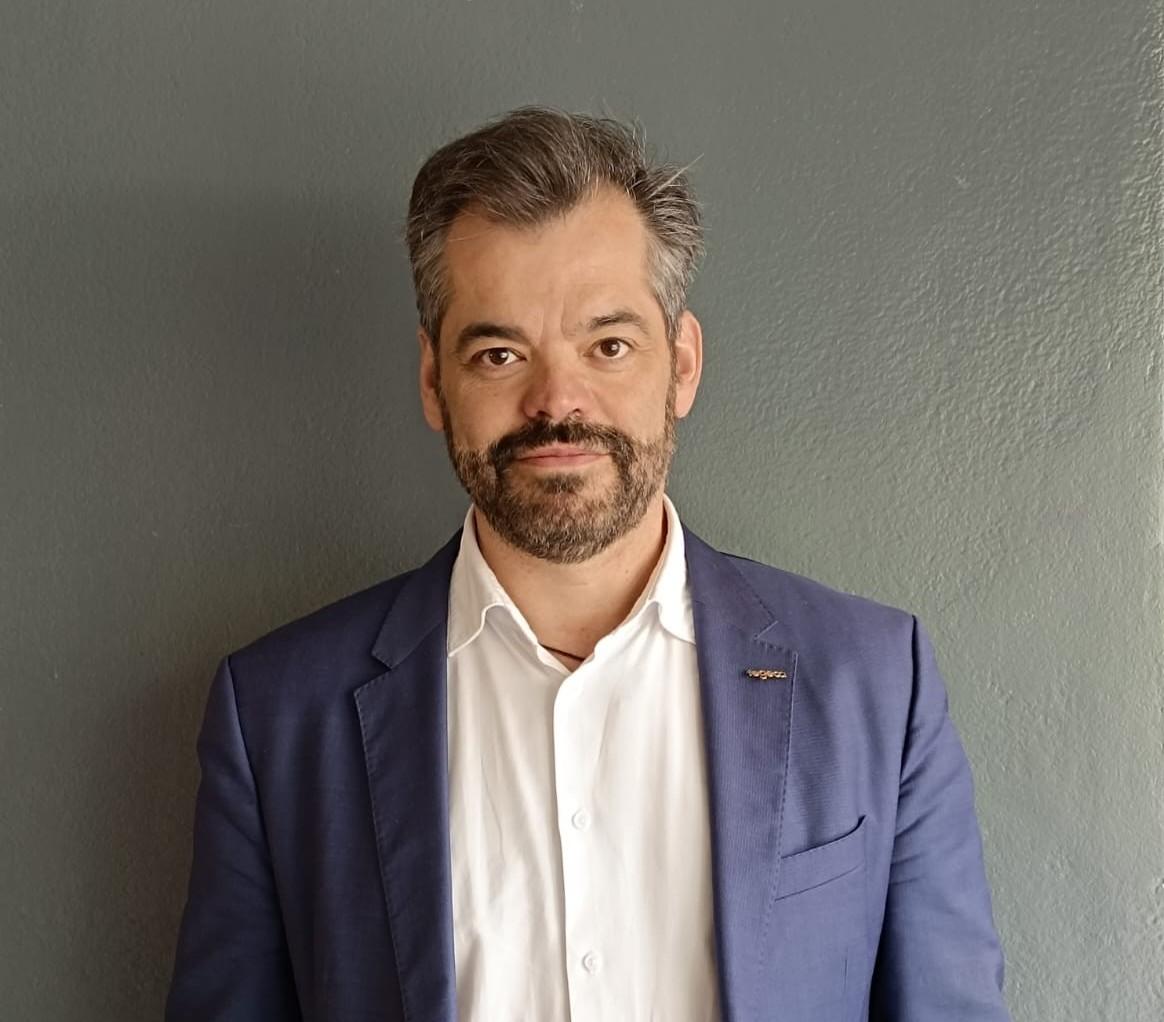
On 19 May, the general assembly of the Spanish Association of Generator and Heat Emitter Manufacturers (FEGECA) elected Vicente Gallardo, currently country sales director at Bosch Home Comfort Spain, as the Association’s new chairman for the period 2026–2030. Gallardo tells us about his main objectives at FEGECA, a regular participant in C&R, and shares his views on the current situation and new trends in the sector.
What are your main objectives as the new president of FEGECA?
I am very conscious of the great responsibility of taking on this role and I do so with the aim of strengthening FEGECA’s role as a key partner for government bodies, regulatory authorities and industry stakeholders. We are at a turning point for air conditioning and heating, characterised by the energy transition, the decarbonisation of buildings and the need to streamline the refurbishment of Spain’s housing stock.
One of my main objectives is to promote an open approach to technology that enables us to harness the full potential of the various solutions available to reduce emissions and improve energy efficiency. FEGECA must continue to advocate for an energy transition based on the principles of technological neutrality, efficiency and economic viability for users.
We also wish to continue strengthening the association’s institutional presence, by increasing collaboration with other organisations in the sector and actively contributing to the development of regulations relating to energy, air conditioning and the building sector. Another priority will be to raise awareness of high-efficiency technologies among professionals, public authorities and end consumers, highlighting the contribution made by our manufacturers to both Spain and Europe’s climate and energy targets.
What actions and plans does the association intend to implement to boost the generator and heat emitter manufacturing sector?
FEGECA will continue to work on a number of strategic priorities. The first is to defend and represent the sector’s interests in all regulatory processes affecting air conditioning, heating and domestic hot water production. We are currently experiencing a period of far-reaching regulatory changes at both European and national level, which is why it is essential to play an active part in these debates.
Another priority is the generation and dissemination of knowledge. We will continue to produce studies, reports and technical documents that enable us to provide the market with accurate information on the most efficient and sustainable technologies. We will also step up our outreach activities aimed at professionals across the value chain and end users.
Training will also be a key area of focus. The sector needs increasingly highly-qualified professionals to cope with the technological transformation we are currently experiencing. That’s why we will support initiatives aimed at providing training for installers, engineering firms and maintenance companies.
Finally, we will continue to promote collaboration with public authorities and sectoral organisations to support energy-efficiency refurbishment policies that will enable the renewal of obsolete facilities, improve the energy efficiency of buildings and accelerate the decarbonisation of the building stock.
You previously served as Chairman of FEGECA for eight years. How has the sector changed since then?
The transformation has been extraordinary. When I first took office, the debate centred on energy efficiency. Today it’s also decarbonisation, hybridisation and the integration of renewable energy, digitalisation, artificial intelligence and energy sustainability.
In recent years, we have seen how technologies that previously accounted for only a small share of the market, such as condensing boilers and heat pumps, have come to play an increasingly prominent role in energy transition strategies. At the same time, there have been significant developments in connectivity, smart control and energy management within these facilities.
The regulatory framework has also changed. Europe has set much more ambitious climate targets, and the sector must adapt to new requirements for efficiency, emissions and the use of renewable energy. This development has increased the level of complexity, but it has also created significant opportunities for innovation and growth.
Another significant change has been the growing public awareness of energy consumption in buildings. Users are demanding more efficient and sustainable solutions with lower operating costs, driving a far-reaching modernisation of the entire sector.
Since 2013, you have also held the post of Country Sales Director for Bosch Home Comfort in Spain. From this business perspective, how do you see the sector developing by 2026?
After a number of years marked by high economic uncertainty and major regulatory changes, the market continues to grow and move towards more energy-efficient technologies with lower emissions.
From a business perspective, we are seeing sustained growth in interest in renewable energy solutions, particularly in refurbishment projects and new-build properties. At the same time, there is still enormous potential for retrofitting the existing installations, where millions of units have efficiency levels that could clearly be improved. In this regard, the sector has a great opportunity to contribute to the country’s energy objectives by incorporating advanced technologies, hybrid systems, connected solutions and equipment designed to be integrated into ever more complex energy environments. However, in order to accelerate this development, it will be necessary to maintain stable regulatory frameworks, simplify certain administrative processes and continue to promote energy-efficiency refurbishment programmes.
In the medium term, I am optimistic. We have the technology, industrial capacity and technical expertise to lead a transformation that will not only reduce emissions, but also improve consumers’ comfort, competitiveness and energy independence.
How will the relationship between air conditioning and renewable energy develop?
Air conditioning will become one of the main drivers for the integration of renewable energy into buildings. The trend is clear: air-conditioning systems are no longer seen as isolated elements, but as components of a broader, smarter energy ecosystem. Energy efficiency and sustainability now play a decisive role in the current design of air-conditioning systems.
Heat pumps are one of the technologies most representative of this development, harnessing renewable energy from the air, water or the ground. But we will also see greater integration with photovoltaic installations, energy storage systems and smart demand management platforms.
Hybrid systems will also play an important role, as they allow different technologies to be combined to optimise energy efficiency in line with the specifications of every building and the conditions of use. In this regard, condensing boilers fuelled by renewable gases, such as biomethane or renewable hydrogen, once they reach that level of maturity, may play a key role in certain sectors, such as the replacement of existing systems.
The future will not be based on a single technological solution, but on the smart combination of different renewable technologies that will enable us to achieve the objectives of efficiency, sustainability and affordability for all users.
What other challenges will the energy and technological transition bring?
The energy transition represents a historic opportunity, but it also poses significant challenges. The first is to ensure that this transformation is technically and economically viable for citizens, businesses and public authorities. The pace of change must be in step with the capacity of all stakeholders to invest and adapt. The energy transition must not leave any group behind.
Another key challenge will be training. The widespread adoption of new technologies requires qualified professionals capable of designing, installing and maintaining increasingly sophisticated systems. The availability of talent will be a key factor in the success of this transition.
Regulatory alignment will also be a significant challenge. It will be necessary to develop coherent, stable and predictable regulatory frameworks that provide certainty for manufacturers, distributors, installers and end users.
Finally, we must tackle the refurbishment of an ageing and inefficient building stock. Decarbonisation will not be possible without a firm commitment to the retrofitting of homes and commercial buildings. In this context, the generator and heat emitter manufacturing sector is well placed to provide innovative solutions that reconcile sustainability, comfort, energy efficiency and economic competitiveness.
The energy transition should not be seen merely as a technological challenge, but as a comprehensive transformation that requires public-private collaboration, long-term planning and a realistic view of the role that different technologies can play in achieving climate targets.