




Installation companies looking to hire qualified professionals to remain competitive


The shortage of qualified professionals poses a risk to the competitiveness of installation companies, which is why there is an urgent need to attract new talent to the sector. This was one of the main conclusions of the CONAIF Congress held recently in Salamanca, at which it was also stated that installers are essential for connecting with end customers, and that they have become necessary and strategic partners for energy companies in carrying out the energy transition in homes, businesses and industries, and in generating joint business opportunities.
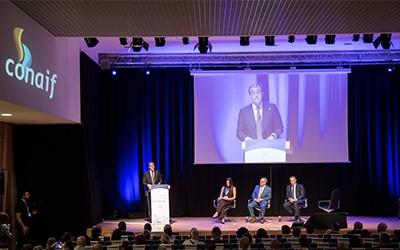
The 2026 CONAIF Congress was organised by the National Confederation of Energy and Fluid Installation and Maintenance Companies Associations, in collaboration with the Salamanca installers’ association, Aesfonca, and the provincial employers’ organisation, CEOE Cepyme Salamanca. During the event, the President of the Salamanca Chamber of Commerce, Industry and Services, Alberto Díaz, highlighted the vital role played by installation companies in the face of the energy transition and the new challenges facing the economy; he also referred to a reality that relates to the work of installers and the range of opportunities that lie ahead for them: “these trades are presented as professions of the past, yet in reality they are the ones with the brightest future,” he said.
For his part, the president of CEOE Cepyme Salamanca, Paulino Benito, spoke of the difficulties currently faced by SMEs and micro-enterprises, which make up the majority of Spanish installation firms. “These are companies,” said the president of the Salamanca employers’ organisation, “that need confidence and support in order to invest and grow.”
The president of CONAIF, Francisco Alonso, paid tribute to installers, stating that “we are the ones who make it possible for energy-efficient technologies to actually reach homes, shops, businesses and industry, and we play a vital role in ensuring that the energy transition moves from the drawing board to reality”. Meanwhile, José María García, President of the Association of Installation Companies of Salamanca (AESFONCA), highlighted the importance of the CONAIF Congress for the sector as a showcase for installers’ associations and their installation companies.
In addition to the energy and facilities experts who delivered the programme of presentations, the conference was attended by prominent figures from the worlds of business and television, such as Dimas Gimeno, current chief executive of Wow Concept and former Chairman of El Corte Inglés; Carlos Sobera, presenter of various entertainment programmes on Telecinco; and Alicia Senovilla, a familiar face in the media who has presented the CONAIF Congress for the last ten editions.
The role of installers
Among the conclusions of the conference, it was emphasised that in the energy sector installers play a vital role in connecting with end customers. Because they deal with them directly, they advise them on the most efficient systems, as well as carrying out the installations and maintaining them. The customer’s energy transition depends on them. They are the people who deliver and who enable the roll-out of efficient solutions such as geothermal energy, solar photovoltaic power, electric mobility, biomethane and biopropane, among others.
The participating energy companies all agreed on one point: installers are essential and strategic partners in helping them bring about the energy transition in homes, businesses and industry, and to create joint business opportunities. One idea that ended up becoming one of the central themes of the meeting: the future of the sector will be, above all, collaborative, with energy companies and installation firms, alongside the other key players in the value chain, needing to work together to offer more efficient and competitive solutions.
Another of the conclusions was that the shortage of qualified professionals poses a risk to the competitiveness of installation companies. Europe will need 335,000 additional professionals by 2030 for the development of heat pumps alone. For all these reasons, there is an urgent need to bring new talent into the sector.
The speakers also stated that we are living in a time of opportunity for installers unlike any other in Spain’s history. The profession and the professionals working within it face the challenge of meeting strong demand for services from society, driven by the push for energy efficiency, electrification and the progress of the energy transition. In this context, skilled technical and manual trades have a brighter future than ever before, and employment in these fields is guaranteed; they cannot be replaced by growing trends such as artificial intelligence, automation or digitalisation, although these will provide support to professionals in their day-to-day work.
The speakers stated that consumers have the right to receive accurate information. The transposition into Spain law of the European Energy Performance of Buildings Directive (EPBD) has been accompanied by the spread of misinformation and misinterpretations regarding the future of domestic heating and gas boilers. This European provision does not impose a ban on the technology – that is, on boilers – but rather sets out a path towards decarbonisation and the phasing out of fossil fuels in heating. Misinformation confuses consumers and prevents them from making informed decisions based on the reality of their households.
The potential of green gas
The potential of green gas for decarbonisation also came under discussion. Green gas – and, specifically, biomethane – enables progress towards decarbonisation by using existing gas networks to distribute it and bring it to homes and industries. One of its advantages is that it decarbonises consumption without the need for a massive and immediate replacement of equipment and infrastructure. Boilers are 100% compatible with this renewable energy source.
It is impossible to imagine that a single energy source will be able to meet all the world’s energy needs, which are many and cannot always be met through electrification. The key to achieving this lies in combining all the available options, while assessing the most efficient and optimal alternative in every case. In an increasingly complex energy landscape, LPG is emerging as a vital piece of the energy puzzle, offering solutions for decarbonisation, both now and in the future.
It was also put forward that the future of energy lies in electricity. We are currently witnessing a period of profound transformation in the energy sector, with electrification front and centre. Moving towards more efficient systems represents one of the major opportunities of the coming years: geothermal energy, heat pumps, energy-efficient refurbishment, self-consumption, connectivity, charging infrastructure, smart control, digitalisation… systems are becoming increasingly integrated and customers need a more comprehensive service with professional advice. In this scenario, which is now a reality, the installer’s role is crucial. Electrification broadens the scope of work for installation companies, creates new opportunities for specialisation and paves the way for services with greater added value; however, it requires training, qualified professionals, regulatory stability, collaboration, as well as simple and accessible solutions for customers.
Authorised company
Another conclusion was that authorised firms are given greater weight under the new regulations. The role of authorised installation companies, within their areas of competence, is to be strengthened in two of the regulations currently being drafted, which were discussed at the CONAIF Congress. Among the possible changes to the Low Voltage Regulation is the inclusion of a compulsory maintenance contract for certain types of installations, as requested by CONAIF in the comments it submitted on the draft; and the forthcoming Royal Decree on the handling of fluorinated gases is expected to extend its scope to include new natural refrigerants such as R290, for which a specific certificate will be required for their handling.
Finally, energy efficiency in buildings was highlighted. Measurement, real-time monitoring and data analysis have become the foundation for optimising the operation of buildings, reducing energy consumption and improving their performance without compromising the comfort of users. The connectivity of air-conditioning and DHW systems is another key factor in achieving maximum efficiency in these installations. The Energy Saving Certificates (CAE) scheme is yet another tool available to installers that helps promote energy efficiency in buildings.