




Pilar Simón (La Rioja): We are facing new risks associated with the transformation of work


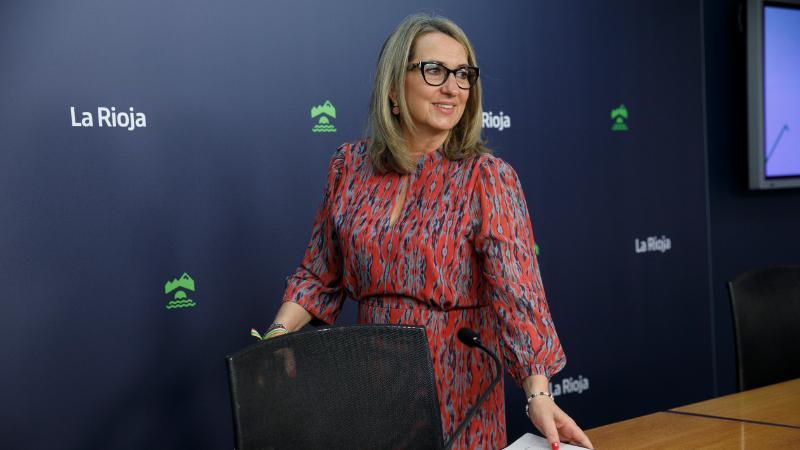
“Occupational risk prevention is a strategic policy for us because it directly affects workers’ health, the quality of employment and the competitiveness of our businesses,” says Pilar Simón, Director-General for Labour and Occupational Health in the Regional Government of La Rioja. This expert warns that we are facing new risks associated with the transformation of work; explaining that “digitalisation, automation, the ageing of the working population, the introduction of new technologies and the growing importance of psychosocial factors mean that we must constantly update our preventive measures”.
How important is occupational risk prevention in La Rioja?
Occupational risk prevention is a strategic policy for the Regional Government of La Rioja because it directly affects workers’ health, the quality of employment and the competitiveness of our businesses. Our aim is to move towards a genuine culture of prevention, in which health and safety form part of the day-to-day management of businesses and of society itself. The La Rioja Occupational Health and Safety Strategy 2025–2027 serves as the roadmap that guides our actions and enables us to coordinate our efforts with all the stakeholders involved.
What structure do they have in place to achieve this objective?
In La Rioja, we have a specialised and well-established administrative framework for workplace health and safety. The Directorate-General for Labour and Occupational Health, which forms part of the Regional Ministry of the Economy, Innovation, Business and Self-Employment, exercises the regional powers relating to the prevention of occupational risks and occupational health.
To develop these skills, we have the Occupational Health Service, which reports to the Directorate-General for Labour and Occupational Health and is one of the main technical bodies responsible for preventive action and advice in our autonomous community.
This service comprises 15 health and safety officers, professionals who provide advice, investigate workplace accidents, run prevention campaigns, carry out inspections and monitor health and safety conditions in the workplace, as well as implementing the measures set out in the La Rioja Occupational Health and Safety Strategy. The work carried out by these specialists ensures a permanent presence on the ground and enables them to provide specialist support to both businesses and workers.
What specific areas do their activities cover?
Our activities range from investigating workplace accidents and providing technical advice to businesses to organising awareness-raising campaigns, technical seminars, conferences, specialist courses and training programmes aimed at workers, employers, the self-employed and future professionals. Training is one of our key priorities because we believe that prevention begins with knowledge.
In recent years, we have made a significant effort to bring prevention into educational institutions and, in particular, into vocational training, by incorporating content and activities that enable young people to develop, right from the start of their career, a preventative mindset that is integrated into their future working lives.
We are driving forward specific initiatives in emerging areas such as psychosocial risks, mental health at work, the effects of digitalisation, demographic changes and the impact of new ways of organising work, with the aim of anticipating the challenges that are already transforming the labour market.
How should preventative policies be designed?
Public-private partnership is essential. Prevention can only be effective if there is a shared commitment between public authorities, businesses and workers.
Experience shows us that the best results are achieved when preventative policies are designed and developed jointly. Companies have first-hand knowledge of the reality of their workplaces, and the Government can provide technical support, coordination, training and the capacity to drive progress. Combining these two perspectives leads to better solutions and a stronger culture of prevention.
We therefore work on an ongoing basis with the most principal employer bodies and trade unions, within the social partnership framework, as well as with mutual insurance organisations, occupational health and safety services, professional bodies, specialist organisations and educational institutions.
A good example of this collaboration is the numerous technical seminars, conferences and training initiatives that we organise jointly with the University of La Rioja, foundations and organisations working in the field of prevention. These initiatives enable us to pass on technical knowledge to businesses and workers, and to create opportunities for the exchange of experiences and best practice.
What new and current challenges are of concern to occupational risk prevention experts?
One of the main challenges remains that of reducing workplace accidents and ensuring that accident prevention is effectively integrated into all businesses, particularly small and medium-sized enterprises, which make up much of the backbone of our economy.
We are facing new risks associated with the transformation of work. Digitalisation, automation, the ageing of the workforce, the introduction of new technologies and the growing influence of psychosocial factors mean that preventive measures must be constantly updated.
Another particularly important challenge is to continue strengthening a culture of prevention from an early age. Prevention should not begin when a person enters the labour market; it must be incorporated during their education. We are therefore stepping up our involvement in vocational training and other areas of education so that future workers and employers come to see prevention as a core value and a professional skill in its own right.
We must also continue to raise awareness of the importance of occupational health in the broadest sense, encompassing not only the prevention of accidents but also the promotion of healthy and safe working environments that contribute to workers’ physical, mental and social well-being.
Are there any other thoughts on the sector that you’d like to highlight?
I would like to emphasise that occupational risk prevention is a shared responsibility and an investment in the future. Sometimes, we tend to judge prevention solely on the basis of the accidents that do occur, but its true value lies precisely in the accidents, illnesses and injuries that we manage to prevent. Every training initiative, every technical workshop, every awareness-raising campaign and every project carried out helps create safer and healthier working environments.
Here at the Government of La Rioja, we are committed to a modern, participatory and community-based approach to prevention, founded on social dialogue, training, innovation and collaboration. We want a culture of prevention to take root in all areas: in businesses, amongst workers, the self-employed, students and society as a whole. Because the best form of prevention is one that ceases to be seen as a legal obligation and instead becomes a collective commitment to health, safety and the quality of employment in our community.