




Over 15,000 National Police officers involved in security detail for visit of Pope Leo XIV to Spain


More than 15,000 National Police officers participated in the security operation organised for the Pope’s visit, which took place between 6 and 12 June, as well as some 600 vehicles, one aeroplane, seven helicopters, 16 drones, 160 metal detectors, 162 security scanners and 302 handheld detectors, among other resources.
According to the National Police force, a regular participant at SICUR, the deployment of personnel and equipment to Madrid, Catalonia and the Canary Islands was essential to ensuring security and the smooth running of the visit.
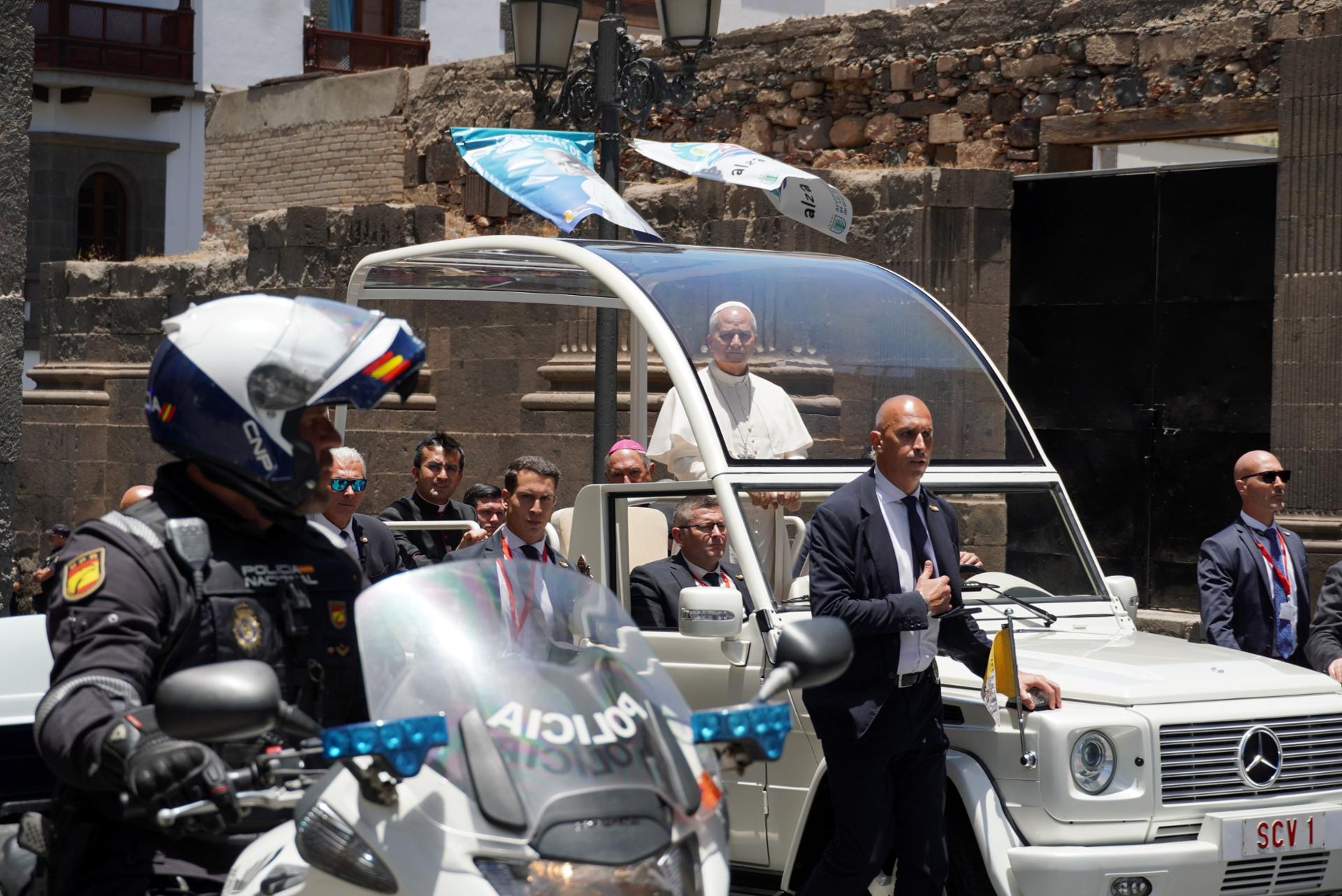
The visit of Pope Leo XIV to Spain, which took place between 6 and 12 June, posed the greatest logistical security challenge in over 200 years of history of the National Police Force. The apostolic visit required the deployment of extensive security measures (Operation Gracia), with the mobilisation of personnel and equipment to the various venues – Madrid, Catalonia and the Canary Islands – proving essential to ensuring security and the smooth running of the events.
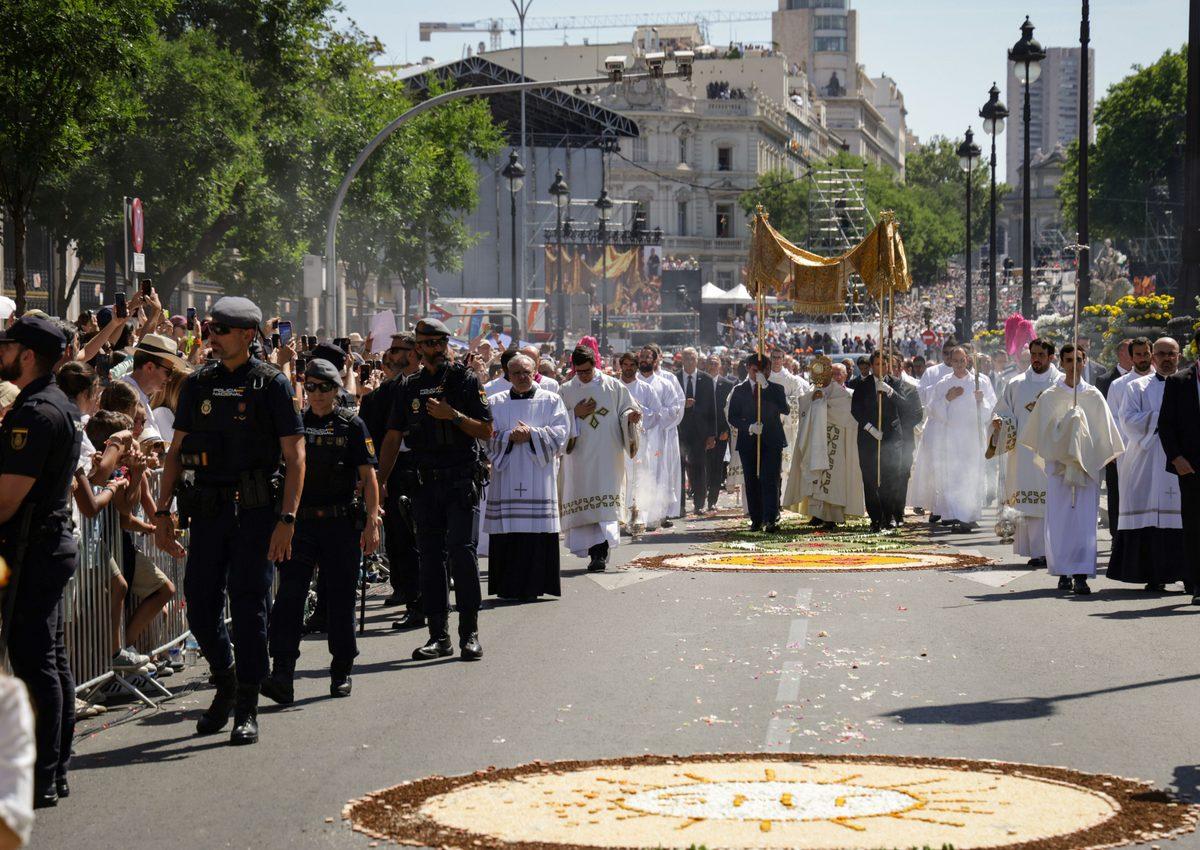
More than 15,000 officers from various units were deployed in Madrid (9,700), Barcelona (600), Las Palmas (1,200) and Tenerife (1,000), alongside 2,600 trainee police officers from the National Police Academy in Ávila. Throughout Pope Leo XIV’s stay in Spain, his personal security detail consisted of officers from the Central Protection Unit alongside members of the Special Operations Group (GEO).
The vehicle fleet totalled almost 600, including 250 vans from the Police Intervention Unit (UIP), 17 lorries from the Mounted Police Unit, 24 vans used by the Canine Unit, 38 vehicles for use by the Special Operations Group (GEO), and 91 vehicles allocated to the protective units. In addition, the Police Air Unit deployed one aeroplane, seven helicopters and 16 drones; while the Underground and Environmental Protection Department deployed eight specialist vans.
In carrying out their duties, officers were equipped with 40 early-warning threat detection cameras, 160 walkthrough metal detectors, 162 security scanners, 302 metal detectors, 43 frequency jammers and 44 personal evacuation kits.
Transportation of the units
Transporting the police units to the Canary Islands was a logistical challenge. Two ships set sail from Huelva bound for Las Palmas and Tenerife, carrying some 215 officers, more than 170 vehicles and 16 dogs; they were joined by a further 1,300 officers who travelled on seven flights in the days leading up to the arrival of His Holiness on the islands. In addition, an inter-island transfer was required between 11 and 12 June, involving a ferry travelling from Agaete to Tenerife carrying more than 320 officers, 160 vehicles and four dogs.
The Air and Space Force assisted in the transport of heavy vehicles such as the lorries belonging to the Technical Intervention Task Force (GOIT) and the special vehicles of the Police Intervention Unit (BMR and 4x4s).
To coordinate the operation, each venue had a CEMAN, an Intelligence Unit and an Air Safety Coordination Unit, which remained operational from the day before His Holiness’s arrival in the city until the end of his stay. At the CEMAN – the headquarters for the coordination and resolution of all incidents during the apostolic visit – representatives from the units involved in the operation were stationed, and footage transmitted by the Police Air Unit was received and viewed in real time.
The Intelligence Unit, managed by the General Directorate of Information, carried out continuous monitoring of social media and potential emerging threats so that, after analysing the data, the information obtained could be made available to the relevant units to facilitate operational coordination.
In addition, a Cybersecurity Unit was set up which, led by the National Police’s Operations and Digital Transformation Division, was responsible for coordinating cyber-patrol on social media through the monitoring and analysis of digital information. This work has enhanced the capacity to detect, prevent and respond to risks in the digital environment.
Restrictions on the use of drones
The National Police reminded the public that the use of drones and unmanned aerial vehicles was restricted in areas affected by official events, processions, public gatherings and specially protected areas in Madrid, Barcelona and the Canary Islands. These measures were intended to ensure the safety of those attending, the official delegation, the authorities, the emergency services and any authorised aircraft that might be involved in the operation, as the unauthorised use of drones in such environments could pose a risk to public safety, disrupt the proceedings and jeopardise the work of the police, health and emergency services.
Flying drones was not permitted in restricted areas without prior authorisation, even if the flight was intended for private, recreational, informational or imaging purposes. Any unauthorised operation was detected by the SIGLO-CD (Global Anti-Drone System) early warning system, and could result in the immediate intervention of officers, the identification of the pilot or operator, the immobilisation or seizure of the equipment and, where appropriate, the initiation of administrative or criminal proceedings as may be applicable under current legislation.
Restricción del uso de drones
La Policía Nacional recordó que estaba restringido el uso de drones y aeronaves no tripuladas en las zonas afectadas por los actos oficiales, desplazamientos, concentraciones de público y espacios de especial protección previstos en Madrid, Barcelona y Canarias. Estas medidas pretendían garantizar la seguridad de las personas asistentes, de la comitiva, de las autoridades, de los servicios de emergencia y de los medios aéreos autorizados que pudieran participar en el dispositivo, ya que el uso no autorizado de drones en estos entornos podría suponer un riesgo para la seguridad pública, interferir en el desarrollo de los actos y comprometer la actuación de los servicios policiales, sanitarios o de emergencia.
El vuelo de drones no estaba permitido en las zonas restringidas sin autorización previa, aun cuando el vuelo se pretendiera realizar con fines particulares, recreativos, informativos o de captación de imágenes. Cualquier operación no autorizada era detectada por el sistema de alerta temprana SIGLO-CD (Sistema Global Contra Drones), y podría dar lugar a la intervención inmediata de los agentes, la identificación del piloto u operador, la inmovilización o intervención del equipo y, en su caso, la tramitación de las responsabilidades administrativas o penales que pudieran corresponder conforme a la normativa vigente.