




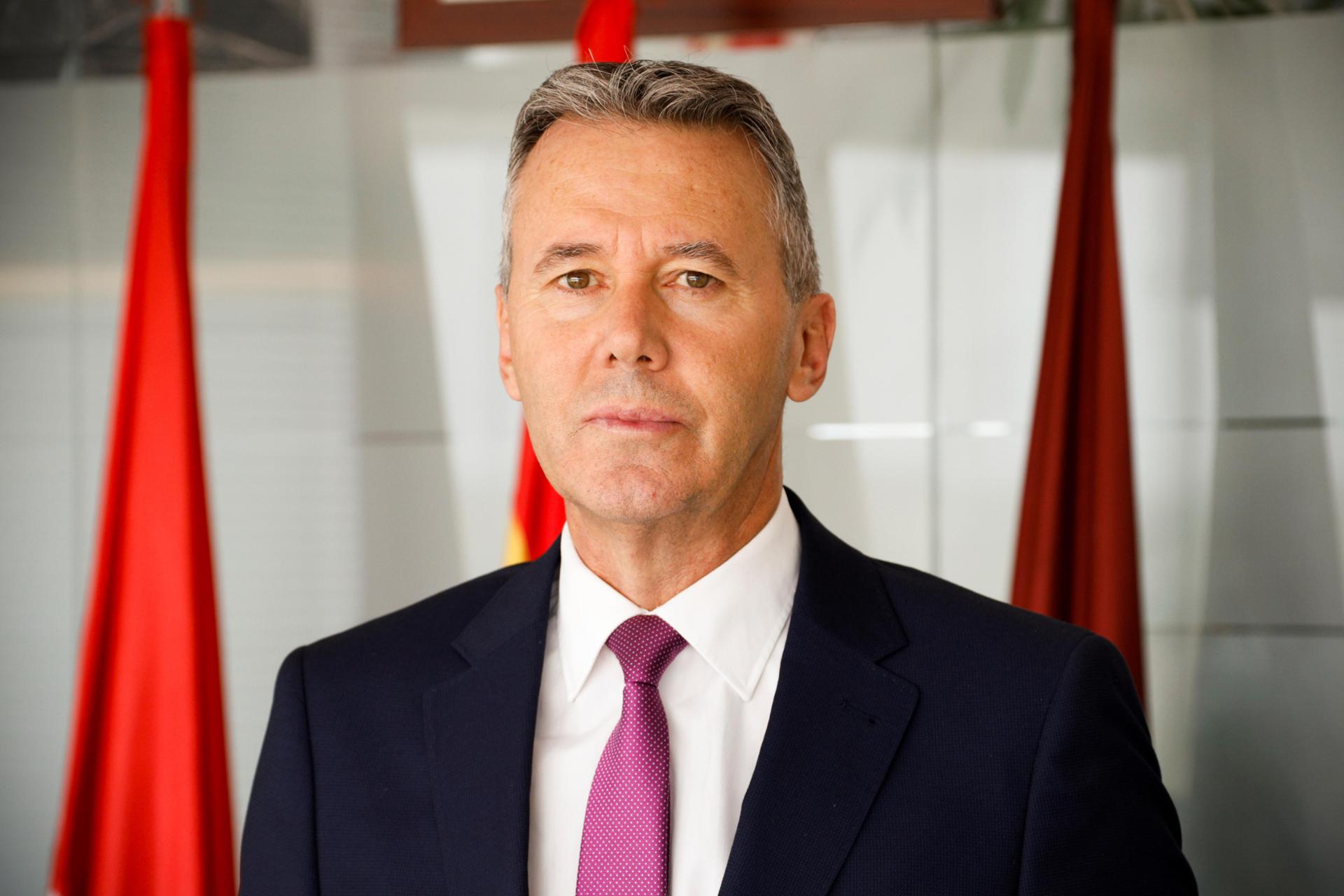
Jesús Gil Martín: Madrid City Council boasts 8,300 security professionals and state-of-the-art systems


Madrid City Council employs approximately 8,300 professionals, including Municipal Police, firefighters, and SAMUR-Civil Protection medical staff, with the objective of reaching 10,000 by 2027, according to Jesús Gil Martín, General Coordinator of Security and Emergencies. He explains that "complementing this highly professional human capital, which is a fundamental part of the system, we possess the best infrastructure, systems, and equipment necessary to ensure optimal performance.”
How much priority does Madrid City Council place on security and emergency planning?
We attach the utmost importance to it, while maintaining full respect for other equally important matters required to achieve the highest quality standards as a city (such as the environment, social policy, public works, culture, housing, mobility, and districts). This is a shared objective promoted jointly by the entire government team, involving the Cabinet Members for the various portfolios, the districts, and senior management.
Proof of this is that the Deputy Mayor's Office (the second highest hierarchical position in the City Council after the Mayor) holds the portfolio for Security and Emergencies. Furthermore, of the 300 measures in the government programme, more than 50 correspond to this area: Deputy Mayor, Spokesperson, Security and Emergencies.
Indeed, all studies and citizen surveys tell us that safety, in its broadest sense (including emergency response), is one of the main indicators of the best cities in which to live. In this context, Madrid is among the best in the world thanks to the shared effort of all administrations and stakeholders (security forces, judiciary, emergency services, social services, etc.) and the civic contribution of its inhabitants.
What human and technological resources do you make available in this area?
Madrid City Council currently employs around 8,300 professionals, including Municipal Police, firefighters, and SAMUR-Civil Protection clinicians, with the objective of our government programme being to reach 10,000 personnel by the end of the current parliamentary term (2027). To this end, the municipality has made a firm commitment to public sector recruitment in these areas, approving some of the largest public employment offers in the history of the city of Madrid. This ambitious and rigorous planning of selection processes required the involvement and effort of all parties: the administration (Budget, Human Resources, etc.), the services themselves (Municipal Police, Fire Brigade, and SAMUR-Civil Protection), and the City Council's Integrated Training Centre for Security and Emergencies (CIFSE), as well as the Regional Government's Institute for Integrated Security and Emergency Training (IFISE).
It should be borne in mind, in this context, that these resources work together with other municipal services (social services, cleaning, mobility, etc.), which allows for preventative action and a comprehensive response in this sensitive and important matter for citizens. They also work together with other security and emergency services, both from the Central Government (such as the National Police and Civil Guard) and from the Community of Madrid (fire and health services). Therefore, this combined effect, through their coordinated action, multiplies their positive impact.
In addition to this highly professionalised human capital, which is a fundamental part of the system, the best infrastructure, systems, and equipment are available to ensure optimal performance.
Beyond the basic work infrastructure, where over the last six years a very significant investment has been made in the construction and comprehensive renovation of buildings serving as headquarters for the different units of the three security and emergency services (Municipal Police stations, Fire Brigade stations, and SAMUR-Civil Protection bases), it is also worth highlighting the provision of the most advanced technical resources as tools to improve safety and efficiency in their work. Some examples would be the installation of video surveillance systems on public roads incorporating artificial intelligence and the provision of Conductive Energy Devices (CEDs) or drones (UAVs) for the Municipal Police; the capability for remote access to patient medical records or the provision of virtual reality ultrasound simulators for training in SAMUR-Civil Protection; and the technological improvement of new vehicles and new uniforms for the Fire Brigade.
What other lines of action to improve security and emergency planning are you currently promoting?
In addition to the aforementioned improvements in human capital (increase in personnel and training) and equipment for our security and emergency services, through a significant investment demonstrating the total priority of the municipal government team, a firm commitment is being made to strengthen the entire municipal system of planning and coordination in civil protection. This is achieved through the development and implementation of a set of plans for different risks and the provision and training of specific technical resources for the coordination of actions, both preventative and reactive, in the execution of these plans.
Thus, over the last six years, the Municipal Emergency Plan of Madrid City Council (PEMAM), a territorial and multi-risk plan that serves to deal with any risk, disaster, or civil protection emergency that may affect our municipality, integrated into the Territorial Civil Protection Plan of the Community of Madrid (PLATERCAM), and the Madrid Emergency or Winter Inclement Weather Plan (PEIAM) have been reviewed in depth. Furthermore, the municipal action plans (special plans) for floods (PAINUNAM) and heatwaves (CALORMAD) have been drawn up and approved.
In addition, new plans are currently being drawn up to complete the planning system and ensure an orderly response to possible civil protection emergencies of any origin or nature in our city. Planning and response are necessarily coordinated with those of the higher administrative bodies, the Community of Madrid and the Central Government, which validate all these instruments prior to their approval.
The results of the approval and training of these plans are clearly tangible, with better coordination of the response to episodes experienced by our city this year. These include the combined effect of reservoir releases and persistent rainfall that forced us to activate the Flood Plan and adopt special measures to avoid risks to the population, or the national power outage suffered by our country, which also forced us to adopt a single direction of response actions within the framework of the PEMAM.
Is there anything else you would like to highlight?
I would like to highlight two fundamental elements that contribute to the robustness of the municipal security and emergency prevention and response system: the City Council's Integrated Security and Emergency Training Centre (CIFSE), which provides initial, specialised, and refresher training for each service, as well as joint training for all of them to improve their coordination and, therefore, the efficiency of joint interventions; and the Madrid Integrated Security and Emergency Centre (CISEM). The latter houses the communications centres of the three municipal security and emergency services (together with the mobility service) and the single command information manager (GIMU), keeping them in direct contact with each other, which is a vital element in the coordinated operation of the services.
Both centres are to be given a decisive boost, from a resourcing and technological point of view, so that they can advance in their mission to integrate the operation of the services, which we believe to be fundamental for improving the efficiency of the system. /