




Region of Madrid Fire Chief: The main fire risk in Madrid is the forest-urban interface


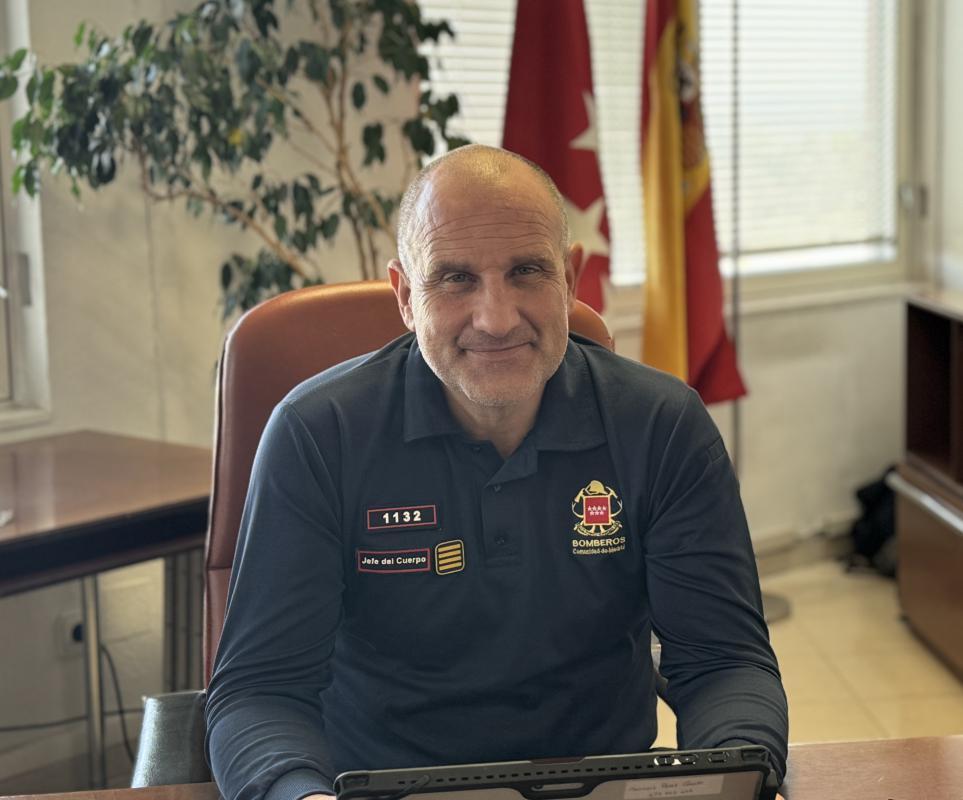
The main risk in the Region of Madrid is forest fires and, specifically, the forest-urban interface, according to Antonio Pérez Crespo, Chief of the Fire Brigade of the Region of Madrid, who tells us the year 2025 has been the worst in the historical series. "In two big fires in our province, we saw unprecedented rates of spread.” In this regard, he warns that combating them will increasingly require "highly qualified and trained personnel with highly trained capabilities".
How have fires changed in their different settings and environments in recent years?
The Fire Brigade of the Region of Madrid is responsible for both structural fires and forest fires. With regard to structural fires, the heterogeneity of the territory of the region, where small and medium-sized towns coexist with large cities, means that the response to the risk of structural fire, including primary and industrial-sector industrial infrastructure, is very different. Perhaps what is most evident for our units is the urban growth, often changing from large towns to small cities. Similarly, the building stock is changing and, in general, while large buildings used to be rare, they are now becoming more common.
The main risk in the Region of Madrid is forest fires and, specifically, the forest-urban interface risk. 2025 was the worst year on record. In two big fires in our province, we saw unprecedented speeds of spread. The fire that started in the municipality of Tres Cantos reached speeds of more than 7 km/h, with an area of more than 700 hectares burned in about 30 minutes.
These fires make us wonder about the causes of such aggressive performance and whether it will become more common in the future.
What new measures are needed in the fight against these fires in light of these changes?
The system needs to evolve, not only in terms of the response given by those involved, but also in terms of how the organisation and its management are structured. Forest fires require highly qualified, highly trained and highly skilled personnel. In addition to this highly qualified "muscle", technical firefighting managers, emergency managers and sector heads who are highly qualified to carry out their functions will also be required. This can be extended to other risks in the Madrid region. Increasingly educated staff, but highly trained in responses to different types of risks.
At present, what resources does the Region of Madrid currently have to fight these fires?
The Region of Madrid Fire Brigade has a network of 22 fixed fire stations, distributed throughout the territory. These stations, which remain operational 24 hours a day, are complemented by a network of 19 seasonal forest fire response parks. In addition, there are more than 25 brigade bases dedicated to forest fire prevention and extinction. The resources, in terms of vehicles and personnel at these stations, whether fixed, seasonal or brigade-based, vary depending on the type of risk in the territory in which they are located.
In terms of air resources, the Fire Brigade also has two helicopters available all year round; one for rescue and the other for coordination of resources, including a camera for capturing images.
What role does prevention play and what elements and actions are needed to reinforce the system?
Prevention is a fundamental element to protect and save lives, as well as to minimise the damage that any risk could cause were it to materialise. Prevention involves many actions: research and study of the risk, study of preventive and/or corrective measures, education and preparation of the population. Prevention is undoubtedly what saves the most lives. Prevention also gives us knowledge to improve our response through new procedures or tools.
What other issues must be taken into account in the future?
I believe that, over the coming years, planned urban development in the Region of Madrid up to 2035, combines with climate irregularities, will mean that the Fire Brigade must conduct an in-depth study of territorial risks. These risks will determine the type of response. In light of all that we have seen since 2020, from Covid to flash flooding and forest fires, it is essential for us to be prepared and specialised for a range of different risks.