




Pedro Pablo Sanz (AMAT): Employers are aware of the link between health and competitiveness


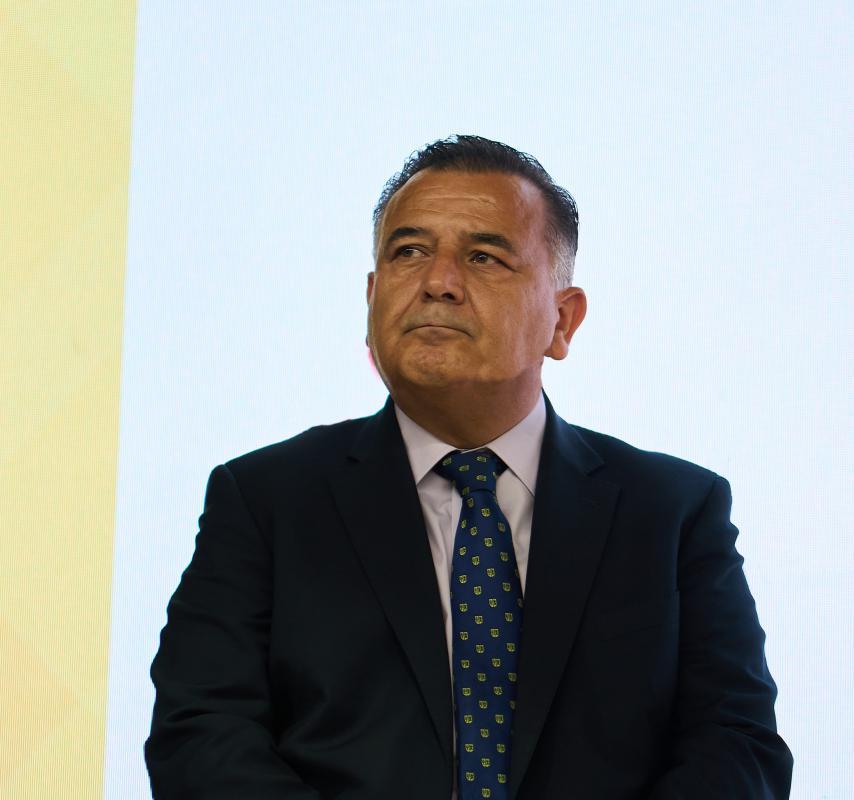
Employers are increasingly aware of the close relationship between the health of their employees and the competitiveness of the organisation, says Pedro Pablo Sanz Casado, Managing Director of the Association of Occupational Accident Mutual Insurance Companies (AMAT). In the view of this expert, "this relationship is especially evident in those sectors that are most intensive in human capital, where the physical and mental well-being of workers has a direct impact on productivity and the quality of the goods and services that companies produce and provide".
What is the relationship between employees' healthcare and increased competitiveness of companies?
Workers are one of the main productivity factors in a company. As a result, employers are increasingly aware of the close link between the health of their employees and the competitiveness of the organisation.
Firstly, if we analyse the data on occupational accidents with sick leave for the population protected by the mutual insurance companies collaborating with the Social Security from 2000 to 2024, we can see that the average monthly incidence per 1,000 covered workers has fallen by 175.27% (from 7.79 cases in 2000 to 2.83 cases in 2024). This information refers to 97.26% of workers protected by occupational contingency out of the total number of workers protected across the system in the year 2024. It is clear from these data that when the company implements prevention activities, the incidence of occupational accidents with sick leave decreases significantly.
Nevertheless, we must remember that companies are not responsible for common illnesses and non-occupational accidents. It is worth noting here that sick leave due to common contingencies is at an all-time high, with exorbitant growth; for example, the average monthly incidence per 1,000 protected workers has increased by 309.45% in the last 25 years (from 7.62 cases in 2000 to 31.2 cases in 2024). This information refers to 78.9% of the workers protected by common contingency out of the total number of workers protected in the total system in the year 2024.
What is the cost of these casualties?
According to the estimates of AMAT, based on data from the Ministry of Inclusion, Social Security and Migration and the mutual insurance companies collaborating with the Social Security, the cost of sick leave arising from common contingencies both in terms of financial benefits paid by the Social Security and the mutual insurance companies and the direct cost to companies has risen by 186.95% (€18.96855 billion more) in the last ten years, rising from a total cost of €10.14632 billion in 2015 to €29.11487 billion euros in 2024.
Common Contingency sick leave not only increases operating costs, but can also negatively affect the reputation and image of the company in the eyes of its customers, reducing productivity and competitiveness, and making the products and services offered more expensive. The cost of sick leave due to common contingencies has serious repercussions for companies' competitiveness, for job creation and for our social protection system, and has a negative impact on economic growth.
In addition to the economic costs, these problems have led employers to demand special attention on this issue, as a burden detrimental to other workers, as their workload is increased by having to carry out the tasks of those on sick leave; as well as the organisational problems that companies must face, given that in many cases replacement processes are not feasible, and even less so when there are a large number of short-term processes, and many jobs require a level of training that it is not easy to provide to replacement workers at such short notice.
Are Spanish employers aware of this link between health and competitiveness?
In recent years, as we have said, rising sick leave due to common contingencies is at an all-time high, and this has become one of the main challenges faced by companies on a daily basis. In light of this situation, and in line with what we have discussed, companies have no responsibility for common illnesses and non-occupational accidents, without ignoring the commendable efforts some companies are making, within their possibilities, to develop strategies aimed at improving the general health of their workers beyond their immediate organisational orbit and the concept of health and safety at work.
In what industrial sectors is the health-competitiveness connection most evident?
The relationship between the health of workers and the competitiveness of companies is especially evident in those sectors that are most intensive in human capital, where the physical and mental well-being of workers has a direct impact on productivity and the quality of the goods and services that companies produce and provide. However, as mentioned above, neither the companies nor, by extension, those sectors they belong to, have any responsibility for common illnesses and non-occupational accidents. By way of example, if a construction worker suffers an injury playing football over the weekend and their primary care doctor issues a sick leave report for common contingencies, what responsibility does the company have for this sick leave?
This is why, for some time now, the mutual insurance companies collaborating with the Social Security have been demanding that workers suffering from an illness diagnosed as a traumatological or osteoarticular pathology arising from common contingencies can receive comprehensive healthcare and medical discharge from the medics of the mutual insurance companies, given that these entities are specialists in the management of this type of sick leave. As a result, if the mutual insurance companies had the corresponding resources and management skills to carry out these actions, in the year 2024, the 1,293,463 workers who suffered a sick leave for a diagnosed trauma pathology could have recovered 30 days earlier.
What other actions are needed to enhance the workers' health and how do they also help to improve their work performance and the competitiveness of the company?
Promoting health in companies means cementing an organisational culture that must be driven by management and transmitted throughout the organisation. To achieve this, it is necessary to adopt a transversal approach that, starting from the control of aspects relating to health and safety in the processes, makes it possible to identify opportunities for improvement to foster well-being among the people who make up the company.
Health and wellness programmes should be developed as rigorously as any other component of the business management model. These must be defined on the basis of a needs analysis, setting clear goals, planning actions and evaluating results. This process should include the identification of areas for improvement and their integration with established risk control strategies in order to build a system that harmonises health protection and promotion. Clearly, boosting health and wellbeing in the workplace must translate into significant and verifiable improvements, both in terms of reducing illness and related costs, as well as increasing productivity, improving staff motivation and creating a more positive working environment.