




SICUR 2026 highlights the role of fire alarm control panels in improving security facilities


Security threats are evolving into technological and hybrid attacks, experts tell the International Security Exhibition.
The use of exoskeletons in companies is increasing, but they must be adapted to the tasks and requirements of the workplace.
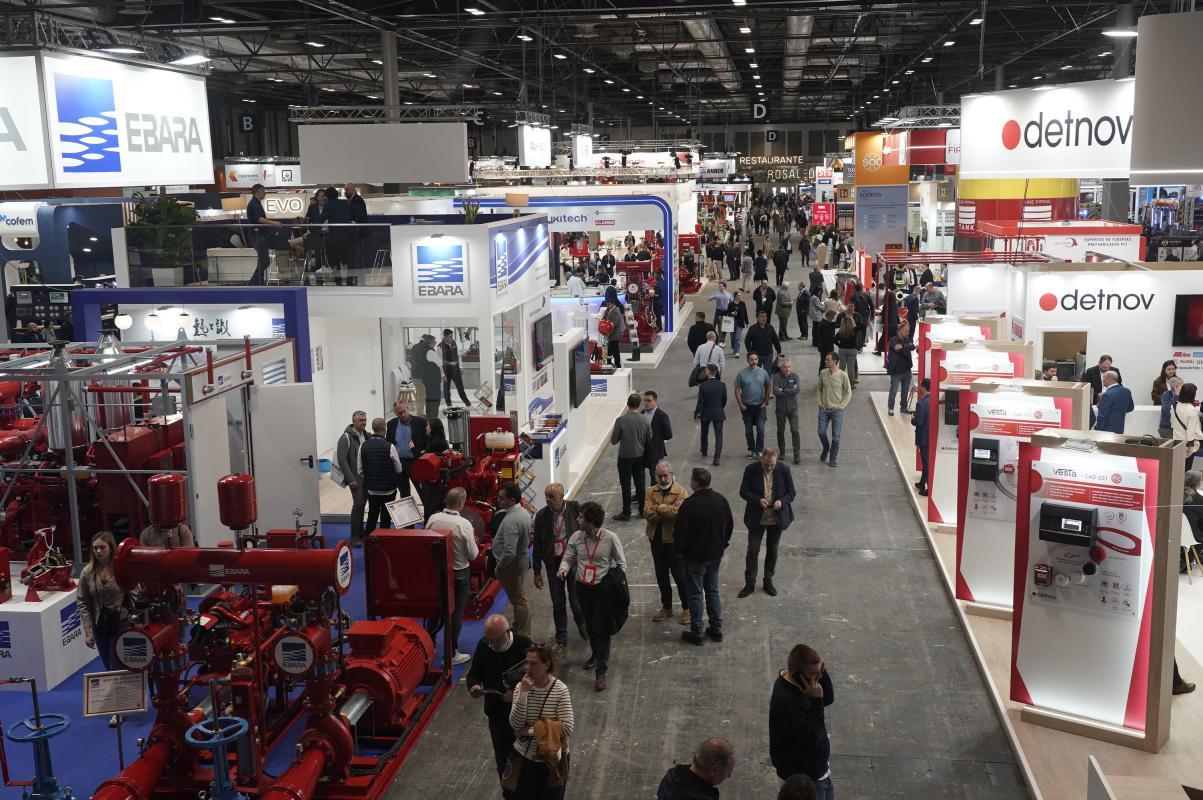
On its first day, the International Security Exhibition, SICUR, has enjoyed a successful participation in the technical conferences, as well as visits to the exhibition offer of the more than 670 exhibiting companies participating in this edition. Inaugurated by Jaime Peris Pascual, Special Commissioner for Reindustrialisation of the Ministry of Industry and Tourism; Francisco Martín Aguirre, Government Delegate in Madrid, and Manuel Zaragaza, Director General of Civil Protection of the Community of Madrid, SICUR celebrates its 25th edition until Friday 27 February, organised by IFEMA MADRID.
During the first day of the technical agenda , the importance of fire alarm control centres (CRI) and their role in the improvement of security installations was highlighted. Antonio Tortosa, president of Tecnifuego, advocated that "fire protection installations should communicate with the outside world, and if they do so through a CRI, immediate communication will be achieved, from which all the corresponding procedures will be set in motion to solve the problem". In addition, the connection to a fire alarm control centre "will reinforce and improve the security installation by avoiding, for example, false alarms".
Likewise, Lluis Marín, coordinator of Tecnifuego's Detection Equipment Manufacturers Sector Committee, stressed the importance of "providing fire protection systems with tools for effective emergency communication, while facilitating the management of the maintenance of detection and alarm systems".
Civil Security
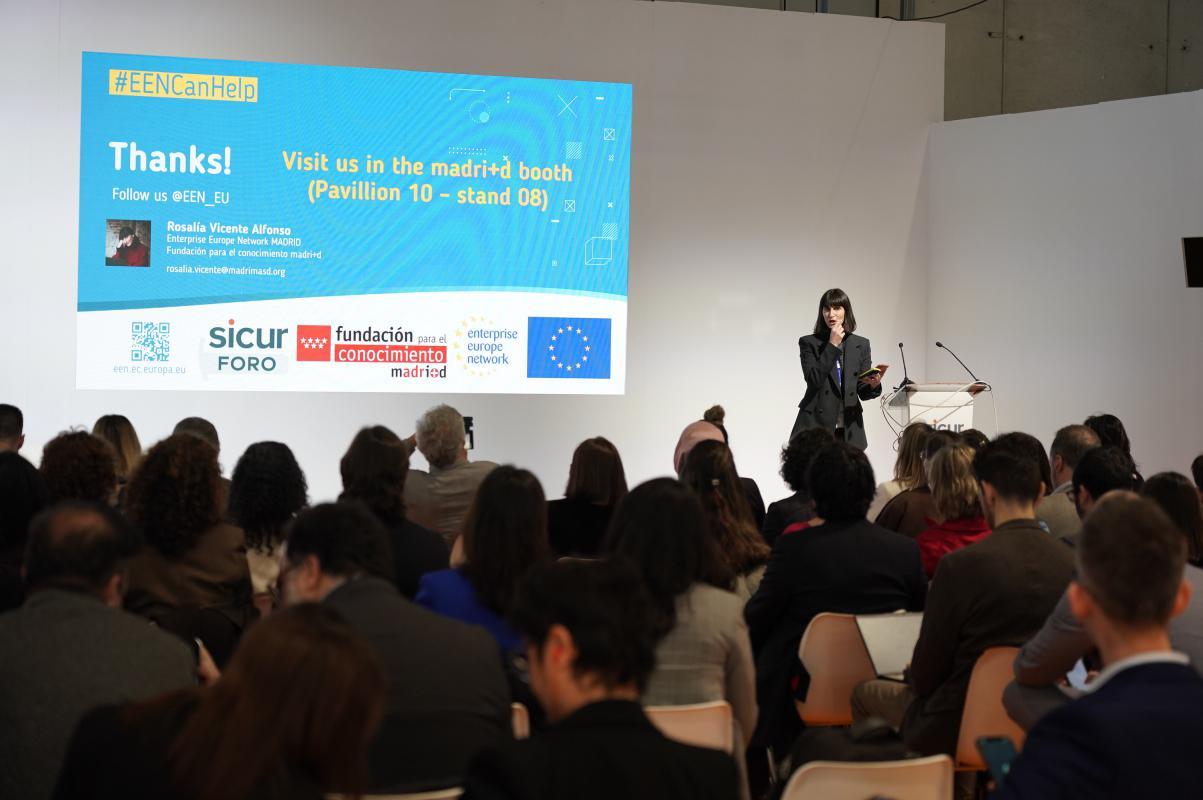
Another of the conferences held at the FORO SICUR was the session organised by CDTI (Centre for Technological Development and Innovation) and the Fundación Madrid+D dedicated to Cluster 3 of Horizon Europe “Civil Security for Society” 2026, in which institutional leaders, European experts and national contact points from different countries analysed the strategic priorities of the work programme. During the meeting, Maite Boyero Egido, from CDTI INNOVACIÓN, indicated that "last year, Spanish participants (security industry, research and technology centres, security forces, etc.) raised around 27 million euros in grants, out of the 190 million available for the entire European Union, which placed our country as the first in fundraising".
Ainara Ripa, from the Instituto Nacional de Técnica Aeroespacial, stressed that "the funding is aimed at all types of entities that develop R&D&I projects in the field of civil security and allows end users (security forces and corps, fire brigades, emergencies...) to solve their needs in the field of security in their day-to-day operations". These types of projects "are intended to provide solutions to the fight against crime and terrorism, border management, critical infrastructure protection, disaster management and cybersecurity, fundamentally". While Marina Martínez, from SOST-CDTI (Spanish science and technology office in Brussels) pointed out that "collaborative projects allow end-users to work together with civil society, municipalities, research and innovation actors, universities, etc., as well as to connect with the private sector and its technological capabilities".
For his part, José Cebrián de Barrio, head of R&D&I at the Ministry of the Interior's Technology Centre, emphasised that "funding instruments are very necessary to increase the maturity rate of security R&D&I projects for which there are still no prototypes". He added that "the Ministry of the Interior has been involved in more than 150 security projects since 2007, with funding of approximately 42 million euros and with more than 800 partners".
After the introductory session, participants held 20-minute strategic meetings under the umbrella of Brokerage Event SICUR 2026, providing a unique opportunity to generate new strategic contacts and foster technological cooperation in security and civil protection at an international level.
SICUR CYBER
In the SICUR CYBER space, Patricio Delorme, partner of the Spanish Association of Security Engineers, put the emphasis on cybersecurity in credentials and explained "how to choose a secure credential, which is very important for individuals and companies". In this regard, he noted that "globally, 35% of credentials are still in their first generation of technology, 40% have started to migrate to the next generation and only 25% have the most secure technologies". On the other hand, he warned that "credentials must take into account three elements: the technology, the formats and the security keys with which they are protected". He also stated that "regulations in the sector are positive because they allow us to be more protected and to work with standards, which boosts capacities and facilities"; he pointed out that "the life cycles of new technologies continue to shrink, going from 20 to 5 years on average"; and concluded by stating that "the only efficient way to reduce risks is to invest in security, especially in electronic security and cybersecurity".
SICUR CYBER also hosted a round table on the regulatory horizon and private security in the transpositions of the European directives NIS 2 and CER, moderated by César Álvarez, project coordinator of the Fundación Borredá. At this round table, Ángel Flores Alviz, head of the Intelligence and Coordination Service of the National Critical Infrastructure Protection Centre (CNPIC), explained that "we have moved from a focus on infrastructure protection to a broader concept, which also encompasses the resilience of services and the ability to prevent, protect against and recover from incidents, both intentional and unintentional".
Leandro Gobierno López, Area Head of the Interior Ministry's Cybersecurity Coordination Office (OCC), said he was in favour of "having a broad vision of security". He referred to the NIS 2 and CER directives, which establish "an area of coordination and communication, avoiding duplication and double administrative burdens". Meanwhile, Julio Camino, inspector, head of the group of obliged establishments of the Central Private Security Unit of the Spanish National Police, indicated that "the CER directive is oriented towards physical security", and recalled that private security is carried out by companies in the sector.
Antonio Suárez, chief colonel of the Protection and Security Service of the Civil Guard, pointed out that "the transpositions of the two directives will be a question of time, motivated by the geopolitical moment we are living through". He noted that whereas a decade ago threats were primarily physical, "they are now evolving into technological and hybrid attacks". Finally, Eduardo Cobas, secretary general of APROSER, stressed that the European safety directive "now calls for standardisation to improve safety and requires critical operators to determine which personnel they consider essential to ensure that they are better trained and able to perform their duties".
EXO Corner
In Exo Corner, Luis Ruiz, technology manager at the Instituto de Biomecánica de Valencia (IBV), spoke about the effect of exoskeletons from a biomechanical point of view and pointed out in which tasks they can be used in the construction, metal or hotel and catering industries. He explained the latest studies carried out by the Instituto de Biomecánica in this field and presented the guides that the IBV has worked on to help sectors such as construction and metal in the incorporation of exoskeletons, as well as the protocols maintained in the Ergo/IBV software. He noted that "the implementation of exoskeletons in companies is increasing", but warned that "it is necessary to follow protocols according to models, types of tasks and job requirements to ensure success in this initiative".
In addition, a cycle of practical selection of personal protective equipment (PPE) took place in the Speakers' Corner on Occupational Safety .