




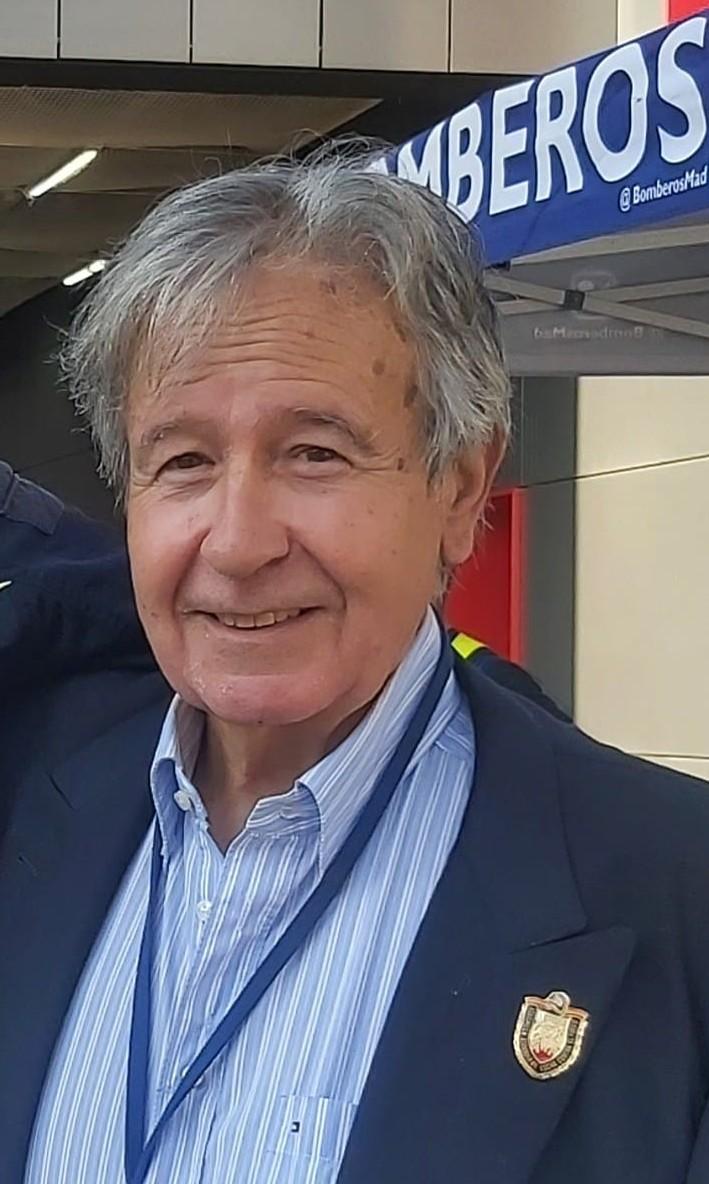
Rafael Moro (ASELF): Emergency management is undergoing an unprecedented transformation


Safety and emergency management are undergoing an unprecedented transformation, warns Rafael Moro Fonseca, vice-president of the Spanish Fire Protection Association (ASELF), who took part in the latest edition of SICUR. “Among the main challenges are the increase in large-scale wildfires; new energy technologies, such as battery storage systems and electric mobility; the protection of critical infrastructure; the resilience of cities; extreme weather events; and the integration of digital tools, AI and decision-support systems into emergency services”.
What activities does ASELF carry out?
ASELF operates as an independent forum bringing together all professionals, organisations and institutions involved in emergency prevention, protection and response. Our scope of activity covers the fire service, civil protection, medical emergencies, law enforcement agencies, public administrations, universities, research centres, companies in the sector, equipment and vehicle manufacturers, engineering firms, insurance companies and all those professionals committed to improving people’s safety and protecting the environment.
ASELF’s mission is to foster the exchange of knowledge, drive innovation, promote technical training and help ensure that emergency-related decisions are based on experience, evidence and cooperation among all stakeholders.
What objectives have you worked towards in 2026?
Throughout 2026, we have focused our efforts on several priority objectives: strengthening the dissemination of technical knowledge; promoting the analysis of new risks arising from the energy transition, such as battery storage systems and electric mobility; encouraging the exchange of experiences between national and international emergency services; supporting initiatives that bring the culture of prevention and self-protection closer to society; and to continue promoting forums for dialogue between public authorities, professionals and businesses, with a view to improving preparedness and response capacity in the face of increasingly complex emergencies.
We recognise that today’s major challenges – climate change, new-generation wildfires, technological risks, the resilience of critical infrastructure and the digital transformation of emergency services – can only be tackled through collaboration, knowledge-sharing and continuous innovation. That will remain ASELF’s main area of focus this year.
How is the sector coping with the transformation currently taking place in the field of security and emergencies?
Safety and emergency management are undergoing unprecedented transformation. Today, we must face increasingly complex, interrelated and ever-changing risks, meaning we must evolve just as rapidly as technology and society do. Key challenges include the increase in large-scale wildfires fuelled by climate change; the expansion of new energy technologies, such as battery storage systems and electric mobility; the protection of critical infrastructure; the resilience of cities; adaptation to extreme weather events; and the integration of digital tools, artificial intelligence and decision-support systems into emergency services.
But alongside the technological challenges, there is another equally important one: the need to strengthen cooperation between public authorities, emergency services, businesses, research centres and universities. No single organisation has all the answers required to address today’s risks. At ASELF, we believe that these challenges must be tackled through three main lines of action. Firstly, by promoting the ongoing exchange of knowledge and experience among professionals. Secondly, by promoting technological innovation, while always ensuring that this is accompanied by training, procedures and risk assessment. And, finally, by fostering a genuine culture of prevention and self-protection that involves not only professionals, but also businesses and the general public.
Prevention remains the most effective and cost-efficient way of protecting lives, property and the environment. Every euro invested in anticipating risks prevents far greater human, social and economic costs once an emergency has already occurred. At ASELF, we will continue to work to act as a meeting point for all stakeholders in the sector, fostering dialogue, the exchange of best practice and the dissemination of technical knowledge, in the belief that a better-prepared society is also a safer and more resilient society.
How do you view the collaboration between public authorities, businesses and emergency service professionals, and what does each of them contribute?
Collaboration between public authorities, businesses and emergency services professionals is no longer an option: it is a necessity. The changing nature of risks, the rapid pace of technological innovation and the increasing complexity of emergencies make it essential for all stakeholders to work in a coordinated manner and share knowledge.
Public authorities are aware of the service’s needs and have a responsibility to make sure citizens are protected. Businesses contribute innovation, technological development and investment. Emergency services provide the operational expertise needed to validate solutions under real-world conditions. When these three perspectives come together, the result is more effective teams, safer procedures and better preparation to deal with future risks.
At ASELF, we believe that our role is precisely to facilitate that dialogue. We act as a forum where people can exchange experiences, analyse needs, present innovations and discuss solutions from a technical, independent perspective that is guided by the public interest.
Public-private partnerships must always be based on transparency, technical rigour and mutual trust. The aim cannot be limited to simply incorporating new technologies, but must be to ensure that these technologies genuinely meet the operational needs of those involved in emergency response and deliver tangible benefits for public safety.
Our experience shows that the greatest progress in the field of emergency prevention and response is made when public authorities, businesses, universities, research centres and professionals work together from the very outset of each project. Such cooperation accelerates innovation, promotes the transfer of knowledge and helps develop solutions that are more effective, safer and better suited to operational realities.