




Spanish public transport at its historic peak


The International Bus and Coach Trade Fair has released its inaugural economic report highlighting the strategic role of the bus in mobility and the Spanish economy. This anal-ysis, conducted in collaboration with experts, operators, and manufacturers, confirms that the sector is experiencing one of its most positive periods and is consolidating its position as an essential pillar of collective mobility in the country.
Introduction: FIAA 2026 Report
As a fundamental pillar of Spanish mobility and the economy, the bus sector is entering an optimistic economic cycle. In this context, forums such as FIAA will help reinforce expectations, solidify the opportunities created by the new Sustainable Mobility Law (LMS), and support the paths forged by key sectoral players towards more effective digitalisation and truly sustainable, profitable decarbonisation. The LMS, approved this November, guarantees the basic right of Spaniards to mobility and establishes public bus transport as a fundamental value serving 49 million people.
Notably, Spain is one of the world's leading tourist destinations, and this year it will exceed 100 million international visitors. Rafael Barbadillo, President of CONFEBUS, the sector's employers' association, recently stated that Spain is the leading country in Europe in terms of passenger volume. He also noted: "We are witnessing an unprecedented commitment to public transport", and stressed the importance of transport for citizens, indicating that "transport represents the third largest household expense in Spain".
Sara Hernández, Secretary General for Mobility of the Spanish Government, recently indicated that the administration recognises the great challenges of modern mobility: energy transition and digitalisation. Both are basic pillars of a model that aims to guarantee that all citizens in Spain enjoy equal mobility rights, whether they live in large population centres or small, isolated villages.
Spain: a benchmark in collective mobility
Spanish public transport, and specifically the bus sector, is experiencing "the best moment in its history", according to a report by FIAA, the International Bus and Coach Trade Fair.
Spain is cementing its position as the leading European bus market, forecast to close 2025 with nearly 60,000 vehicles and over 4,300 new registrations, according to MSI Insight data.
This sustained growth places the country at the forefront of public transport in Europe, supported by the strength of its business landscape and the drive of public policies aimed at sustainability and digitalisation.
Rafael Barbadillo, president of CONFEBUS, the sector's employers' association, highlights the strategic role of the bus in Spain: "Spain is the leading country in Europe by passenger volume.” Barbadillo underlines the current situation in the sector: "We are witnessing an unprecedented commitment to public transport", and he highlights the importance of the sector for the daily lives of citizens: "Transport represents the third largest household expense in Spain".
FIAA: A driving force for innovation and sector development
The International Bus and Coach Trade Fair (FIAA) has established itself as the primary forum for industry, operators, and administrations to convene.
Vicente Toldos, Commercial Manager of FIAA, highlights: "These lines of action represent a strategic opportunity for the bus sector to take shape within these arenas, enabling a more effective and robust response to the Administration, the market, and users. FIAA has accompanied the industry through all stages of transformation and will continue to be the forum that defines the future of public transport.”
For her part, María del Carmen González, director of ANETRA, underlines the importance of the fair: "FIAA is a strategic meeting point for innovation, collaboration, and the development of the entire road passenger transport industry.”
ATUC, the Association of Urban and Collective Public Transport, stresses: "FIAA is a key meeting point between the operator and the industry. The relationship between these actors is ongoing, but events like FIAA are vital to sustain these ties and ensure that positive cycles, such as the current one, are consolidated.”
The major challenge of concession renewal
Spanish bus transport operates on a model of exclusive concessions operated by numerous companies, connecting Spanish towns and generating the most comprehensive bus transport system in Europe. However, Europe demands market liberalisation, requiring that all state and regional concessions be put out to public tender.
In fact, concession renewals, numbering in the hundreds throughout the country with imminent deadlines, are another fundamental factor in defining the current situation of the bus sector as critical.
These are the factors that companies and the main associations need to reinforce to maintain positive economic momentum in the sector. FIAA, because of its ability to connect players possessing decision-making, investment, and trend-setting power in the bus world, is the ideal forum to jointly advance towards these objectives. These include the continuity of transport subsidies, ensuring mobility continues to be seen as a major social benefit, and basing sustainability largely on attracting users from private vehicles.
These lines of action represent a strategic opportunity for the bus sector to take shape within these arenas, enabling a more effective and robust response to the Administration, the market, and users. FIAA has accompanied the industry in all its stages of transformation and will continue to be the forum that defines the future of collective transport," says Vicente Toldos, Director of FIAA.

The Spanish bus sector strengthens
Spain, like many other European countries, has a business landscape in which family-owned enterprises play a pivotal role. There are approximately 2,500 bus companies in Spain. In recent years, there has been a significant process of consolidation, with some 1,000 firms acquired by other companies, although there have also been closures. In fact, the average vehicle fleet has grown from 5 to almost 17 units per company in just over 25 years.
Almost the entire Spanish bus sector is comprised of family-owned companies. Although there are large business groups that have exported mobility services around the world, these groups - with few exceptions - remain family-owned.
Examples such as ALSA, MOVENTIS, VECTALIA, and RUIZ – internationally recognised for their presence in other countries – are groups that are still in the hands of families. FIAA has been present in the sector for three decades, and the family business community sees in this forum an opportunity to grow and face market transformations with greater assurance. This is demonstrated by the growth in exhibitor numbers, which have increased by 30% compared to the previous edition.
The LMS: A boost for Spanish mobility
The bus market is a fundamental pillar of national mobility and indeed of the Spanish economy. The LMS is the first mobility law passed in Spain – approved this November after more than 1,800 amendments – and ensures the fundamental right of Spaniards to mobility. The spirit of the Sustainable Mobility Law and workplace mobility plans may lead to the bus further increasing its share if the law is properly implemented.
The opportunities for evolution in public transport provided by this law merit significant reflection by operators and manufacturers for the coming years. "The discussion and training formulas resulting from FIAA's programme are the perfect tool for the sector to make the most of this long-awaited new legislation," says Toldos, Director of FIAA.
Bus business opportunities and challenges in Spain
Despite the positive economic outlook, the sector faces many challenges. Undoubtedly, one of the main ones is the shortage of professional drivers. It is necessary to relax the current regulations that make it difficult to recruit drivers, as well as to eliminate any added bureaucracy that does not add value. It is essential to attract talent.
In this sense, the head of FIAA emphasises: "FIAA 2026 has a presence in more than 30 countries to attract some of that talent and investment capacity, reaching unprecedented levels in the history of the event. The results are tangible: in recent years, the number of international exhibitors has grown by 50 per cent, demonstrating the growing global interest in the fair.”
Bus manufacturers and industry in general see an opportunity in the current market situation, especially if solutions to problems such as driver shortages are addressed.
All experts agree that digitalisation, the Sustainable Mobility Act, and decarbonisation are opportunities; these are high-potential avenues with long-term plans that need to find solid and profitable consensus. FIAA is a showcase for these opportunities and offers a variety of ways to remain a benchmark in the European bus and coach market.
In 2024, Spain experienced its strongest year ever for bus fleet renewals, with 4,392 units registered, the highest figure in the Spanish market to date. However, 2025 will close with very similar figures, as there has been a considerable upturn in registrations in recent months. According to analyst MSI Insight, we could end the year at around 3,365 units, a figure that would be maintained in 2026 and increase in 2027.
The business sector is the largest recipient, but the leasing segment also stands out, with a 124% increase between 2024 and 2025. Rental and private sales, on the other hand, are holding steady and will hardly decrease in the next two years. These figures are similar for used vehicles, with a forecast for 2026 of 2,719 units for companies, 16 for leasing, 420 for rental, 190 for private individuals, and 380 for imports. Thus, 2025 is expected to end with a bus fleet of almost 60,000 units, almost 5% more than in 2024.
Events such as FIAA: essential for the sector
Entrepreneurs in the sector are receptive to the positive market forecasts of the last few years. Aiming to sustain turnover and stable, quality employment, while offering a mobility service that continues to increase in excellence, companies and associations in the sector also see a landscape of opportunities where events and fairs such as FIAA are essential to solidify trends and share objectives.
"For our organisation, FIAA is a strategic meeting point that promotes innovation, collaboration, and the development of the entire road passenger transport industry," says María del Carmen González, director of ANETRA.
The same applies to ATUC, the Association of Urban and Collective Public Transport, which describes FIAA as "a fundamental meeting point between the operator and the industry.” The relationship between these actors is ongoing, but events like FIAA are vital to strengthen these ties and ensure that positive cycles, such as the current one, are consolidated.”
Business consolidation and bus fleet growth
Analysing the market specifically in terms of the number of companies and buses, the Spanish Transport Association (AET) states that "the sector maintains a fragmented base with many small and medium-sized companies, although in recent years there has been a trend towards consolidation. Capital requirements, digitalisation, and regulatory compliance are driving integration and consortia. The number of companies alone does not reflect the health of the sector; what is important is their adaptation to new demands for service, sustainability, and efficient management".
In addition to the number, ATUC highlights the level of excellence being achieved by Spanish companies, and those operating in our country providing services to urban public transport operators, noting they are "among the best on the international scene". Relations between urban operators and manufacturers "are very good," notes ATUC, "responding very well to a period of high demand for orders driven by the expansion of the use of public urban transport. The fleet and its distribution in the urban environment are world class.
These conclusions and visions for designing strategy emerge from the professional dynamics and the breadth of exposure at events such as FIAA.” "Compared to these companies," continues Juan Manuel Sierra, head of Institutional Relations at DIREBUS, "national and European companies working to order offer new developments in the search for excellence for operators when providing their service activity, whether regular or discretionary. Competition is fierce. The momentum in the purchase and registration of minibuses over larger vehicles is very noticeable, as the market segment in which they operate is booming, coupled with Persons with Reduced Mobility (PRM) applications.”
ANETRA confirms there are fewer companies, but the fleets are bigger. The latest data from the Register of Transport Activity Companies shows that there are currently 2,691 registered public service operating companies compared to the 3,334 registered in 2015, which implies a loss of 643 companies in a decade, a 20% decrease.
This shift in business positions has led us to have a fleet that, in the words of AET president Juan Manuel Martínez, "has begun a transition towards low-emission technologies, especially in urban and metropolitan services, where electrification has advanced the most. In intercity and long-haul, range needs and charging times remain a challenge. Renewal depends on the stability of the concession system and available funding. The average age of the fleet is improving in some areas, but there is still some way to go for a smooth technological transition.”
In this context, according to the employers, the enormous costs borne by the sector will continue to have a major influence on the economic outlook. According to the AET president, "the sector is facing increasing cost pressures (energy, financing, qualified personnel) and the need to invest in fleets and infrastructure. Digitalisation and data mining are key to improving margins. Decarbonisation is an objective that cannot be renounced, but it must be approached with technical and economic realism, avoiding ideological frameworks that are disconnected from real operations".
On a more general level, DIREBUS points out that "cost structures have risen, the social and fiscal obligations of companies have risen, and current public tender specifications are low-bid and without the possibility of index-linking cost increases during the duration of the tender".
Regarding passenger demand, says María del Carmen González of ANETRA, "we are seeing a gradual recovery in passenger numbers between 2021 and 2023 after the slump caused by the pandemic in 2020. Particularly noteworthy is the extraordinary increase in demand for regular public transport for general use which, in the years prior to 2019, showed worrying demand data with negative values such as -7.6% in 2013, -4.7% in 2014, or -4.4% in 2018".
Increases in passenger numbers in Spanish public transport
This increase is undoubtedly due to the incentives derived from government aid to promote public transport; for example, the €364 million earmarked to finance public transport in Madrid, Barcelona, Valencia, and the Canary Islands, funding to offer free transport for children under 14, discounts of between 40% and 70% on travel passes, or seasonal discounts such as the "Verano Joven", with discounts of 90% for people between 18 and 30 years old to travel by bus in the summer.
If we look at current demand data, we can see an increase since 2019, the reference year for comparing data without the pandemic; specifically, more than 15% in regular urban general-purpose transport, more than 30% in interurban transport, 21% in commuter transport, 43% in medium-distance, and 26% in long-distance.
These data contrast with those of the regular special use and occasional passenger transport segment, where, without any type of aid, they show negative demand values compared to 2019: a drop of no less than 10.5% in regular special use transport (work and school) and -2.2% in occasional transport, according to ANETRA.
In the urban context, ATUC confirms a greater expansion of use, caused by the discounts applied and institutional and user awareness, resulting in the number of cities or entities with public urban transport, either public or with private concessions, now nearing 120. The year 2025 is estimated to close with an increase in passenger volumes of between 4.5% and 5%.”
Against this backdrop, the opportunities that open are endless, and at FIAA they are evident in the business networking at each edition. "The bus is the backbone of mobility in much of the country. However, it has been politically undervalued compared to other modes. Opportunities include modular platforms that reduce lifecycle costs, integrating energy and infrastructure solutions as a service, and developing digital ecosystems that optimise operation and maintenance. Manufacturers that provide structured financing and convert part of the capex into opex will have an advantage, especially in small and medium-sized operators," the AET says.
ANETRA is equally emphatic about what FIAA means for the sector. "Our relationship with FIAA is essential. It is a privileged showcase for the latest trends in the sector, to bring together manufacturers, operators, and administrations, and to generate an exchange of knowledge that helps to accelerate the modernisation of public and discretionary transport", concluded Deputy Director María del Carmen González.
FIAA: A strategic engine for manufacturers
Manufacturers are a key pillar and a driving force within the bus industry. For them, FIAA serves as an essential showcase in their annual calendar for events and lead generation, as well as a critical platform to gauge how new products perform in the market, assess the demands of the sector, and analyse trends.
For example, an industry leader like INDCAR, founded in 1988, has participated in FIAA since its inaugural edition. For INDCAR, FIAA "is a gathering that brings together the entire sector in the same space, generating high-quality leads and direct commercial opportunities. For us, it has allowed us to cement relationships, showcase innovations, and open new business opportunities in the sector," said Marketing and Communications Director Meritxell Riera.
Mobility Bus, established as a brand in 2019, made its debut in FIAA in the 2022 edition, confirming that it meant for the brand "achieving greater presence and impact at a national level, and has allowed customers to get to know the product and the company better". The Communications Department recognises the importance of these types of trade fairs, indicating that "in terms of brand recognition and positioning, it has allowed us to raise our profile, together with other actions carried out by the company".
Also in 2022, after five years of experience in the Spanish market, the subsidiary of the Dutch VDL sought to leverage the opportunities generated at FIAA. "Before our participation in FIAA, Spanish operators were already familiar with the VDL brand. However, being present at the fair allowed us to further strengthen our relationship with them, to reinforce our position in the sector, and to directly show the quality and advantages of our products. We also took this opportunity to present for the first time our innovative Rentalbus service, thus expanding our value proposition and offering new solutions adapted to the needs of the market," said Héctor Rodríguez, head of Rentalbus in Spain.
2022, a critical post-pandemic milestone for the sector, also marked the arrival of another major player at FIAA. TEMSA, through its official distributor in Spain, Marín Ayala, strengthened its position with its presence at this important trade fair after a decade in the Spanish market. "Without a doubt, our first participation in 2022 was a turning point for our project, as we came from two years where the market was quite paralysed by the pandemic, and for us, it was the boost we needed to launch effectively", comments Gema Ruiz from the Communications Department, who oversees the project. A telling statistic was the qualitative leap experienced by the company in terms of presence and vehicle registrations, from 15 to more than 100 in the year following its debut at FIAA.
A cornerstone of the bus industry, and the automotive industry in general, is IVECO. Having debuted in 2012, FIAA was the perfect opportunity to show "a very clear vision of what we wanted to build in the Spanish market: a solid, innovative offer capable of supporting the evolution of passenger transport in all its aspects. Since then, we have been present at practically every edition, establishing a relationship of continuity with the fair and with the sector," commented Fabrizio Toscano, General Manager of IVECO BUS Spain and Portugal.
When IVECO first participated in FIAA, the company already had industrial and technological experience in the bus segment under the name IVECO Irisbus. The subsequent transition to IVECO BUS, which was consolidated from 2013 onwards, "was not a starting point, but the culmination of a heritage and an opportunity to reinforce our identity as a global, innovative brand, fully integrated into IVECO's strategy.
FIAA was key to this culmination, as a meeting point to strengthen the relationship with Spanish public and private operators. A space that allows us to present urban, interurban, and long-distance mobility solutions in a very direct, close, and experiential way", the general manager of IVECO BUS for Spain and Portugal clearly pointed out.
"Thanks to the fair we have been able to show year after year our evolution in efficiency, safety, comfort, and especially in multi-energy technologies, with advances in electrification, natural gas, or latest-generation diesel. FIAA has been vital for many operators to discover first-hand the value proposition of IVECO BUS. A strategic bridge to the Spanish market," he concluded.
Driven by the contributions of key industry players, the growth of the fair, the international presence, and the benchmark for education and dialogue offered by FIAA, the 2026 edition will undoubtedly be a new turning point to enjoy the positive economic climate that the bus sector is experiencing.
Likewise, industry and trade fairs will strengthen ties to continue to build a strong and resilient market in the coming years, which will boldly address the great challenges and objectives analysed, and thus be prepared for less positive situations. In this regard, FIAA will be vital to continue generating business, stable employment, and commercial contact, consolidating the pillars of safe, reliable, quality mobility and driving the national economy.
OTOKAR is another important pillar in the Spanish bus commercial landscape and launched operations in 2008, a FIAA exhibition year. This event was "fundamental for us to start promoting the sale of our units and to introduce ourselves to customers we didn't know", said Antonio Bautista, founder of Somauto, the distributor of OTOKAR. The strength of FIAA is that it establishes an environment in which "in a short time it helps you to meet a lot of people, a lot of companies, and to make the relationship with the operators smoother. In a market like the Spanish one, where there are small and medium-sized companies, events such as FIAA are essential to make the products better known and to ensure greater consideration in customer planning," Bautista continued.
This fair will continue to be a milestone every year for OTOKAR, although the company hopes to "find dates and times when attendance will be as good or better than in recent editions, in order to encourage more business meetings with more industry stakeholders and to ensure that schedules allow for a productive atmosphere focused on sales and investment".
FIAA: Driving bus sales
Trade fairs, beyond serving as hubs for professional and business exchange and development, are also a perfect showcase for generating new alliances and boosting sales. Numerous brands have entered the Iberian Peninsula market over the last few years because of their participation in FIAA, and projections suggest that in September 2026 new brands will once again be launched in Southern European markets at this trade fair.
The data supports these claims. According to MSI Insight's analysis, annual registrations will continue to exceed 4,300 units in the bus segment over the next three years. In addition, a significant increase in low-emission vehicles, especially electric and hybrid vehicles, is expected.
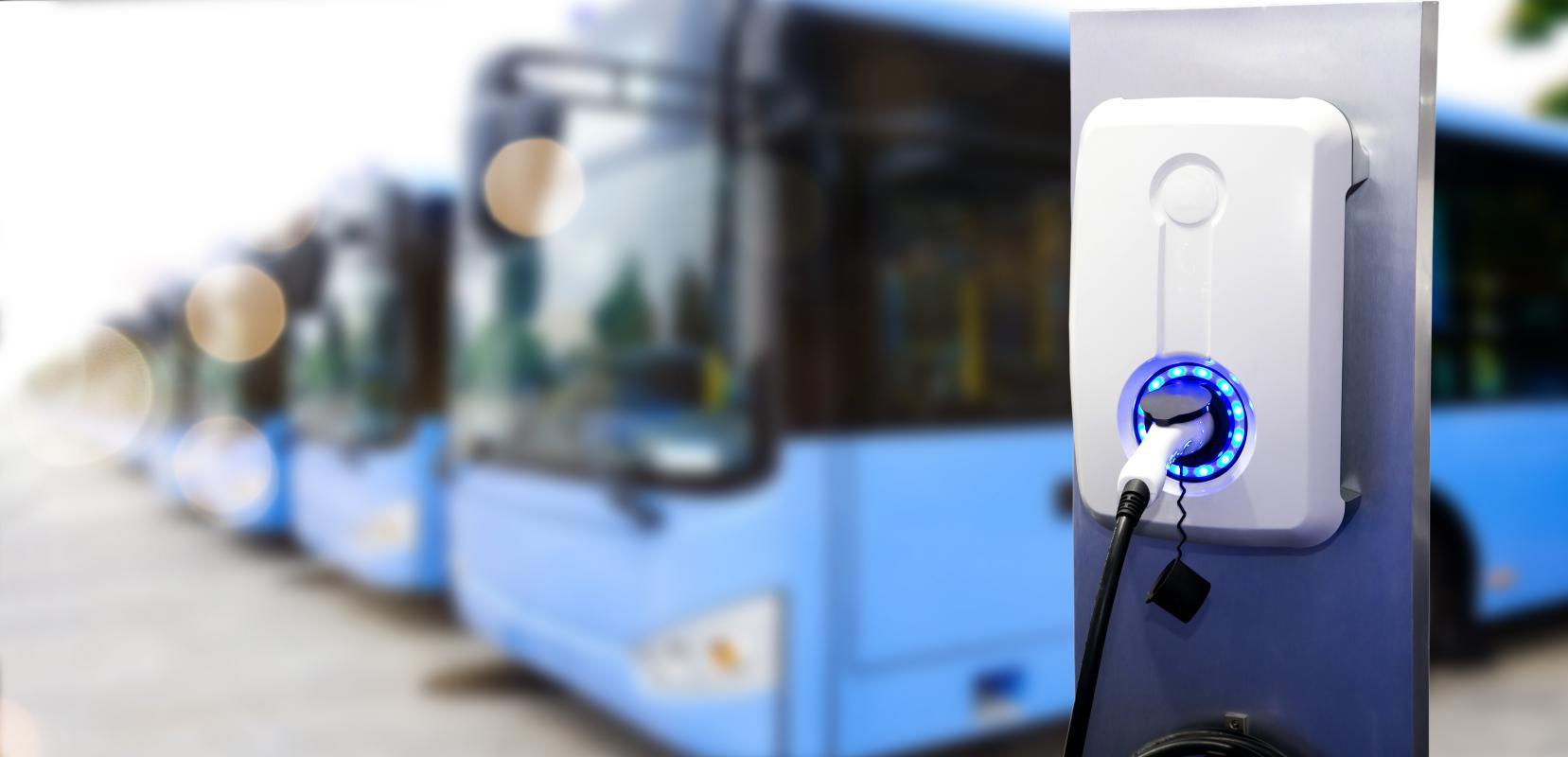
According to the analyst reports, we will close 2025 with 678 electric buses registered in Spain, 847 hybrids, and only 52 gas-powered buses. Forecasts for 2026 and 2027 point to very similar figures.
Spain and, in general, the Iberian Peninsula, are experiencing the arrival of numerous bus manufacturers from all over the world. Stringent market requirements and long delivery times mean that the demand for buses currently exceeds supply.
In addition, Spain is facing a major wave of concession renewals that will lead to an increase in orders, especially for buses powered by clean energy. Undoubtedly, the 2026 edition of FIAA comes at a time of high demand and probably at the peak period for bus transport in Spain.
Analysis of the Spanish bus market (2015–2025)
The evolution of bus registrations in Spain between 2015 and 2025 shows a cyclical pattern, with periods of expansion followed by phases of contraction. Between 2015 and 2017, the market experienced remarkable growth, initially driven by a strong increase in 2016 and followed by a more moderate increase in 2017. According to José Manuel López, Commercial Director at MSI Insight, "all this was due to a favourable climate of fleet renewal and economic recovery".
From 2018 onwards, a phase of slight slowdown began, with two consecutive years of moderate declines, although the figures remained at high levels. The situation changed drastically in 2020 and 2021, years in which there was a sharp drop in the market. The collapse was due to the impact of the pandemic which caused:
- A reduction in interprovincial mobility.
- Cancellation of public events.
- Reduction of school transport to a minimum.
- Public fear of using urban buses.
- Sharp decline in investment in new fleets.
- Uncertainty regarding the reopening of international and domestic tourism, with a significant drop in tourism.
- Fiscal prudence in credit policies for fleet companies and dealers.
"All this led to the bankruptcy of many transport companies, a significant reduction in the profitability of brands, coachbuilders, distributors, and service centres. Direct financial aid was requested, as a renewal scheme aimed at aiding vehicle purchase was not effective. But all incentives from public bodies were weak and ineffective. It was by far the biggest crisis the sector has ever experienced," adds José Manuel López.
From 2022 onwards, the sector began a robust recovery, first with a significant rebound and then with very strong growth in 2023 and 2024, even surpassing pre-pandemic crisis peaks. This recovery is associated both with the reactivation of activity and the implementation of modernisation and sustainability programmes, as well as the bounce-back effect after two years of suppressed demand.
Finally, from 2025 it seems that the positive figures for the previous year will be maintained. "It can be considered a good year because, although it started with a first half of the year in decline, the recovery at the end of the year has been fundamental to being able to close with numbers similar to 2024. The year 2026 will continue with good recovery rates, being a transition year to consolidate a growing market in the future. All the regulatory standardisation due to new legislation (especially on sustainability) will lead to a slight market contraction, but this will consolidate with future fleet renewals, aimed at improving fleet sustainability," he says.
In summary, the expert concludes that "the data describe very marked fluctuations in the new vehicle sales market, highly sensitive to external factors, both in the past due to the COVID year and the new future regulations, but capable of regaining momentum once the extraordinary circumstances have been overcome".
Conclusions and Strategic Action Lines
The Spanish bus sector faces a promising future, defined by innovation, sustainability, and operational excellence. Key strategic priorities include:
- Cementing digitalisation and decarbonisation.
- Adapting to the new LMS and concession liberalisation.
- Strengthening training and talent recruitment.
- Leveraging the momentum of events such as FIAA to generate business and partnerships.
The FIAA 2026 edition will be instrumental in consolidating these advances and positioning Spain as a European benchmark in collective mobility.