


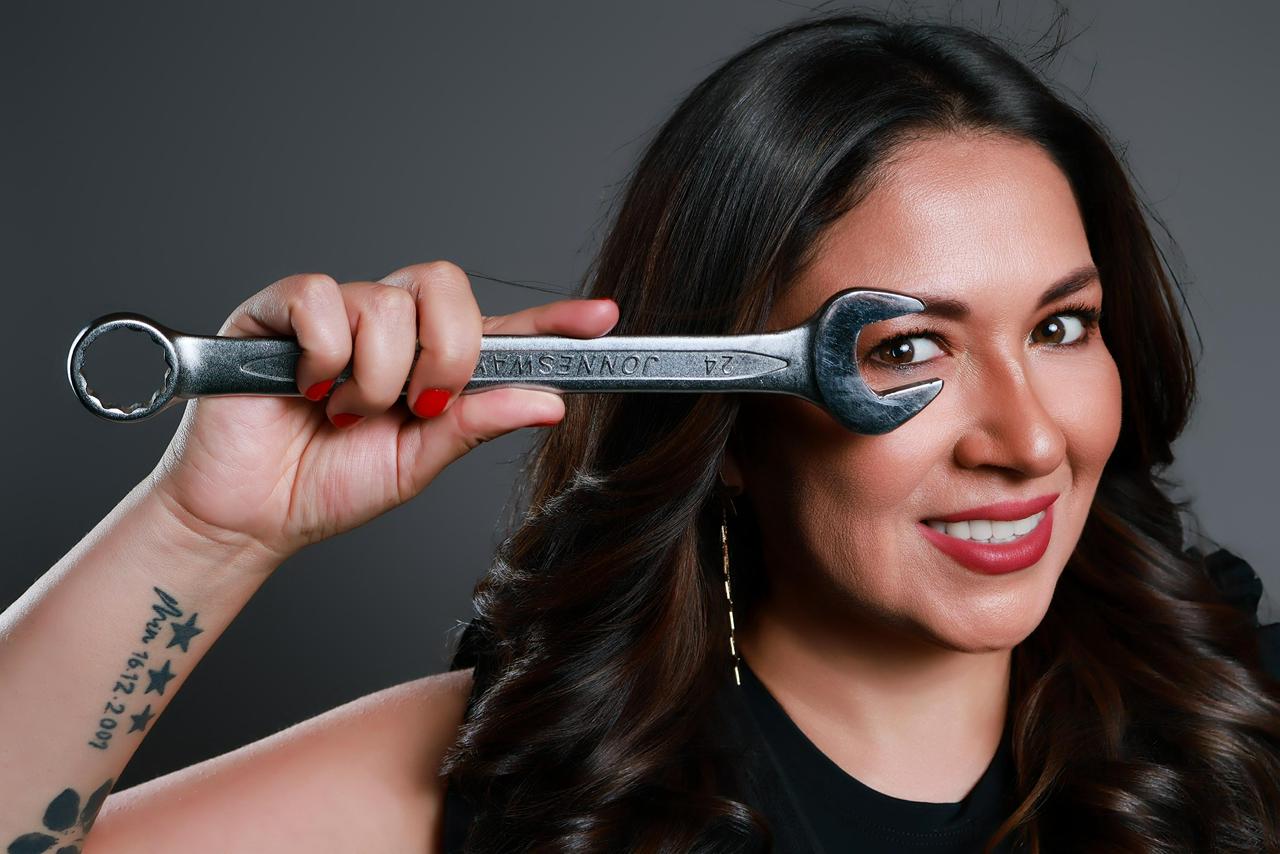
The Ultimate Guide to ‘La Cristi Mecánica’ for Saving Gas: ‘You Have to Check What’s Going On Under the Hood’
The influencer, who will serve as an ambassador for the upcoming Motortec Chile 2026 event, offers tips on how to avoid unnecessary fuel consumption in light of the price hike that occurred earlier this month.
Cristina Catalán is a social media sensation. With over 90,000 followers on Instagram, she is now a leading authority when it comes to offering advice on the world of auto mechanics. She is also the CEO of AMC Performance Chile, a repair shop located in Macul that specializes in various types of vehicle repairs and parts.
A resume more than qualified to become the ambassador for Motortec Chile 2026. The event, which will take place June 18–20 at Espacio Riesco and is organized by IFEMA Madrid and Fisa, part of GL events Chile, is the country’s most important aftermarket trade show and serves as a platform for auto mechanics to learn about the latest innovations in the automotive world.
An event that has taken on even greater importance due to the fuel price hike that occurred in early April and hit the pockets of all Chileans hard. Given this situation, the Motortec Chile ambassador took it upon herself to create a guide so that drivers can save on gas through the vehicle’s mechanics themselves.
“Ultimately, saving gas isn’t about using weird tricks; it’s about understanding how your car works. When a car is well-maintained, everything runs more smoothly: it uses less fuel, drives better, and saves you from unnecessary expenses,” says the expert, known online as Cristi Mecánica.
“Often the problem isn’t the gas; it’s the condition of the car,” notes the automotive influencer. And with that in mind, she explains what to focus on when checking for proper vehicle function: fuel injectors, sensors, the ignition system, and even tire pressure.
The first thing she makes clear is that fuel additives work, but under certain conditions. “They’re not magic. In my experience, when a car is well-maintained, the additive alone won’t generate real savings. It’s a supplement. The problem arises when they’re used to ‘cover up’ faults, and that’s not the right approach. First, you diagnose the issue; then we see if it helps or not,” she asserts.
He also highlights the common misconception among many drivers that switching to lower-octane fuel saves money. “Generally speaking, it’s not a good idea. Today’s engines do compensate, yes, but they do so by retarding the ignition, which means you lose efficiency. In the end, what you save on fuel costs, you often end up paying back in higher fuel consumption. It’s not as cost-effective as it seems,” he emphasizes.
Regarding the car’s mechanics, Cristina Catalán points to the fuel injection system. “It’s basically how the engine is fed. If it’s dirty or malfunctioning, the fuel mixture isn’t right, and fuel consumption will inevitably go up. Keep up with maintenance, use high-quality fuel, and clean the system when necessary. It’s not something you do just because; it has to make technical sense,” she notes.
Regarding scanners used to check sensor performance, Cristi notes that they are “absolutely essential. Today’s cars operate based on those sensors, which tell the engine what to do. If a sensor reads incorrectly, everything goes haywire: mixture, ignition, fuel consumption.”
“Often, the customer doesn’t even realize it; they just notice that the car is using more fuel. That’s when the scanner is no longer optional,” he makes clear. Spark plugs are also key. “When they’re in poor condition, combustion isn’t efficient. You lose power, and the engine has to work harder to achieve the same result. And that, obviously, leads to higher fuel consumption,” he points out.
Finally, he offers two key tips on tire pressure and choosing the right routes to drive. “It’s a detail that seems minor, but it makes a huge difference. A flat tire creates more rolling resistance, and that forces the engine to work harder. “Plus, you wear out the tire faster, so it’s a loss no matter how you look at it,” he emphasizes.
Regarding route selection, she notes that the worst thing is choosing one with too much traffic. “Yes, it’s the worst for fuel consumption. Constantly braking, accelerating, and moving in fits and starts makes the engine work inefficiently. Smooth driving isn’t the same as being stuck in traffic the whole time—that’s when fuel consumption skyrockets,” she concludes.
In addition to being an ambassador, Cristina will have a booth at Motortec alongside Total Energies, one of the brands she works with. The idea is to showcase some of the work she does at her workshop, located in the Macul district, at the event.