




SIMO EDUCACIÓN concludes its 12th edition with artificial intelligence and neuroeducation at the heart of the debate.


The Salón Internacional de Tecnología e Innovación Educativa (International Exhibition of Education Technology and Innovation), organised by IFEMA MADRID in collaboration with EDUCACIÓN 3.0, was a gathering of 60 companies and nearly 200 specialists for a programme featuring more than 120 talks.
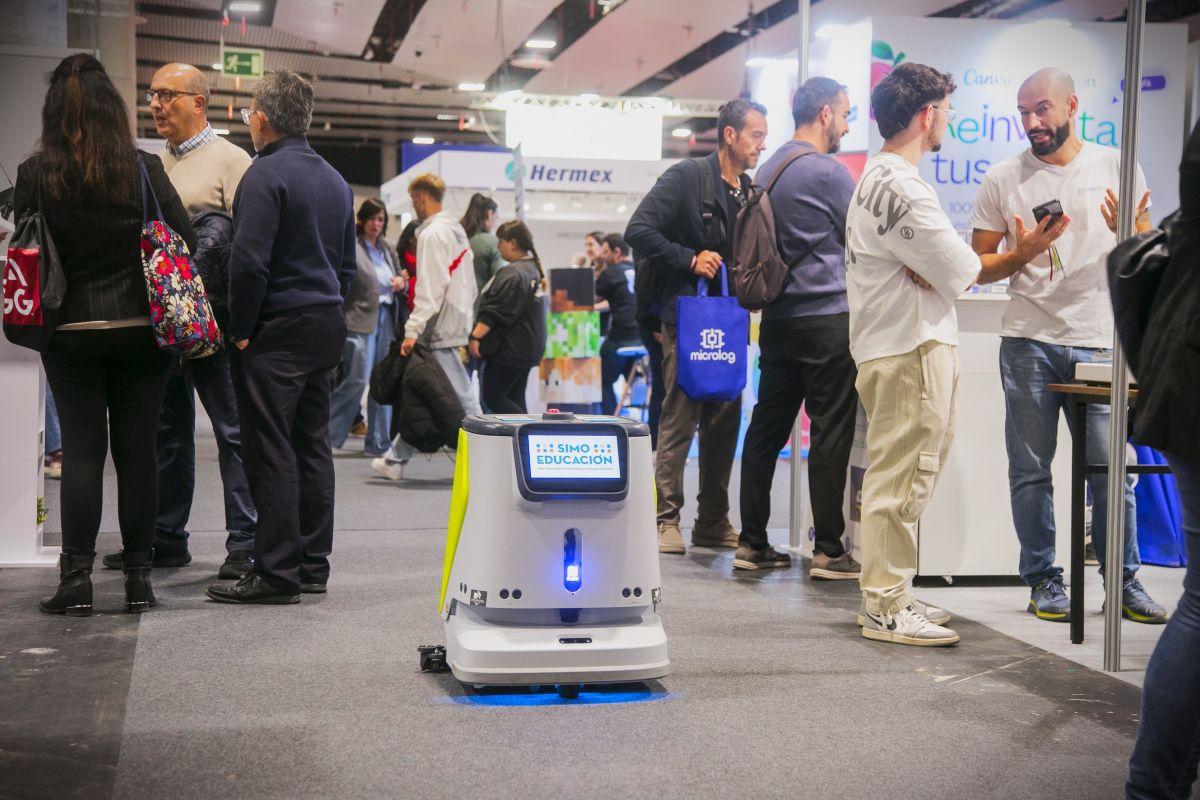
SIMO EDUCACIÓN has concluded its 12th edition after three days devoted to examining the challenges facing education and the opportunities offered by new technologies in the classroom. Held at IFEMA MADRID from 11 to 13 November, the International Educational Technology and Innovation Fair, organised in collaboration with EDUCACIÓN 3.0, brought together 60 participating companies, featured more than 120 talks and welcomed nearly 200 specialists. A debate on artificial intelligence, neuroeducation and the transformation of educational institutions was at the heart of this year’s event.
The trade exhibition showcased innovations in educational robotics, artificial intelligence, digital content and technology equipment, with offerings ranging from immersive learning environments to tools for tackling misinformation, developing computational thinking and promoting inclusion for all pupils. The demonstrations showed how these innovations can be used in schools and the new opportunities they offer for teaching.
From the classroom to school leadership: the challenges of digital transformation
The integration of artificial intelligence into teaching was one of the main themes of this year’s event, with sessions devoted to personalised learning, content creation, school management and the ethical challenges associated with its use.
Against this backdrop, SIMO EDUCACIÓN DIRECTORES, extended to all three days for the first time and sponsored by HP, brought together experts and representatives from Google for Education, HP, ICONO and Alexia (Educaria), among others, to discuss leadership by school management teams and the digital transformation of schools.
The debate continued at SIMO EDUCACIÓN TALKS, where CECE, ACADE, CICAE and Escuelas Católicas explored the balance between innovation, data protection and digital well-being. The Instituto Nacional de Tecnologías Educativas y de Formación del Profesorado (INTEF) [National Institute for Educational Technologies and Teacher Training] also presented proposals on teacher training and new guidance for integrating artificial intelligence into teaching. These sessions were complemented by the talks, workshops and specialist events at Speaker Corner, Samsung Day and the XIII Jornada Educación de Inetum.
Neuroeducation brings science closer to the realities of the classroom
One of the major new features was the launch, as part of the exhibition, of the I Congreso Internacional NeuroEduca (1st International Neuroeduca Conference) organised by EducaciónLab. The conference raised the bar for the programme, bringing together 24 specialists and featuring more than 20 sessions exploring how the brain learns. Leading figures including Jesús Guillén, José Ramón Gamo, Emilia Redolar, Chema Lázaro, Siro López, Ana Mombiedro, Marisa Moya and Roberto Aguado examined how attention, memory, emotions, movement and learning environments influence the learning process.
The congress brought advances in neuroscience into teaching practice, offering proposals to improve student motivation, emotional regulation and well-being. The inaugural edition also hosted the I Premios NeuroEduca, recognising initiatives and professionals working at the intersection of neuroscience and education.
Ten teaching projects recognised from more than 200 entries
The XIV Premios a la Innovación Educativa y Experiencias Docentes Innovadoras (Awards for Educational Innovation and Innovative Teaching Experiences) recognised ten projects selected from more than 200 entries from across Spain. The projects covered areas ranging from artificial intelligence and sustainability to inclusion, emotional education and school leadership.
The awards recognised the following initiatives: CÓDIGO NATURA 4.0 MISIÓN VIDA ACTIVADA (CRA Río Argos, Murcia), in Early Years and Primary Education; Decidir como el Banco Central Europeo (IES Ortega y Gasset, Madrid), in Secondary and Upper Secondary Education; Gladiadores en la Nube (JOYFE, Madrid), in Higher Education; Somos ecodiseñadores (Sant Nicolau, Sabadell), in STEAM; and Splai Premier League (Escola Splai, Barcelona), in Gamification.
Other award-winning projects were EmozionarTech (IES Santo Reino, Jaén), in Emotional Education; Proyecto Compá (CEIP Blas Infante, Jerez de la Frontera), in Inclusion, Equality and Diversity; En tus manos (CEP Primer Marqués del Turia, Valencia), in Sustainability; and Código abierto: la misión de Mary Ward (Colegio Irlandesas Bami, Seville), in Artificial Intelligence. In a new category, the award for Best School Leadership Project went to Liderazgo y Transformación de un Organismo Educativo Vivo (IES Recesvinto, Palencia).
SIMO EDUCACIÓN 2026 rounds off an edition that has highlighted the role of technology, pedagogical judgement and teacher training in addressing the new challenges facing education.