




Antonio Díaz (AESPLA): Prevention creates value, attracts talent and improves productivity


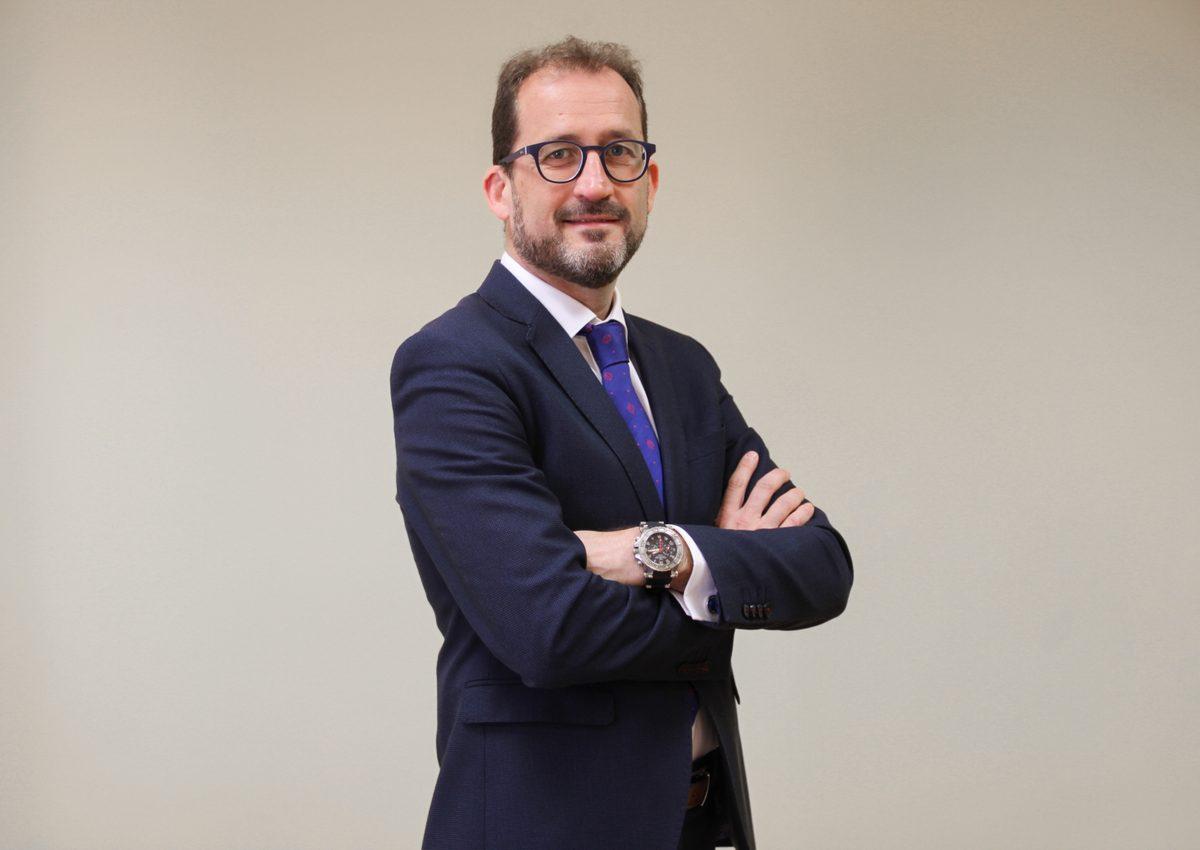
Interview with the chairman of the Spanish Association of Occupational Risk Prevention Services (AESPLA) and director of Health and Wellbeing at the Association for Accident Prevention (APA).
“With this paradigm shift, we have moved from an approach focused almost exclusively on physical security and regulatory compliance to a model in which holistic wellbeing takes centre stage.”
How has the world of risk prevention changed in recent years?
One of the most significant aspects of recent developments in occupational health and safety is the paradigm shift that has taken place. In recent decades, there has been a shift from an approach focused almost exclusively on physical safety and regulatory compliance to a much broader model, in which the overall wellbeing of workers takes centre stage.
This new approach, which AESPLA actively promotes, views health from a holistic perspective that encompasses physical, emotional, social and even financial aspects. Consequently, prevention is a key factor not only in avoiding damage, but also in creating value, attracting and retaining talent, improving productivity and contributing to the sustainability of organisations.
What are the main challenges faced at the moment in the areas of prevention and safety?
The occupational health and safety sector is undergoing a period of profound change, driven both by the draft bill to reform the Occupational Health and Safety Act and by the emergence of new risks and the rapid evolution of working practices.
One of the most significant challenges is the effective management of psychosocial risks, such as stress, burnout and mental health issues. However, it is important to point out that not all mental health problems originate in the workplace; nevertheless, the company must be able to identify those organisational factors that may contribute to or exacerbate such situations, and take preventive action to address them. In this regard, it is essential to adopt a balanced, evidence-based approach that avoids overemphasising the work-related nature of these phenomena, while not downplaying their impact on health and performance.
At the same time, the issue of absenteeism takes on particular significance and must be addressed from a comprehensive business perspective. Beyond the direct economic impact, absenteeism is, in many cases, an indicator of organisational, health or engagement issues. Tackling this issue requires a combination of effective preventive measures, improvements to the working environment, health promotion and a rigorous analysis of its causes, while avoiding simplistic approaches and focusing on structural solutions.
Added to these challenges is the impact of digital transformation, which introduces new variables relating to automation, artificial intelligence and the ethical management of data. In this area, it is worth highlighting initiatives such as the AESPLA AI Observatory, a working group aimed at sharing best practices, solutions and experiences – both internal and from the wider market – relating to the application of artificial intelligence and digitalisation in the prevention of occupational risks.
Furthermore, new organisational models, such as remote working or hybrid working arrangements, present additional challenges in terms of risk management, digital disconnection and team cohesion. Nor can factors such as adverse weather conditions – which are becoming increasingly significant – or the shortage of specialists in prevention, both healthcare professionals and technical staff, be overlooked, as these limit the system’s capacity to respond.
How should these challenges be tackled?
Given this situation, the response cannot be solely a regulatory one. We need to move towards a more mature model, where prevention and well-being in the workplace are effectively integrated into the day-to-day management of companies. This involves not only identifying and assessing risks, but also ensuring that preventive measures are actually and effectively implemented, while fostering a strong culture of prevention at all levels of the organisation.
It is also essential to strengthen training and raise awareness among staff and managers, harness the potential of technological innovation, and adopt a holistic approach that takes into account all aspects of well-being at work. Ultimately, the major challenge is to move from a reactive model towards a predictive, strategic model that is truly integrated into business decision-making.
What are AESPLA’s main areas of action?
The Spanish Association of Occupational Risk Prevention Services (AESPLA) is now a leading forum in Spain in the field of workplace health and safety. It brings together large companies, both public and private, from a range of strategic sectors as diverse as energy, transport, banking, industry, services and telecommunications – all of which share a common commitment to excellence in occupational health and safety and the wellbeing of their people.
Its scope of action focuses primarily on promoting advanced models for the management of occupational risk prevention and workplace wellbeing within organisations. This involves an ongoing process of knowledge-sharing among member organisations, the identification and dissemination of best practice, and the creation of forums for discussion in which professionals from the technical and healthcare sectors, as well as institutional representatives, take part.
In this context, AESPLA acts not only as a representative body, but also as a genuine driving force behind a culture of prevention and well-being at work, promoting a vision that goes beyond mere regulatory compliance to position health and safety as strategic elements of business competitiveness and sustainability.
What are the association’s goals for 2026?
Looking ahead to 2026, the association’s objectives, which are aligned with its 2023–2027 strategy, are geared towards consolidating this vision. Among them, it is worth highlighting the strengthening of a culture of prevention integrated into business management, the reduction in accidents and occupational illnesses, and the committed promotion of well-being at work in the broadest sense, with a particular focus on mental health.
AESPLA also intends to continue making progress in adapting preventive systems to structural changes in the working environment, particularly those arising from digitalisation, artificial intelligence and new forms of organising work.
How important is dialogue with businesses and public authorities, and what is the role of public-private partnerships?
Dialogue with the business community and public authorities is a strategic pillar of AESPLA’s work. The association acts as a meeting point where technical knowledge, practical experience and different perspectives come together, enabling the implementation of solutions that are more effective, realistic and aligned with the needs of the workplace.
In terms of businesses, AESPLA plays a key role as a platform for the exchange of best practice and collective learning. Then there’s our participation in business representative bodies such as the CEOE, cementing the association’s influence and ROLE as a qualified representative. This approach, combined with the high level of technical expertise of its members, enables AESPLA to help ‘translate’ the regulations into the day-to-day reality of organisations, facilitating their practical application and promoting more effective, standardised and results-oriented preventive management models.
Furthermore, collaboration with public authorities is equally essential. Participation in joint initiatives, such as the agreements with the National Institute for Occupational Safety and Health (INSST) and the Regional Institute for Occupational Safety and Health (IRSST), enables public policies to be aligned with the real needs of the business sector and helps advance effective implementation of the Spanish Strategy for Occupational Safety and Health. AESPLA also maintains collaborative relationships with other public and private organisations, both in technical matters and in the areas of training, research and outreach, cementing its role as a driving force within the sector.
In this context, public-private partnership is not only desirable, but essential. It is through this cooperation that the structural changes necessary to consolidate a genuine culture of prevention and well-being at work are brought about. The combination of companies’ technical expertise and the government’s regulatory and institutional capacity is a key driver for improving working conditions and moving towards safer, healthier and more sustainable working environments.
What role does AESPLA play in bringing the sector together?
AESPLA’s role as a unifying force within the sector is particularly noteworthy. Over the course of more than 25 years, the association has successfully anticipated changes, adapted to new realities and established itself as a leader in the promotion of a culture of prevention and wellbeing at work in Spain.
Against a backdrop of increasing complexity, its role as a forum for reflection, exchange and collaboration takes on even greater significance. The future of occupational health and wellbeing depends, to a large extent, on the capacity of organisations to work together, share knowledge and put people at the heart of all their decisions.