




Adela Quinzá-Torroja (Galician Regional Government): I hope that the next SICUR will showcase the latest developments in health and safety


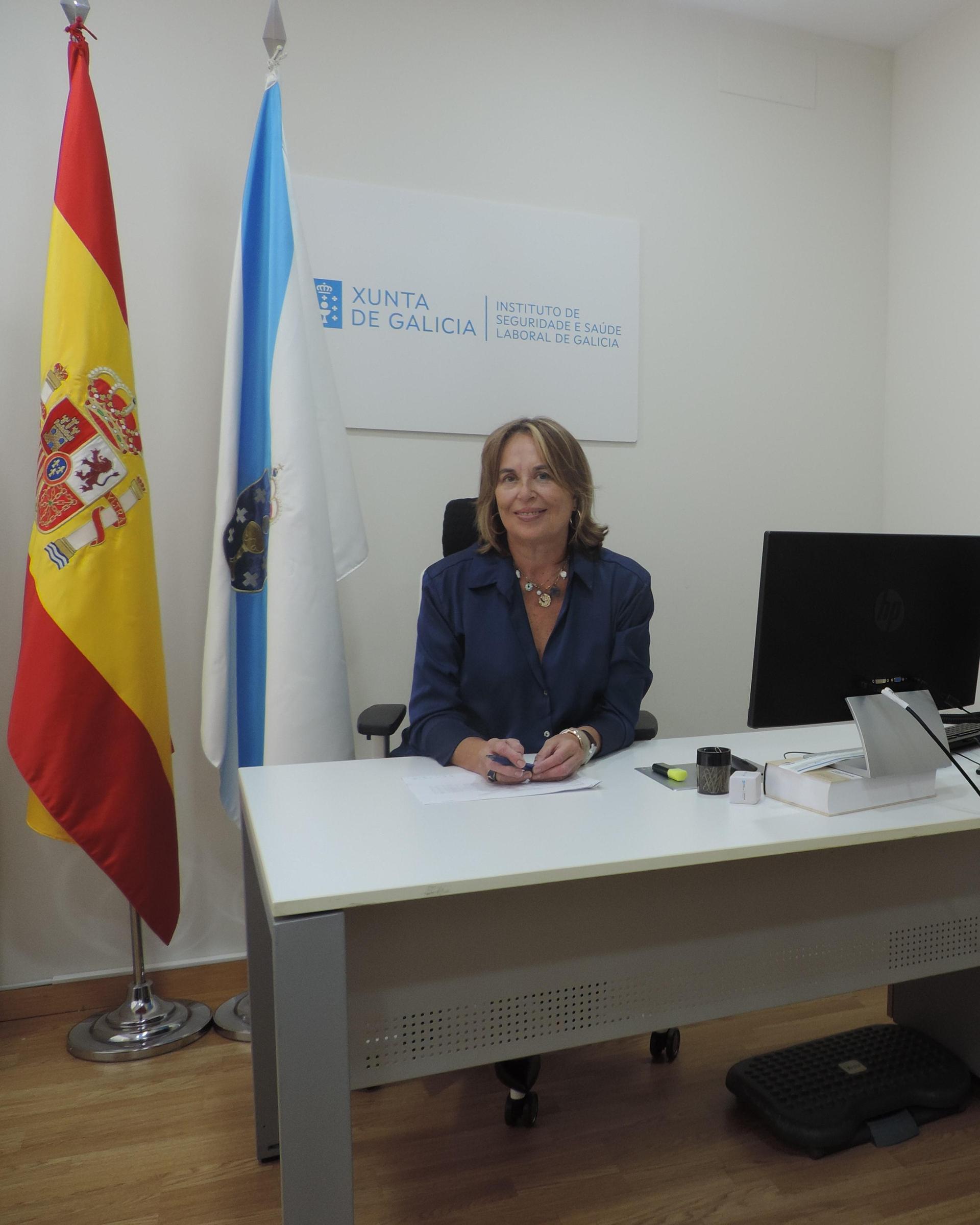
“Health and safety at work is an absolute priority for the Regional Government of Galicia, and significant steps are currently being taken to adapt it to new demands by strengthening resources and technical measures in the field of prevention.” This is according to Adela Quinzá-Torroja García, Director of the Galician Institute for Occupational Health and Safety (ISSGA), under the auspices of the Department of Employment, Trade and Emigration of the Xunta. She also expressed her hope that “the next edition of SICUR will serve as a showcase to demonstrate how technology and science are evolving in all areas of health and safety”.
How important is occupational health and safety in Galicia?
For the Regional Government of Galicia, health and safety at work is an absolute priority, and significant steps are currently being taken to adapt it to new demands by strengthening resources and technical measures in the field of prevention. In addition to its role in implementing the Spanish strategy and following consultation with the social partners, Galicia has adopted the Galician Strategy for Health and Safety at Work: Horizon 2027, a tool we have developed ourselves to address the specific needs of our economic fabric. We are seeing a significant level of implementation, mainly through the annual action plans of the Galician Institute for Health and Safety at Work (ISSGA), as the technical body responsible for risk prevention and the promotion of health in the workplace.
What measures does the place encompass?
This plan, drawn up in collaboration with trade unions and employers’ bodies in Galicia, includes measures to promote preventive management across the various sectors, taking into account indicators such as workplace accident rates and risk, and providing a response in the form of information, technical advice, sector-specific campaigns and training.
In addition to this work in the field of prevention, it is worth mentioning the investigations carried out following accidents or occupational illnesses, in coordination with the Labour Inspectorate and the Public Prosecutor’s Office. It is also worth highlighting the funding scheme offered by the Department of Employment, Trade and Emigration to promote initiatives in this area and to carry out all the functions falling within the remit of the labour authority in our autonomous community.
The Regional Government of Galicia is also set to soon approve the Comprehensive Plan for the Improvement of Prevention, Well-being at Work and a Healthy Return to Work in Galicia 2026–2029, which includes measures designed to encourage companies to go beyond the requirements of current legislation on prevention.
How important is the relationship with the private sector in improving occupational risk prevention?
Here at the Xunta de Galicia, we have always championed public-private partnerships, and there is no doubt that, in a field such as occupational risk prevention, it is essential that all stakeholders pull in the same direction. The health and safety regulations themselves require consultation and joint participation in decisions relating to preventive management. In this regard, we must seek – always on the basis of technical rigour and scientific knowledge – the broadest possible consensus on planning instruments, such as strategic frameworks and action plans. It is therefore essential to involve universities, trade unions and employers’ organisations, clusters, professional associations, scientific societies specialising in health and safety, businesses and, of course, the working population.
We need the commitment of all parties to move forward and – although this is a highly regulated framework with a clear division of powers and responsibilities – ongoing collaboration is essential to ensure that preventive measures are based on shared knowledge, particularly when new occupational risks emerge. This way, we strive to develop solutions tailored to the real needs of workplaces, whilst constantly taking into account technological developments and other factors that have a decisive impact on the creation of healthy and safe working environments, without compromising on productivity.
What are the requirements for quality employment?
Quality employment requires, first and foremost, a safe and healthy working environment that goes beyond the regulatory requirements for occupational health and safety, with a view to promoting people’s well-being. A standard of well-being to which we should aspire in a modern society with a dynamic and constantly evolving labour market.
It’s time to promote and implement strategies to support the business community from the public sector, providing targeted responses to current challenges such as treating physical and mental health as equally important, and taking into account factors such as gender, age, new scenarios and the impact of artificial intelligence. Also, working on platforms, adverse weather conditions and the need to balance personal, family and working life; all of these are issues that will be addressed by the aforementioned Comprehensive Plan for the Improvement of Prevention, Well-being at Work and a Healthy Return to Work in Galicia 2026–2029.
While not overlooking traditional risks, we aim to facilitate compliance with new obligations – such as those relating to radon exposure, the end of the service life of installed asbestos, the occupational cancer agenda, and the introduction of healthy lifestyle programmes in the workplace – by drawing on the expertise provided by occupational medicine and nursing, and also as a means of retaining and attracting talent.
How would you rate the work carried out by occupational health and safety professionals?
I would like to highlight the excellent work carried out day in, day out by technical staff in the field of occupational health and safety, in both the public and private sectors. There are some excellent specialists in safety, industrial hygiene, ergonomics, applied psychosociology and occupational health.
At Issga, we have a team of outstanding professionals who are responsible for carrying out a wide range of initiatives, campaigns and research projects aimed at improving working environments and, consequently, the lives of the people of Galicia.
I would also like to recall just how crucial the word ‘prevention’ became during the pandemic, and how vital professionals in this field were to our return to normality. In this regard, I would like to add that it is essential for prevention to become an established value in all areas of our lives and to be instilled from an early age as a practical skill for dealing with any risk.
Finally, I can only hope that the next edition of SICUR will serve as a showcase for the latest developments in technology and science across all areas of health and safety.